

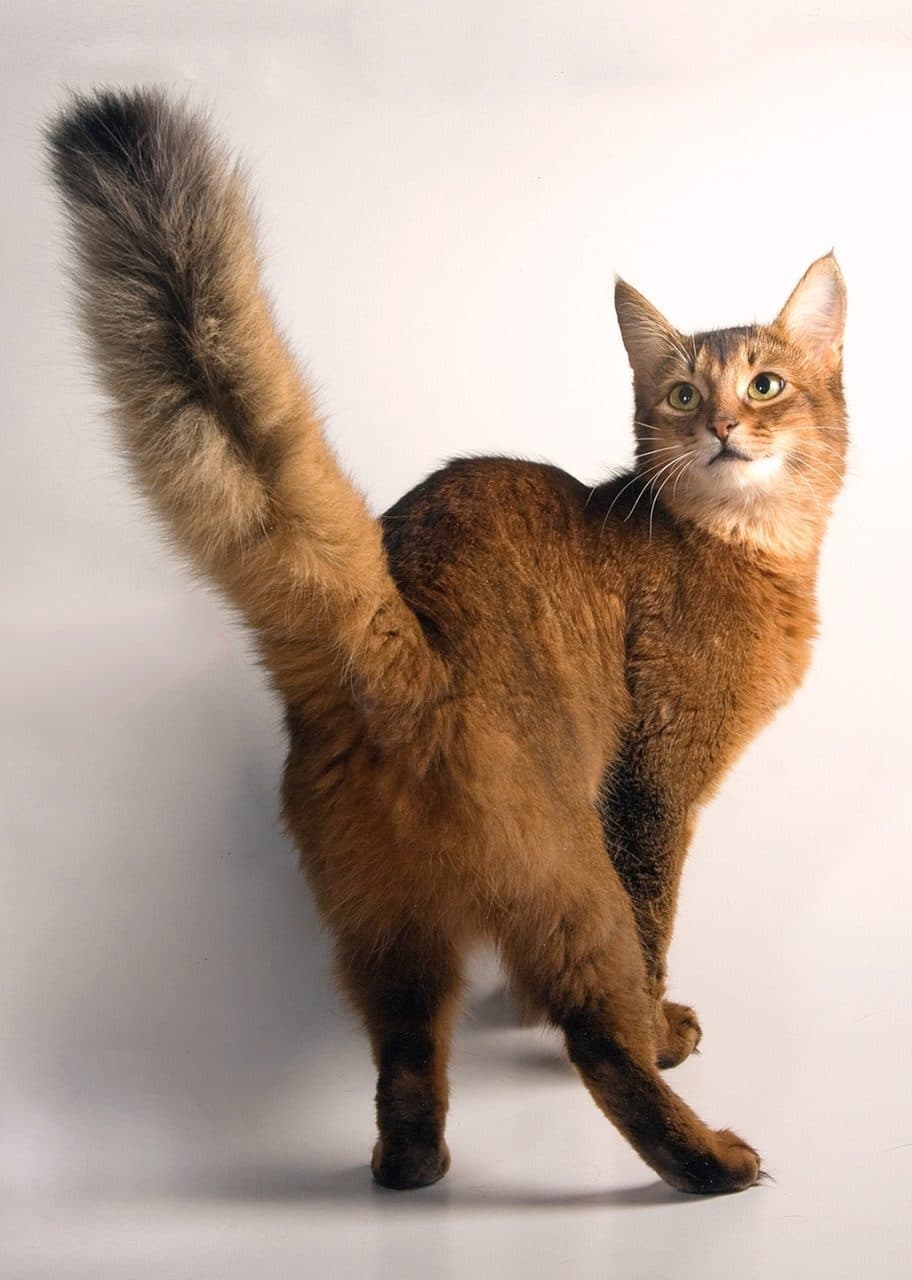
Somalí
Semi-longhaired variety of the Abyssinian. Bushy fox-like tail. Active, sociable, curious. Agouti (ticked) coat.
Foto: Wikipedia Commons · CC BY-SA
Ideal for
- ✓Families with time to give affection
- ✓Flats
- ✓Those looking for a sociable cat
Reconsider if
- ×Households where it is left alone many hours
Notify me when a Somalí is up for adoption
We'll only email you when a verified rescue posts one available. No spam, unsubscribe in 1 click.
We'll only use your email for this alert. More info in our privacy policy.
Is the Somalí a good match for you?
Indicative rating from 1 (low) to 5 (high).
💶 Estimated cost of ownership
45-75 €/month
Premium food 22-32 €, litter 10-15 €, vet and vaccinations pro-rated (including dental cleanings) 14-20 €, antiparasitics 4-6 €, toys and a contingency fund 8-12 €.
History and origin
A semi-longhaired variety derived from the Abyssinian cat, with which it shares a common gene pool. It therefore inherits the same predispositions: progressive retinal atrophy and pyruvate kinase deficiency (haemolytic anaemia).
Temperament and character
Character typical of the breed. Sociable or reserved depending on the individual. Early neutering (4-6 months) is the best preventive measure.
Living together
Children: good with respectful ones. **Other cats:** sociable if raised together from a young age. **Dogs:** possible if calm.
Life stages of the Somalí
Each stage has its own care priorities. Life expectancy: 12-16 años.
Kitten
0-6 months
Socialisation, vaccination, deworming and enrichment for its high activity level.
Junior
6 months-2 years
Neutering, genetic testing for PK deficiency and PRA, dental health and exercise.
Adult
2-10 years
Ophthalmological check-ups, gum control, haematology (anaemia) and weight.
Senior
11+ years
Renal screening, visual and joint monitoring and a geriatric diet.
Care
Brushing: according to coat (short = weekly · semi-long = 2-3 times · long = daily).
Litter tray: N+1 trays (rule of 70).
Feeding: quality wet + dry food.
Vet: annual check-up + blood work from 7 years of age.
Care in detail
🍽️ Nutrition
Premium, protein-rich food to match its high activity level, with wet food for hydration. A quality diet that looks after gums and kidneys; portion control, although it rarely puts on weight.
✂️ Grooming
Its semi-long coat without a dense undercoat barely mats: brushing 1-2 times a week, a little more during moulting. Frequent dental hygiene given its tendency to gingivitis, and checking of ears and claws.
🎓 Training
Very intelligent, active and curious. Learns tricks, harness walking and to fetch objects with positive reinforcement. Needs mental stimulation and constant company; it bores easily.
🏃 Exercise
Very high energy. A tireless, playful climber; requires several play sessions a day, tall cat trees and interactive toys. Loneliness and boredom lead to destructive behaviour.
Breed-specific health
Hypertrophic cardiomyopathy (HCM) common in many breeds — genetic test recommended. PKD in Persian and derived breeds. Life expectancy 12-16 years.
🩺 Health predispositions of this breed
Conditions this breed is more predisposed to. Knowing about them helps with prevention and early detection. A predisposition does not mean the animal will develop them.
Common diseases in cats
Learn the symptoms, prevention and when to see the vet. Reviewed indicative information that does not replace a veterinary consultation.
Screening and prevention for the Somalí
Recommended tests and screenings
- ✓Genetic test for pyruvate kinase deficiency (PK-Def), common in the Abyssinian/Somali
- ✓Genetic test for progressive retinal atrophy (PRA, rdAc mutation)
- ✓Echocardiography for hypertrophic cardiomyopathy (HCM)
- ✓Screening for renal amyloidosis
- ✓Dental assessment (predisposition to gingivitis) and patellar assessment (patellar luxation)
Prevention
Genetic screening for PK-Def and PRA-rdAc before breeding. Neutering, vaccination and deworming. Rigorous dental hygiene given its tendency to gingivitis, brushing of the semi-long coat and plenty of enrichment for its high energy.
Check-up schedule
Annual check-up with cardiac auscultation and dental control; renal blood work from 7 years of age. Genetic and cardiac screening recommended in breeding animals.
Warning signs
- !Weakness, lethargy or pale gums (anaemia from PK-Def)
- !Stumbling or difficulty seeing at night (PRA)
- !Red gums, bad breath or tooth loss (gingivitis)
- !Lameness or patellar slipping (patellar luxation)
- !Increased thirst/urination (kidney/amyloidosis)
Somalí gallery

Frequently asked questions about the Somalí
- How long does a Somalí live? ▾
- The life expectancy of the Somalí is 12-16 años. A good diet, adequate exercise, annual veterinary check-ups and preventive care can help reach the upper end of that range.
- How much does a Somalí weigh? ▾
- An adult Somalí weighs between 3-5 kg, depending on its sex, genetics and condition. It is mediano.
- Where does the Somalí breed come from? ▾
- The Somalí originates from Estados Unidos (de Abisinios). A semi-longhaired variety derived from the Abyssinian cat, with which it shares a common gene pool. It therefore inherits the same predispositions: progressive retinal atrophy and pyruvate kinase deficiency (haemolytic anaemia).
- How much exercise does a Somalí need? ▾
- The Somalí has alta energy. **Brushing:** according to coat (short = weekly · semi-long = 2-3 times · long = daily).
- Is the Somalí good with children? ▾
- **Children:** good with respectful ones. **Other cats:** sociable if raised together from a young age. **Dogs:** possible if calm.
- Who is the Somalí NOT recommended for? ▾
- It isn't the right breed for: Households where it is left alone many hours. It's important to choose a breed that's compatible with your lifestyle.
- What health problems does the Somalí have? ▾
- Hypertrophic cardiomyopathy (HCM) common in many breeds — genetic test recommended. PKD in Persian and derived breeds. Life expectancy 12-16 years.
- Is the Somali the same as the Abyssinian? ▾
- It is its semi-longhaired variety. It shares the agouti 'ticked' coat, the active and curious character and the same health predispositions, but with a longer coat and a bushy fox-like tail.
- Which health tests should I ask the breeder for? ▾
- The genetic tests for pyruvate kinase deficiency (PK-Def) and retinal atrophy (PRA-rdAc), both common in the Abyssinian/Somali line, as well as cardiac screening of the parents.
- Is it a very active cat? ▾
- Very. It is one of the most energetic breeds: it climbs, jumps and plays tirelessly. It needs daily stimulation, heights and company, and does not cope well with being left alone for many hours.
- How much brushing does its semi-long coat need? ▾
- Less than you might expect: as it lacks a woolly undercoat, it barely mats. Brushing 1-2 times a week is enough, a little more during moulting.
- Does it have dental problems? ▾
- It is predisposed to gingivitis, like the Abyssinian. Good dental hygiene at home and periodic veterinary cleanings are important to prevent gum problems.
Learn more about cats
Practical veterinary guides to support your Somalí.
Sources and references
Content compiled from official breed standards and leading veterinary sources.
Want to adopt a somalí?
There are somalís in rescue shelters looking for a family. Filter by breed in the catalogue.