

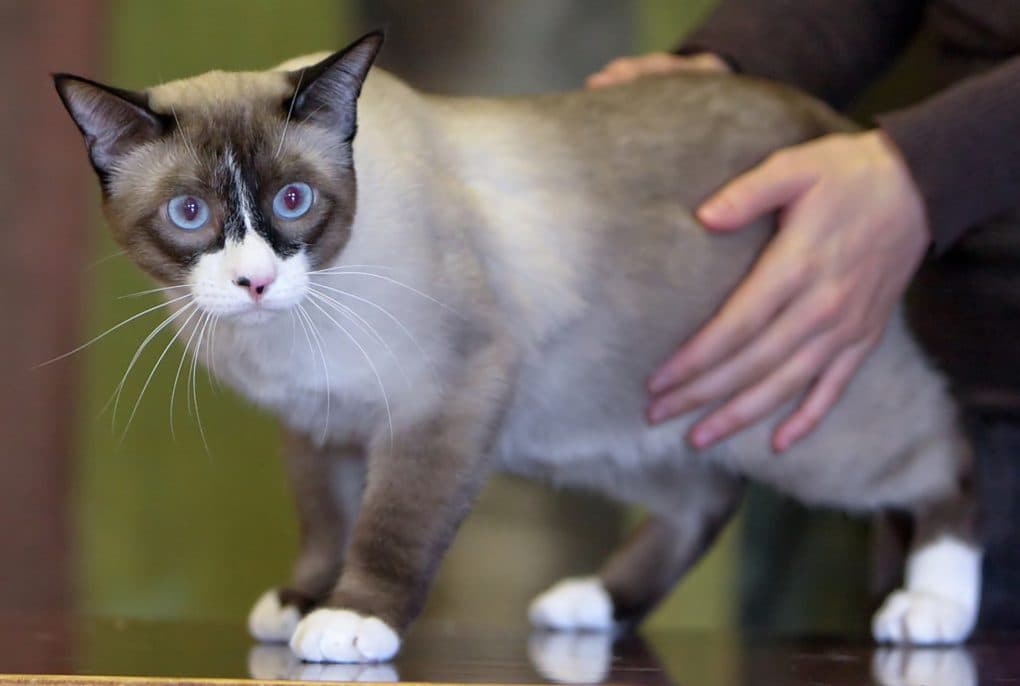
Snowshoe
Siamese pattern with white feet (socks). Affectionate and talkative. A Siamese × bicolour cross.
Foto: Wikipedia Commons · CC BY-SA
Ideal for
- ✓Families with time for cuddles
- ✓Flats
- ✓Anyone looking for a sociable cat
Reconsider if
- ×Homes where it is left alone for long hours
Notify me when a Snowshoe is up for adoption
We'll only email you when a verified rescue posts one available. No spam, unsubscribe in 1 click.
We'll only use your email for this alert. More info in our privacy policy.
Is the Snowshoe a good match for you?
Indicative rating from 1 (low) to 5 (high).
💶 Estimated cost of ownership
45-70 €/month
Food 20-30 €, litter 10-15 €, vet and vaccinations prorated 12-18 €, antiparasitics 4-6 €, toys and a contingency fund 6-10 €.
History and origin
An American breed from the 1960s derived from crossing Siamese cats with bicolour American Shorthairs, showing a point pattern with white socks. It is a fairly rare breed and generally considered healthy and robust.
Temperament and character
Typical of its breed. Sociable or reserved depending on the individual. Early neutering (4-6 months) is the best preventive measure.
Living together
Children: good with respectful ones. **Other cats:** sociable if raised together from young. **Dogs:** possible if calm.
Life stages of the Snowshoe
Each stage has its own care priorities. Life expectancy: 14-19 años.
Kitten
0-6 months
Socialisation, vaccination, deworming and growth diet.
Junior
6 months-2 years
Neutering, dental health and enrichment for its sociable, active nature.
Adult
2-10 years
Weight control, dental health and annual check-ups.
Senior
11+ years
Renal and cardiac screening, weight control and geriatric diet.
Care
Brushing: according to coat (short = weekly · semi-long = 2-3 times · long = daily).
Litter tray: N+1 trays (decision 70).
Feeding: quality wet + dry food.
Vet: annual check-up + blood work from age 7.
Care in detail
🍽️ Nutrition
Quality food with wet food for hydration. Portion control; it is an active, muscular cat that maintains its weight well on a suitable diet.
✂️ Grooming
Minimal: its short coat only needs weekly brushing and sheds little. Dental hygiene and checking of ears and nails.
🎓 Training
Intelligent, sociable and talkative. Learns tricks, harness walking and to fetch objects with positive reinforcement. Very attached to its family; needs interaction and company.
🏃 Exercise
Medium-high energy. Enjoys daily play, heights and often water. Needs stimulation and company; boredom and loneliness lead to vocalisation.
Breed-specific health
Hypertrophic cardiomyopathy (HCM) common in many breeds — genetic test recommended. PKD in Persian and derived breeds. Life expectancy 14-19 years.
Common diseases in cats
Learn the symptoms, prevention and when to see the vet. Reviewed indicative information that does not replace a veterinary consultation.
Screening and prevention for the Snowshoe
Recommended tests and screenings
- ✓Echocardiography for hypertrophic cardiomyopathy (HCM)
- ✓Ophthalmic examination (strabismus from the Siamese lineage)
- ✓Examination of the tail (possible kinks)
- ✓Screening for amyloidosis (Siamese lineage)
- ✓Dental check
Prevention
Early neutering, vaccination and deworming. Dental hygiene, a quality diet and plenty of enrichment and company for its sociable and demanding nature.
Check-up schedule
Annual check-up with cardiac auscultation; renal and hepatic blood work from age 7. Cardiac screening recommended before breeding.
Warning signs
- !Lethargy, rapid breathing or fainting (heart)
- !Marked strabismus or vision problems
- !Vomiting or loss of appetite (liver/kidney)
- !Persistent meowing or separation anxiety
- !Inflamed gums or bad breath
Snowshoe gallery

Frequently asked questions about the Snowshoe
- How long does a Snowshoe live? ▾
- The life expectancy of the Snowshoe is 14-19 años. A good diet, adequate exercise, annual veterinary check-ups and preventive care can help reach the upper end of that range.
- How much does a Snowshoe weigh? ▾
- An adult Snowshoe weighs between 3-5 kg, depending on its sex, genetics and condition. It is mediano.
- Where does the Snowshoe breed come from? ▾
- The Snowshoe originates from Estados Unidos. An American breed from the 1960s derived from crossing Siamese cats with bicolour American Shorthairs, showing a point pattern with white socks. It is a fairly rare breed and generally considered healthy and robust.
- How much exercise does a Snowshoe need? ▾
- The Snowshoe has media energy. **Brushing:** according to coat (short = weekly · semi-long = 2-3 times · long = daily).
- Is the Snowshoe good with children? ▾
- **Children:** good with respectful ones. **Other cats:** sociable if raised together from young. **Dogs:** possible if calm.
- Who is the Snowshoe NOT recommended for? ▾
- It isn't the right breed for: Homes where it is left alone for long hours. It's important to choose a breed that's compatible with your lifestyle.
- What health problems does the Snowshoe have? ▾
- Hypertrophic cardiomyopathy (HCM) common in many breeds — genetic test recommended. PKD in Persian and derived breeds. Life expectancy 14-19 years.
- Why is it called Snowshoe? ▾
- Because of its distinctive white feet, like 'socks' or 'snowshoes', over a Siamese-type colour pattern. It comes from crossing Siamese cats with bicolour cats.
- Is it a talkative cat? ▾
- Yes, it inherits from the Siamese an expressive voice and the habit of 'chatting', though usually somewhat softer. It is very sociable and demanding of attention.
- Does it cope well with being left alone? ▾
- Not very well. It is very attached to its family and is affected by prolonged loneliness, which can lead to meowing and stress. Better with frequent company or a second cat.
- Does it need a lot of coat care? ▾
- No. Its short coat only requires weekly brushing and sheds little, so it is very easy to maintain.
- Is it good with children and other animals? ▾
- Yes, it is playful and sociable; it gets on well with respectful children, other cats and calm dogs if socialised from young.
Learn more about cats
Practical veterinary guides to support your Snowshoe.
Sources and references
Content compiled from official breed standards and leading veterinary sources.
Want to adopt a snowshoe?
There are snowshoes in rescue shelters looking for a family. Filter by breed in the catalogue.