

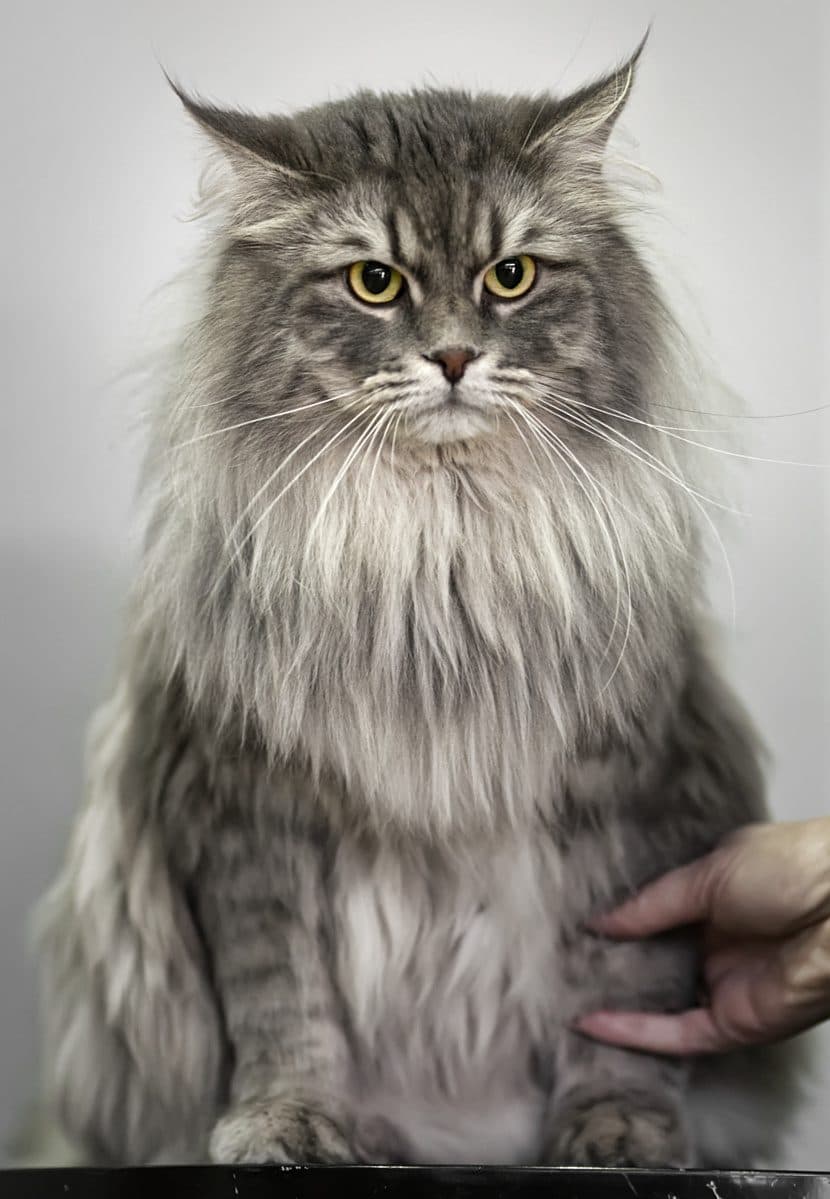
Siberiano
An ancient Russian cat adapted to extreme cold. Dense triple coat. Hypoallergenic (less Fel d1 protein). Sociable.
Foto: Wikipedia Commons · CC BY-SA
Ideal for
- ✓Families with time to stroke it
- ✓Flats
- ✓Those looking for a sociable cat
Reconsider if
- ×Homes where it would be alone for many hours
Notify me when a Siberiano is up for adoption
We'll only email you when a verified rescue posts one available. No spam, unsubscribe in 1 click.
We'll only use your email for this alert. More info in our privacy policy.
Is the Siberiano a good match for you?
Indicative rating from 1 (low) to 5 (high).
💶 Estimated cost of ownership
50-80 €/month
Food (large breed) 25-35 €, litter 12-16 €, vet and vaccines pro-rated (includes cardiac screening) 12-20 €, antiparasitics 5-7 €, grooming and a contingency fund 8-12 €.
History and origin
A natural Russian longhaired breed originating from the forests of Siberia, popularly reputed to be hypoallergenic because of its lower production of the Fel d 1 protein.
Temperament and character
Typical of its breed. Sociable or reserved depending on the individual. Early neutering (4-6 months) is the best preventive measure.
Living together
Children: good with respectful ones. **Other cats:** sociable if raised together from a young age. **Dogs:** possible if calm.
Life stages of the Siberiano
Each stage has its own care priorities. Life expectancy: 11-15 años.
Kitten
0-6 months
Socialisation, vaccination, deworming and a growth diet; a robust, slow-developing breed.
Junior
6 months-3 years
Prolonged maturation up to 5 years; neutering, weight control and brushing of the triple coat.
Adult
3-10 years
Cardiac check-up, weight control, regular brushing and annual check-up.
Senior
11+ years
Six-monthly check-ups, cardiac and renal monitoring, joint and dental health.
Care
Brushing: according to coat (short = weekly · semi-long = 2-3 times · long = daily).
Litter tray: N+1 trays (decision 70).
Feeding: quality wet + dry food.
Vet: annual check-up + blood work from 7 years of age.
Care in detail
🍽️ Nutrition
Quality food for large breeds with a good protein content, plus wet food for hydration. Portion control; it is a large, muscular cat, but excess weight overloads its heart.
✂️ Grooming
Its dense triple coat requires brushing 2-3 times a week and daily during the two annual moults (spring and autumn), which are heavy. Occasional bathing; ear and nail checks.
🎓 Training
Intelligent, well-balanced and sociable, almost 'dog-like'. It learns to fetch objects and to use a harness with positive reinforcement. It tolerates children and other animals well and bonds closely with its family.
🏃 Exercise
Medium energy. It is agile, a climber and a good hunter; it enjoys play, heights and water. Daily play and structures to climb are enough, without being hyperactive.
Breed-specific health
Hypertrophic cardiomyopathy (HCM) is common in many breeds — genetic testing recommended. PKD in Persian and derived breeds. Life expectancy 11-15 years.
🩺 Health predispositions of this breed
Conditions this breed is more predisposed to. Knowing about them helps with prevention and early detection. A predisposition does not mean the animal will develop them.
Common diseases in cats
Learn the symptoms, prevention and when to see the vet. Reviewed indicative information that does not replace a veterinary consultation.
Screening and prevention for the Siberiano
Recommended tests and screenings
- ✓Echocardiography for hypertrophic cardiomyopathy (HCM), a priority in the breed
- ✓General blood work and renal profile
- ✓Dental check-up
- ✓Assessment of weight and body condition
- ✓Cardiac screening prior to breeding
Prevention
Early neutering, vaccination and deworming. Frequent brushing because of its triple coat, weight control (a large breed), dental hygiene and a cool environment in summer (poorly adapted to heat).
Check-up schedule
Annual check-up with cardiac auscultation; echocardiography recommended given the frequency of HCM in the breed. Renal blood work from 7 years of age.
Warning signs
- !Lethargy, rapid breathing or fainting (heart/HCM)
- !Exercise intolerance or coughing
- !Increased thirst/urination (kidney)
- !Knots or matted coat, especially during moulting
- !Panting or discomfort in intense heat
Siberiano gallery

Frequently asked questions about the Siberiano
- How long does a Siberiano live? ▾
- The life expectancy of the Siberiano is 11-15 años. A good diet, adequate exercise, annual veterinary check-ups and preventive care can help reach the upper end of that range.
- How much does a Siberiano weigh? ▾
- An adult Siberiano weighs between 4-9 kg, depending on its sex, genetics and condition. It is grande.
- Where does the Siberiano breed come from? ▾
- The Siberiano originates from Rusia (Siberia). A natural Russian longhaired breed originating from the forests of Siberia, popularly reputed to be hypoallergenic because of its lower production of the Fel d 1 protein.
- How much exercise does a Siberiano need? ▾
- The Siberiano has media energy. **Brushing:** according to coat (short = weekly · semi-long = 2-3 times · long = daily).
- Is the Siberiano good with children? ▾
- **Children:** good with respectful ones. **Other cats:** sociable if raised together from a young age. **Dogs:** possible if calm.
- Who is the Siberiano NOT recommended for? ▾
- It isn't the right breed for: Homes where it would be alone for many hours. It's important to choose a breed that's compatible with your lifestyle.
- What health problems does the Siberiano have? ▾
- Hypertrophic cardiomyopathy (HCM) is common in many breeds — genetic testing recommended. PKD in Persian and derived breeds. Life expectancy 11-15 years.
- Is the Siberian really hypoallergenic? ▾
- It produces less Fel d1 protein than average, so many allergic people tolerate it better, but it is not 100% hypoallergenic. If there are allergy sufferers at home, a trial period of living together is advisable before adopting.
- How much does it shed and how much brushing does it need? ▾
- It has a very dense triple coat. It requires brushing 2-3 times a week and daily during the spring and autumn moults, which are very heavy. In return, the coat barely tangles.
- Is it good with children and other animals? ▾
- Excellent. It is robust, patient, sociable and playful, which makes it very suitable for families with children and for living with other well-balanced cats or dogs.
- Which health problem is the most important? ▾
- Hypertrophic cardiomyopathy (HCM) is the most relevant condition in the breed. It is highly advisable that breeding cats have echocardiography and to ask the breeder for those screenings.
- Does summer heat affect it? ▾
- Yes. Its coat is designed for extreme Siberian cold, so in warm summers it needs cool areas, plenty of water and to avoid exercise during the hottest hours.
Learn more about cats
Practical veterinary guides to support your Siberiano.
Sources and references
Content compiled from official breed standards and leading veterinary sources.
Want to adopt a siberiano?
There are siberianos in rescue shelters looking for a family. Filter by breed in the catalogue.