

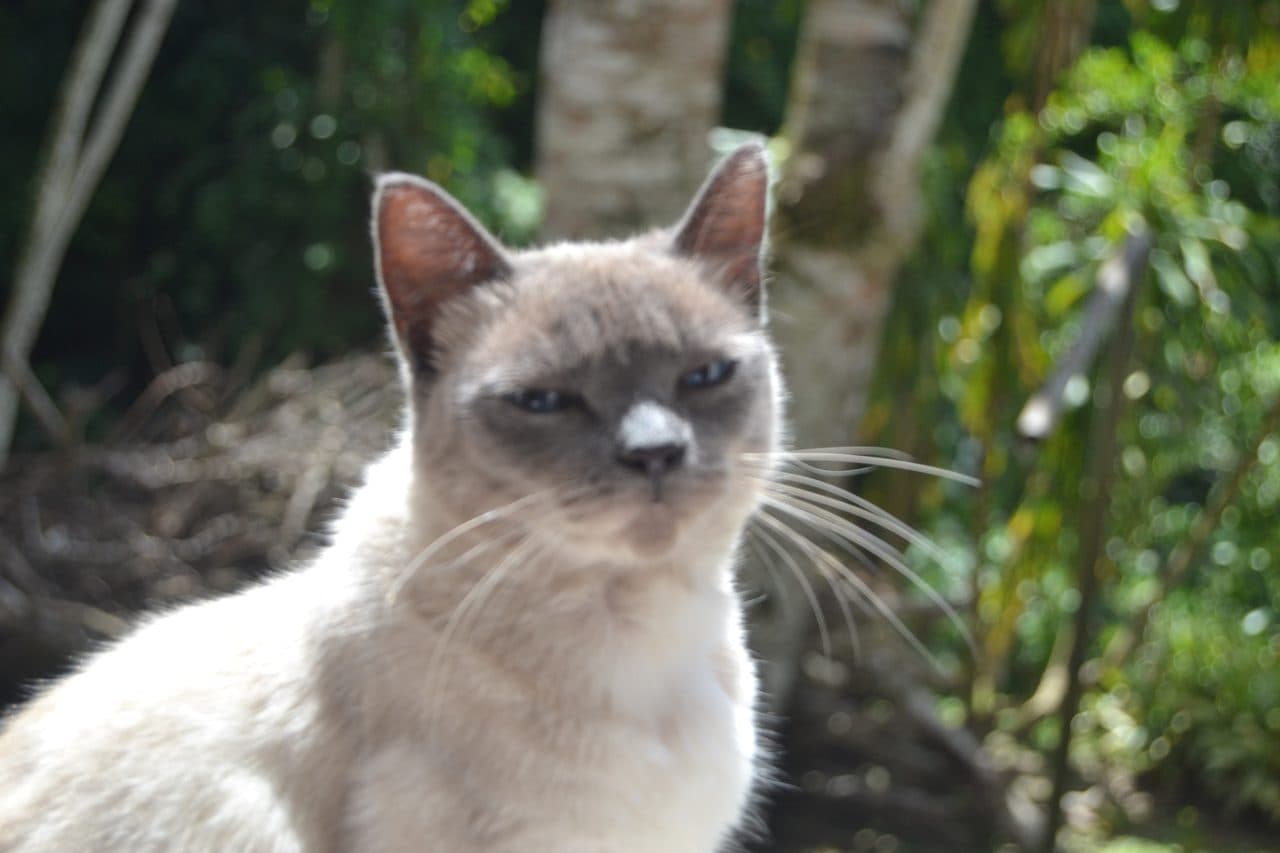
Siamés
Intelligent, vocal and social. Forms an extremely intense bond with its person. Talks in raspy, conversational meows. Not a decorative cat — it demands constant attention and company.
Foto: Wikipedia Commons · CC BY-SA
Ideal for
- ✓People who spend time at home
- ✓Homes with other Siamese cats (company)
- ✓Those who enjoy chatty cats
Reconsider if
- ×Those who work long hours away
- ×Quiet homes (it vocalises a lot)
- ×Families who don't want a "dog-like" cat
Notify me when a Siamés is up for adoption
We'll only email you when a verified rescue posts one available. No spam, unsubscribe in 1 click.
We'll only use your email for this alert. More info in our privacy policy.
Is the Siamés a good match for you?
Indicative rating from 1 (low) to 5 (high).
💶 Estimated cost of ownership
40-75 €/month
Food: 20-35 € · Preventive vet care: 12-25 € · Litter: 8-15 € · Insurance extras: 5-15 €
History and origin
An ancient breed from Siam (Thailand), with its characteristic colourpoint pattern. Genetically predisposed to respiratory conditions such as feline asthma and to certain tumours such as mediastinal lymphoma.
Temperament and character
One of the most intelligent cats in the feline world. Outgoing, sociable and vocal. Intense bond ("dog-like" syndrome). Active. Curious.
Living together
Children: good with respectful ones. Other cats: very sociable (especially other Siamese). Dogs: fine with socialisation.
Life stages of the Siamés
Each stage has its own care priorities. Life expectancy: 12-20 años.
Kitten
0-6 months
Intense socialisation, vaccination, deworming and encouraging the strong bond with the carer.
Junior
6 months-2 years
Neutering, respiratory monitoring (asthma), dental health and plenty of enrichment for its high energy.
Adult
2-10 years
Monitoring for respiratory signs, renal health, weight and ophthalmological check-ups.
Senior
11+ years
Renal and cardiac screening, oncological monitoring (lymphoma) and a geriatric diet.
Care
Mental exercise: interactive toys and puzzles. Low grooming needs (short coat). Feeding: quality food. Company: ideally another cat or plenty of human time.
Care in detail
🍽️ Nutrition
Quality dry or wet food suited to its age; watch the amount because it is active but can gain weight if it gets bored. Always fresh water to protect the kidneys.
✂️ Grooming
Minimal: a short coat that only needs a weekly brush. Sheds very little.
🎓 Training
A highly intelligent, "dog-like" cat: it learns tricks, to fetch objects and to walk on a harness through positive reinforcement. It needs plenty of interaction and mental stimulation.
🏃 Exercise
Lots of interactive play and puzzles every day. Ideally constant company or another cat: it hates being alone and gets depressed without stimulation.
Breed-specific health
Generally robust. Renal amyloidosis. Strabismus. Feline asthma. Life expectancy 12-20 years (some are very long-lived).
🩺 Health predispositions of this breed
Conditions this breed is more predisposed to. Knowing about them helps with prevention and early detection. A predisposition does not mean the animal will develop them.
Common diseases in cats
Learn the symptoms, prevention and when to see the vet. Reviewed indicative information that does not replace a veterinary consultation.
Screening and prevention for the Siamés
Recommended tests and screenings
- ✓Echocardiography
- ✓Renal profile (renal amyloidosis)
- ✓Ophthalmological examination (strabismus)
- ✓Dental check-up
Prevention
Vaccination and deworming kept up to date, quality diet, plenty of company and environmental enrichment; early neutering.
Check-up schedule
Annual check-up, every six months in senior cats with renal blood work.
Warning signs
- !Weight loss and increased thirst (kidney problem)
- !Coughing or breathing difficulty (feline asthma)
- !Lethargy or changes in appetite
- !Frequent vomiting
Siamés gallery

Frequently asked questions about the Siamés
- How long does a Siamés live? ▾
- The life expectancy of the Siamés is 12-20 años. A good diet, adequate exercise, annual veterinary check-ups and preventive care can help reach the upper end of that range.
- How much does a Siamés weigh? ▾
- An adult Siamés weighs between 3-5 kg, depending on its sex, genetics and condition. It is mediano.
- Where does the Siamés breed come from? ▾
- The Siamés originates from Tailandia (Siam). An ancient breed from Siam (Thailand), with its characteristic colourpoint pattern. Genetically predisposed to respiratory conditions such as feline asthma and to certain tumours such as mediastinal lymphoma.
- How much exercise does a Siamés need? ▾
- The Siamés has alta energy. Mental exercise: interactive toys and puzzles. Low grooming needs (short coat). Feeding: quality food. Company: ideally another cat or plenty of human time.
- Is the Siamés good with children? ▾
- Children: good with respectful ones. Other cats: very sociable (especially other Siamese). Dogs: fine with socialisation.
- Who is the Siamés NOT recommended for? ▾
- It isn't the right breed for: Those who work long hours away. Quiet homes (it vocalises a lot). Families who don't want a "dog-like" cat. It's important to choose a breed that's compatible with your lifestyle.
- What health problems does the Siamés have? ▾
- Generally robust. Renal amyloidosis. Strabismus. Feline asthma. Life expectancy 12-20 years (some are very long-lived).
- Why does the Siamese meow so much? ▾
- It is one of the most vocal breeds: it "converses" with raspy meows to communicate with its human. If you want a quiet cat, this is not the breed for you.
- Can it be left alone for many hours? ▾
- It copes badly. It is extremely social and attached; prolonged solitude causes it stress and depression. A companion cat or plenty of human time is advisable.
- Is it true that it behaves like a dog? ▾
- In a way, yes: it is very sociable, follows its person around, learns tricks and can be walked on a harness. It forms an incredibly intense bond with its family.
- Does it need a lot of coat care? ▾
- No. Its short coat only requires a weekly brush and sheds little; it is a very low-maintenance breed in this respect.
- Is it a good breed for families with children? ▾
- Yes, it is sociable and playful, ideal with children who treat it with respect. It also gets on well with other cats and with dogs after a proper introduction.
Related and similar breeds
Learn more about cats
Practical veterinary guides to support your Siamés.
Sources and references
Content compiled from official breed standards and leading veterinary sources.
Want to adopt a siamés?
There are siaméss in rescue shelters looking for a family. Filter by breed in the catalogue.