

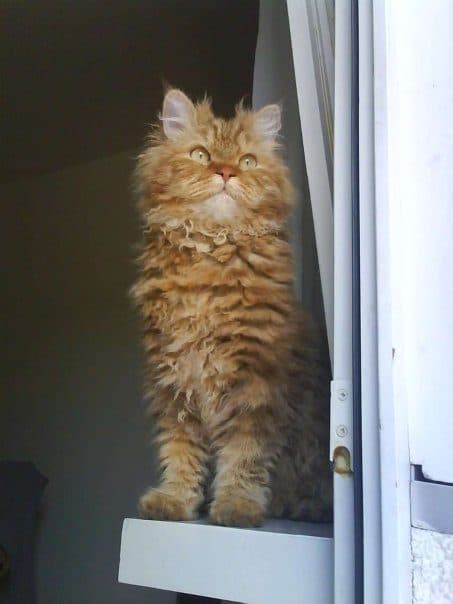
Selkirk Rex
Dense curly coat (short-haired and long-haired varieties). Sweet, patient character. The "sheep cat".
Foto: Wikipedia Commons · CC BY-SA
Ideal for
- ✓Families with time to cuddle
- ✓Flats
- ✓Anyone looking for a sociable cat
Reconsider if
- ×Households where it would be left alone for many hours
Notify me when a Selkirk Rex is up for adoption
We'll only email you when a verified rescue posts one available. No spam, unsubscribe in 1 click.
We'll only use your email for this alert. More info in our privacy policy.
Is the Selkirk Rex a good match for you?
Indicative rating from 1 (low) to 5 (high).
💶 Estimated cost of ownership
45-75 €/month
Food 22-30 €, litter 10-15 €, grooming/bathing products 4-8 €, pro-rated veterinary care and vaccinations 12-20 €, antiparasitics 4-6 €, contingency fund 6-10 €.
History and origin
A curly-coated breed originating in Montana (USA) in 1987. Because of the foundational crosses with Persians, Exotics and British Shorthairs, it retains a predisposition to polycystic kidney disease and hypertrophic cardiomyopathy.
Temperament and character
Character typical of its breed. Sociable or reserved depending on the individual. Early neutering (4-6 months) is the best preventive measure.
Living together
Children: good with respectful ones. **Other cats:** sociable if raised together from a young age. **Dogs:** possible if calm.
Life stages of the Selkirk Rex
Each stage has its own care priorities. Life expectancy: 14-15 años.
Kitten
0-6 months
Vaccination, deworming, care of the curly coat and a growth diet.
Junior
6 months-2 years
Neutering, PKD screening, HCM genetic test and dental control.
Adult
2-10 years
HCM echocardiography, renal screening, weight control and coat care.
Senior
11+ years
Cardiac and renal monitoring and a geriatric diet.
Care
Brushing: according to coat (short = weekly · semi-long = 2-3 times · long = daily).
Litter tray: N+1 trays (decision 70).
Feeding: quality wet + dry food.
Vet: annual check-up + blood work from the age of 7.
Care in detail
🍽️ Nutrition
Quality dry food combined with wet food for renal hydration. Portion control; it has medium energy and can gain weight easily if food is not measured.
✂️ Grooming
Its curly coat (short or long) needs special care: gentle, spaced-out brushing so as not to undo the curls, occasional baths to control oiliness, and ear cleaning. Excessive brushing can 'straighten' the coat.
🎓 Training
Sweet, patient and calm. It learns the litter tray easily and adapts well to the family routine. It tolerates handling very well, which makes brushing, bathing and check-ups easier.
🏃 Exercise
Medium energy. It enjoys daily play without being hyperactive. Interactive toys, a scratching post and companionship are enough; it is a balanced, sociable cat.
Breed-specific health
Hypertrophic cardiomyopathy (HCM) is common in many breeds — genetic testing recommended. PKD in Persian and derived breeds. Life expectancy 14-15 years.
🩺 Health predispositions of this breed
Conditions this breed is more predisposed to. Knowing about them helps with prevention and early detection. A predisposition does not mean the animal will develop them.
Common diseases in cats
Learn the symptoms, prevention and when to see the vet. Reviewed indicative information that does not replace a veterinary consultation.
Screening and prevention for the Selkirk Rex
Recommended tests and screenings
- ✓PKD1 genetic test (polycystic kidney, from crosses with Persian/Exotic)
- ✓Echocardiography for hypertrophic cardiomyopathy (HCM)
- ✓Dermatological assessment (skin and curly coat)
- ✓Dental review
- ✓Renal blood work prior to breeding
Prevention
Early neutering, vaccination and deworming. PKD screening due to its Persian ancestry. Dental hygiene, control of excess skin oil caused by the curly coat, and careful brushing so as not to break the curls.
Check-up schedule
Annual review with cardiac auscultation; renal blood work from the age of 7. PKD and HCM screening recommended in breeding animals.
Warning signs
- !Increased thirst/urination (possible kidney disease/PKD)
- !Lethargy or rapid breathing (heart)
- !Greasy skin, redness or abnormal hair loss
- !Inflamed gums or bad breath
- !Loss of appetite or weight
Frequently asked questions about the Selkirk Rex
- How long does a Selkirk Rex live? ▾
- The life expectancy of the Selkirk Rex is 14-15 años. A good diet, adequate exercise, annual veterinary check-ups and preventive care can help reach the upper end of that range.
- How much does a Selkirk Rex weigh? ▾
- An adult Selkirk Rex weighs between 3-6 kg, depending on its sex, genetics and condition. It is mediano.
- Where does the Selkirk Rex breed come from? ▾
- The Selkirk Rex originates from Estados Unidos. A curly-coated breed originating in Montana (USA) in 1987. Because of the foundational crosses with Persians, Exotics and British Shorthairs, it retains a predisposition to polycystic kidney disease and hypertrophic cardiomyopathy.
- How much exercise does a Selkirk Rex need? ▾
- The Selkirk Rex has media energy. **Brushing:** according to coat (short = weekly · semi-long = 2-3 times · long = daily).
- Is the Selkirk Rex good with children? ▾
- **Children:** good with respectful ones. **Other cats:** sociable if raised together from a young age. **Dogs:** possible if calm.
- Who is the Selkirk Rex NOT recommended for? ▾
- It isn't the right breed for: Households where it would be left alone for many hours. It's important to choose a breed that's compatible with your lifestyle.
- What health problems does the Selkirk Rex have? ▾
- Hypertrophic cardiomyopathy (HCM) is common in many breeds — genetic testing recommended. PKD in Persian and derived breeds. Life expectancy 14-15 years.
- How should I care for the Selkirk Rex's curly coat? ▾
- With gentle, not excessive brushing: brushing too much undoes the curls. An occasional bath is recommended to control the skin's oiliness, and letting the coat air-dry so it regains its natural curl.
- Is it a calm cat, good for beginners? ▾
- Very much so. It is sweet, patient, sociable and of medium energy, which makes it one of the easiest and most pleasant breeds for anyone with their first cat or living in a flat.
- What hereditary diseases can it have? ▾
- Because of its crosses with Persian and Exotic, it can inherit polycystic kidney disease (PKD), for which a genetic test is available, and hypertrophic cardiomyopathy. It is advisable to ask for the parents' screening results.
- Does it shed a lot? ▾
- Its shedding is moderate. Both the short-haired and long-haired varieties shed, but care focuses more on preserving the curls than on large amounts of hair.
- Does it get on well with children and other pets? ▾
- Yes, its serene, tolerant character makes it ideal for families with respectful children, other cats and calm dogs.
Learn more about cats
Practical veterinary guides to support your Selkirk Rex.
Sources and references
Content compiled from official breed standards and leading veterinary sources.
Want to adopt a selkirk rex?
There are selkirk rexs in rescue shelters looking for a family. Filter by breed in the catalogue.