

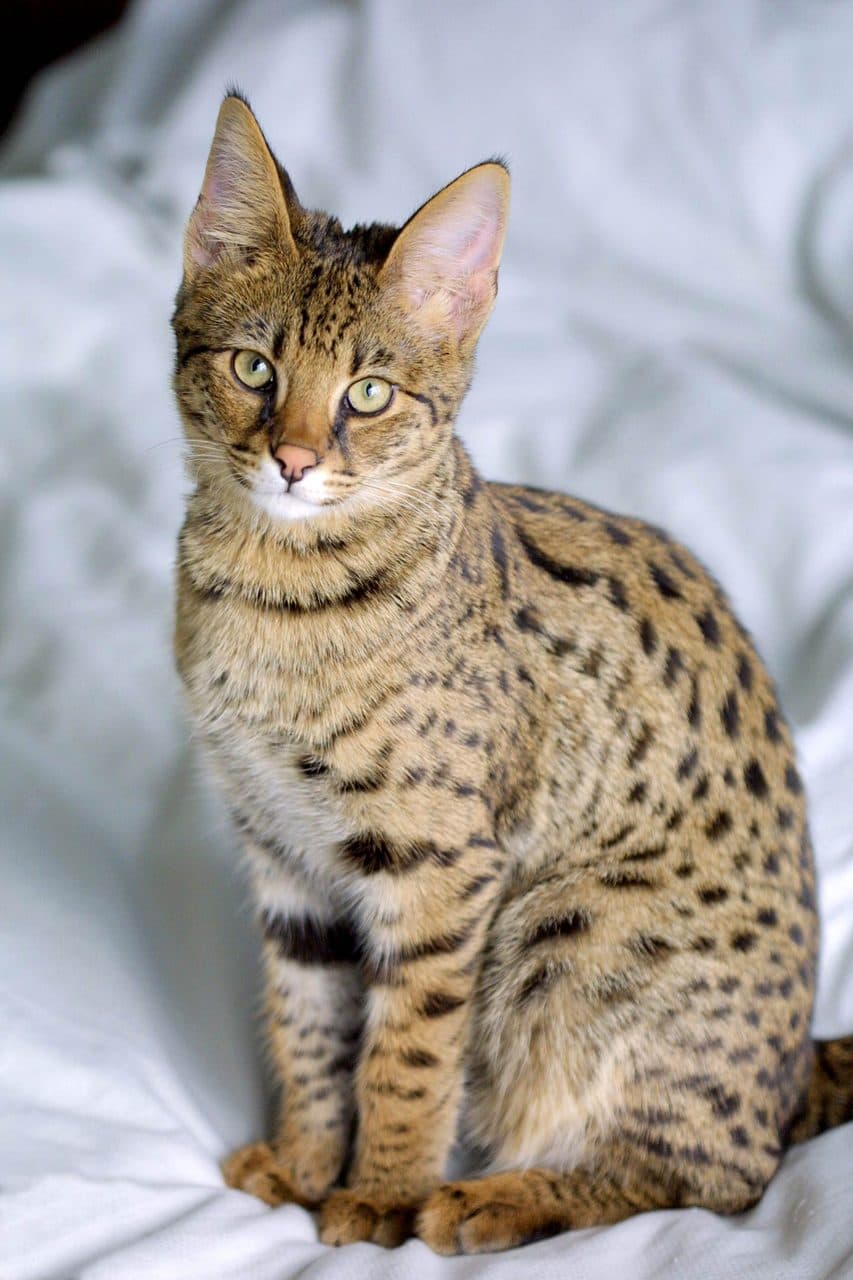
Savannah
Cross between a domestic cat × African serval. Wild appearance. Regulated/banned in some countries. F1-F2 NOT recommended as an ordinary pet.
Foto: Wikipedia Commons · CC BY-SA
Ideal for
- ✓Families with time for petting
- ✓Flats
- ✓Anyone looking for a sociable cat
Reconsider if
- ×Homes where it would be alone for many hours
Notify me when a Savannah is up for adoption
We'll only email you when a verified rescue posts one available. No spam, unsubscribe in 1 click.
We'll only use your email for this alert. More info in our privacy policy.
Is the Savannah a good match for you?
Indicative rating from 1 (low) to 5 (high).
💶 Estimated cost of ownership
70-120 €/month
High-end/specific food 35-55 €, litter 12-18 €, vet and vaccines spread out (including follow-ups) 15-25 €, antiparasitics 5-8 €, enrichment/space and a contingency fund 10-18 €. Does not include legal paperwork (CITES/permits depending on generation).
History and origin
American hybrid breed that emerged in the 1980s from crossing a domestic cat with an African serval; the early generations (F1-F2) are large, athletic and markedly wild in appearance.
Temperament and character
Typical character for its breed. Sociable or reserved depending on the individual. Early neutering (4-6 months) is the best preventive measure.
Living together
Children: good with respectful ones. **Other cats:** sociable if raised together from a young age. **Dogs:** possible if calm.
Life stages of the Savannah
Each stage has its own care priorities. Life expectancy: 12-20 años.
Kitten
0-6 months
Intensive socialisation, vaccination and deworming; a very active hybrid breed that needs space and stimulation.
Junior
6 months-3 years
Prolonged growth, neutering, plenty of exercise (harness walks, play) and enrichment.
Adult
3-10 years
Cardiac check, weight control, intense physical activity and annual check-up.
Senior
11+ years
Six-monthly check-ups, cardiac and renal monitoring, joint and dental health.
Care
Grooming: according to coat (short = weekly · semi-long = 2-3 times · long = daily).
Litter tray: N+1 litter trays (decision 70).
Feeding: quality wet + dry food.
Vet: annual check-up + blood work from age 7.
Care in detail
🍽️ Nutrition
Very high-quality diet, rich in animal protein and with guaranteed taurine; some lines are fed specific or raw diets supervised by a vet. Generous portions in keeping with its size and activity.
✂️ Grooming
Minimal: a short coat that only needs weekly brushing. The real maintenance is behavioural management, space and enrichment, not grooming.
🎓 Training
Very intelligent, athletic and energetic; it learns to walk on a harness, to fetch objects and responds to positive reinforcement. It requires an experienced owner, intensive socialisation and clear rules from kittenhood.
🏃 Exercise
Very high energy. It needs plenty of space, vertical climbing, intense play several times a day and continuous stimulation. It is not a cat suited to small flats or to anyone who cannot devote time and resources to it.
Breed-specific health
Hypertrophic cardiomyopathy (HCM) common in many breeds — genetic test recommended. PKD in Persian and Persian-derived breeds. Life expectancy 12-20 years.
🩺 Health predispositions of this breed
Conditions this breed is more predisposed to. Knowing about them helps with prevention and early detection. A predisposition does not mean the animal will develop them.
Common diseases in cats
Learn the symptoms, prevention and when to see the vet. Reviewed indicative information that does not replace a veterinary consultation.
Screening and prevention for the Savannah
Recommended tests and screenings
- ✓Echocardiography for hypertrophic cardiomyopathy (HCM)
- ✓Genetic test for pyruvate kinase deficiency (PK-Def)
- ✓Genetic test/electroretinography for progressive retinal atrophy (PRA)
- ✓Anaesthetic alert (ketamine sensitivity in lines with serval ancestry)
- ✓Digestive and dietary assessment (taurine requirement)
Prevention
Verify the legality and generation (F1-F2 heavily regulated or banned; CITES). A rich, balanced diet with adequate taurine intake, plenty of environmental enrichment and space. Neutering, vaccination and deworming. Inform the vet before any anaesthesia.
Check-up schedule
Annual check-up with cardiac auscultation; complete blood work from age 7. Genetic (PK-Def, PRA) and cardiac screening in breeding animals. Attention to safe anaesthetic protocols.
Warning signs
- !Lethargy, weakness or exercise intolerance (heart/PK-Def)
- !Pale gums or anaemia (pyruvate kinase deficiency)
- !Diarrhoea or digestive problems (inappropriate diet)
- !Stumbling or vision problems (PRA)
- !Destructive behaviour or anxiety from lack of stimulation/space
Savannah gallery

Frequently asked questions about the Savannah
- How long does a Savannah live? ▾
- The life expectancy of the Savannah is 12-20 años. A good diet, adequate exercise, annual veterinary check-ups and preventive care can help reach the upper end of that range.
- How much does a Savannah weigh? ▾
- An adult Savannah weighs between 5-12 kg, depending on its sex, genetics and condition. It is grande.
- Where does the Savannah breed come from? ▾
- The Savannah originates from Estados Unidos. American hybrid breed that emerged in the 1980s from crossing a domestic cat with an African serval; the early generations (F1-F2) are large, athletic and markedly wild in appearance.
- How much exercise does a Savannah need? ▾
- The Savannah has muy alta energy. **Grooming:** according to coat (short = weekly · semi-long = 2-3 times · long = daily).
- Is the Savannah good with children? ▾
- **Children:** good with respectful ones. **Other cats:** sociable if raised together from a young age. **Dogs:** possible if calm.
- Who is the Savannah NOT recommended for? ▾
- It isn't the right breed for: Homes where it would be alone for many hours. It's important to choose a breed that's compatible with your lifestyle.
- What health problems does the Savannah have? ▾
- Hypertrophic cardiomyopathy (HCM) common in many breeds — genetic test recommended. PKD in Persian and Persian-derived breeds. Life expectancy 12-20 years.
- Is it legal to keep a Savannah in the UK? ▾
- It depends on the generation. The earliest ones (F1-F2), with a higher proportion of serval, are heavily regulated or banned and may require permits (CITES); later generations are more comparable to a domestic cat. Check the regulations before acquiring one.
- Is it suitable for a flat or for beginners? ▾
- No. It is a very large, athletic and demanding cat that needs plenty of space, climbing and stimulation. It requires an experienced owner; the early generations are not recommended as a conventional pet.
- What special care does its anaesthesia require? ▾
- Lines with a greater serval component can be sensitive to ketamine. It is essential to always tell the vet about its hybrid origin so they can adjust the anaesthetic protocol.
- Does it need a special diet? ▾
- Yes, a very high-protein diet rich in taurine; some lines follow specific diets. It is advisable to seek advice from the vet to avoid deficiencies and digestive problems.
- Is it affectionate with the family? ▾
- It can be very loyal and bonded to its family, almost like a dog, but its intense character, energy and needs make it poorly suited to homes with very young children or little available time.
Learn more about cats
Practical veterinary guides to support your Savannah.
Sources and references
Content compiled from official breed standards and leading veterinary sources.
- WikipediaSavannah (cat) ↗
- TICAThe International Cat Association — breed standard ↗
- WikipediaSavannah cat ↗
Want to adopt a savannah?
There are savannahs in rescue shelters looking for a family. Filter by breed in the catalogue.