

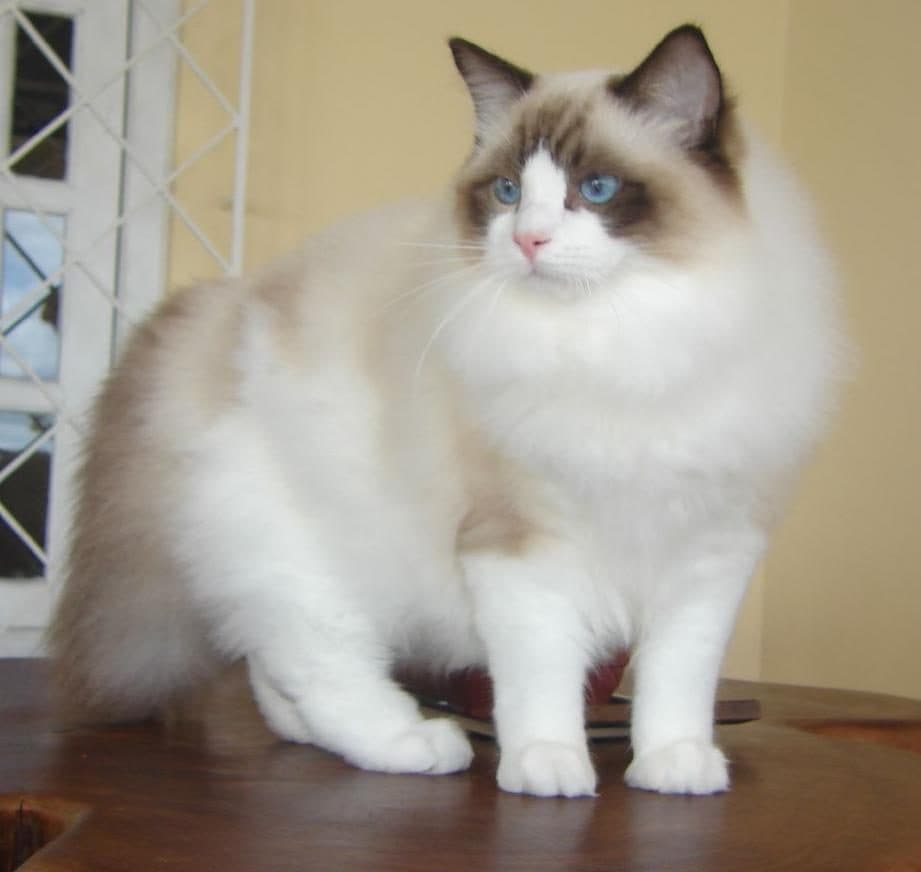
Ragdoll
A giant cat with blue eyes. Named after its "rag doll" quality: it goes completely limp when picked up. An extremely sweet, sociable, almost dog-like character. Silky semi-long coat.
Foto: Wikipedia Commons · CC BY-SA
Ideal for
- ✓Families with children
- ✓Flats
- ✓Those looking for an affectionate, calm cat
Reconsider if
- ×Homes where it would be left alone for many hours
- ×Those unable to brush it regularly
Notify me when a Ragdoll is up for adoption
We'll only email you when a verified rescue posts one available. No spam, unsubscribe in 1 click.
We'll only use your email for this alert. More info in our privacy policy.
Is the Ragdoll a good match for you?
Indicative rating from 1 (low) to 5 (high).
💶 Estimated cost of ownership
35-60 €/month
Food: 16-26 € · Hygiene and litter: 8-16 € · Vet and prevention: 12-22 €
History and origin
Created by Ann Baker in California in the 1960s from a white cat named Josephine. Recognised by TICA in 1979.
Recognised by the major feline federations (FIFé, CFA, TICA). Early neutering (4-6 months) is the best preventive measure against behavioural problems and reproductive conditions.
Temperament and character
Sweet, patient, sociable. Seeks human company. Rarely vocalises (softly when it does). Intelligent. Some lines are more "dog-like" (they follow their human around). Needs daily mental stimulation — scent games, food puzzles and short trick sessions channel its energy better than physical exercise alone. Responds best to positive reinforcement: physical punishment creates fear, anxiety and reactivity — coercive methods are NOT recommended by veterinary behaviourists. Sensitive to its family's mood: it picks up on tension and takes it on.
Living together
Children: excellent. Other cats: sociable. Dogs: gets on very well with calm ones.
Life stages of the Ragdoll
Each stage has its own care priorities. Life expectancy: 12-17 años.
Kitten
0-9 months
Socialisation, vaccination and growth diet (a large, slow-maturing breed that develops until 3-4 years).
Junior
9 months-2 years
Neutering, HCM genetic test, dental and weight control.
Adult
2-10 years
Periodic HCM echocardiography, PKD screening, brushing and weight control.
Senior
11+ years
Cardiac and renal monitoring, urinary control and a geriatric diet.
Care
Exercise: 30-45 min/day split into at least 2 sessions. Calm walks + mental play.
Brushing: 2-3 times/week; intensive during moulting (spring and autumn).
Feeding: quality food appropriate to life stage (kitten/adult/senior) and size. Weight control: obesity is the leading preventable cause of joint problems.
Vet: annual check-up with preventive blood work from age 5 (7 in giant breeds); twice a year from age 8.
Brushing 2-3 times/week. Quality food. Vertical space. Company: it cannot cope with prolonged solitude (a companion is better).
Care in detail
🍽️ Nutrition
Quality food, a combination of wet and dry, with weight control given its large size and water always accessible to look after the urinary tract.
✂️ Grooming
Brushing 2-3 times a week for its silky, semi-long coat, more often during moults. It has less undercoat than the Persian, so it mats less.
🎓 Training
A sweet, sociable, almost 'dog-like' cat that learns to respond to its name and to play fetch. Focus on socialisation, play and environmental enrichment.
🏃 Exercise
Low-to-medium energy: it enjoys gentle play sessions and elevated structures, but it is not a hyperactive cat.
Breed-specific health
Hypertrophic cardiomyopathy (HCM - genetic test). PKD rare. Bladder stones. Life expectancy 12-17 years. Life expectancy 12-17 years with proper care. Pre-breeding testing is recommended by responsible breeders (hip dysplasia + cardiac + ophthalmology screening according to the breed's conditions). When adopting, ask the rescue for a vet report on the current state of health.
🩺 Health predispositions of this breed
Conditions this breed is more predisposed to. Knowing about them helps with prevention and early detection. A predisposition does not mean the animal will develop them.
Common diseases in cats
Learn the symptoms, prevention and when to see the vet. Reviewed indicative information that does not replace a veterinary consultation.
Screening and prevention for the Ragdoll
Recommended tests and screenings
- ✓Genetic test and echocardiography for hypertrophic cardiomyopathy (HCM)
- ✓Blood work/renal ultrasound (PKD, uncommon)
- ✓Urinalysis (bladder stones)
- ✓Weight control
Prevention
Cardiac screening due to the predisposition to HCM, weight control, water always available to prevent urinary stones, and early neutering (4-6 months).
Check-up schedule
Annual check-up with cardiac screening; from age 7, preventive blood work.
Warning signs
- !Rapid or laboured breathing, lethargy or fainting (heart disease)
- !Difficulty or blood when urinating (bladder stones)
- !Increased thirst and urination
- !Apathy or loss of appetite
Ragdoll gallery

Frequently asked questions about the Ragdoll
- How long does a Ragdoll live? ▾
- The life expectancy of the Ragdoll is 12-17 años. A good diet, adequate exercise, annual veterinary check-ups and preventive care can help reach the upper end of that range.
- How much does a Ragdoll weigh? ▾
- An adult Ragdoll weighs between 4-9 kg (machos hasta 10 kg), depending on its sex, genetics and condition. It is grande.
- Where does the Ragdoll breed come from? ▾
- The Ragdoll originates from EE.UU. (California). Created by Ann Baker in California in the 1960s from a white cat named Josephine. Recognised by TICA in 1979.
- How much exercise does a Ragdoll need? ▾
- The Ragdoll has baja energy. **Exercise:** 30-45 min/day split into at least 2 sessions. Calm walks + mental play.
- Is the Ragdoll good with children? ▾
- Children: excellent. Other cats: sociable. Dogs: gets on very well with calm ones.
- Who is the Ragdoll NOT recommended for? ▾
- It isn't the right breed for: Homes where it would be left alone for many hours. Those unable to brush it regularly. It's important to choose a breed that's compatible with your lifestyle.
- What health problems does the Ragdoll have? ▾
- Hypertrophic cardiomyopathy (HCM - genetic test). PKD rare. Bladder stones. Life expectancy 12-17 years. Life expectancy 12-17 years with proper care. Pre-breeding testing is recommended by responsible breeders (hip dysplasia + cardiac + ophthalmology screening according to the breed's conditions). When adopting, ask the rescue for a vet report on the current state of health.
- Why is it called a Ragdoll? ▾
- After the 'rag doll': many individuals relax completely and go limp when picked up, one of the hallmarks of their character.
- Can it be left alone for many hours? ▾
- It doesn't like it. It is very sociable and craves company; it copes better with solitude if it has another animal or lives with a family that is around.
- Is it good with children and dogs? ▾
- Excellent. Its patient, calm nature makes it ideal for families with children and it gets on very well with calm-natured dogs.
- What is its main health problem? ▾
- Hypertrophic cardiomyopathy (HCM), which has a genetic basis in the breed. Cardiac screening is advisable and buying from tested lines is recommended.
- Does it shed a lot? ▾
- It has a semi-long coat that sheds moderately; brushing 2-3 times a week keeps it well under control and it mats less than the Persian's.
Related and similar breeds
Learn more about cats
Practical veterinary guides to support your Ragdoll.
Sources and references
Content compiled from official breed standards and leading veterinary sources.
Want to adopt a ragdoll?
There are ragdolls in rescue shelters looking for a family. Filter by breed in the catalogue.