

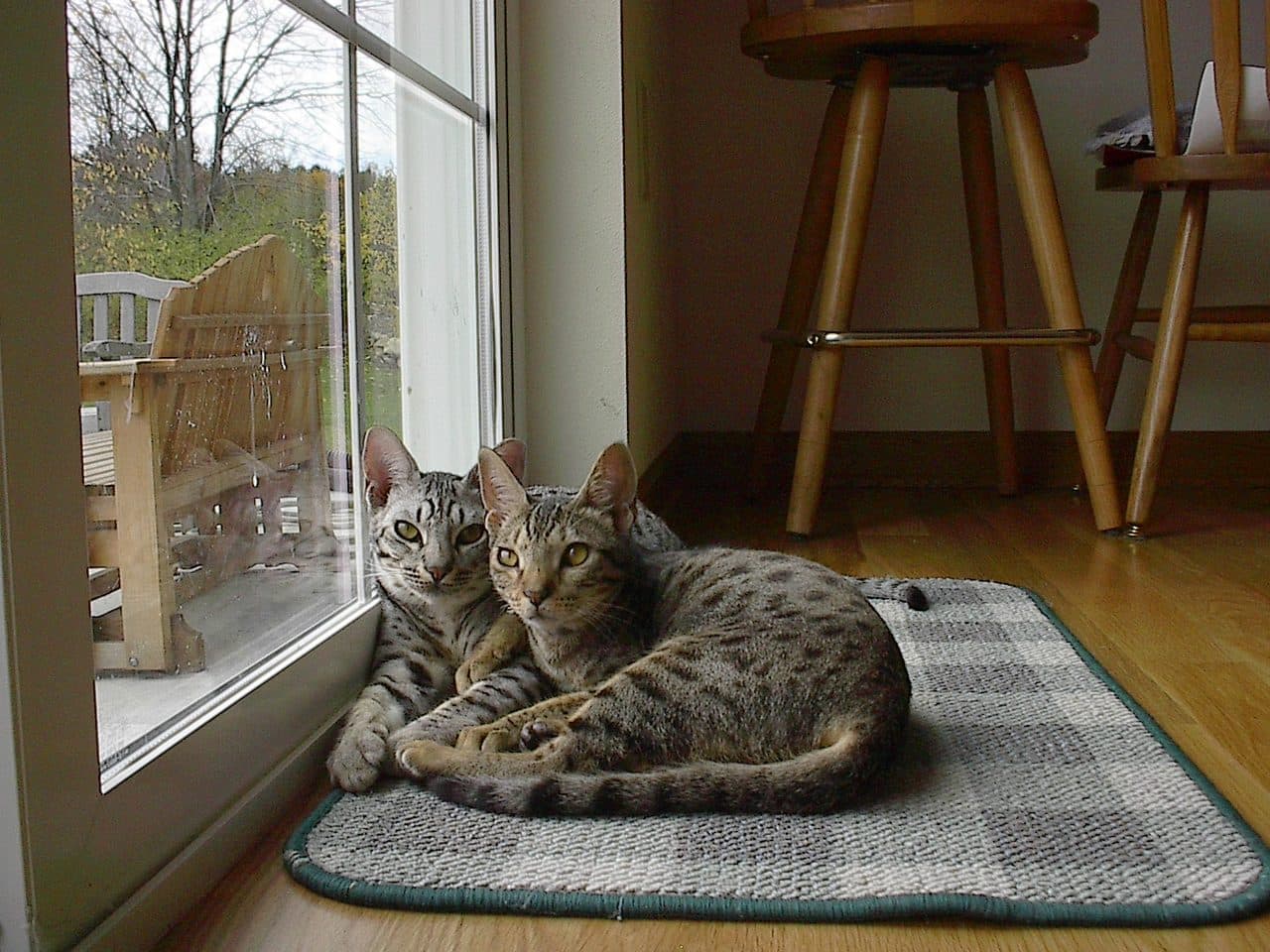
Ocicat
The look of a small ocelot with no wild blood. An Abyssinian × Siamese × American cross. Sociable, active.
Foto: Wikipedia Commons · CC BY-SA
Ideal for
- ✓Families with time for petting
- ✓Flats
- ✓Anyone looking for a sociable cat
Reconsider if
- ×Homes where it would be alone for many hours
Notify me when a Ocicat is up for adoption
We'll only email you when a verified rescue posts one available. No spam, unsubscribe in 1 click.
We'll only use your email for this alert. More info in our privacy policy.
Is the Ocicat a good match for you?
Indicative rating from 1 (low) to 5 (high).
💶 Estimated cost of ownership
45-75 €/month
Premium food 22-32 €, litter 10-15 €, veterinary care and vaccines prorated 12-18 €, parasite treatments 4-6 €, toys/enrichment and a contingency fund 8-12 €.
History and origin
An American breed with a wild, spotted appearance but entirely domestic genetics, created in the 1960s from the cross between the Siamese, the Abyssinian and the American Shorthair.
Temperament and character
Temperament typical of its breed. Sociable or reserved depending on the individual. Early neutering (4-6 months) is the best preventive measure.
Living together
Children: good with respectful children. **Other cats:** sociable if raised together from a young age. **Dogs:** possible if calm.
Life stages of the Ocicat
Each stage has its own care priorities. Life expectancy: 12-18 años.
Kitten
0-6 months
Socialisation, vaccination and deworming; an active, sociable breed that tolerates being alone poorly.
Junior
6 months-2 years
Neutering, adult diet, plenty of exercise and a dental routine.
Adult
3-10 years
Cardiac check, weight control, eye monitoring and annual check-up.
Senior
11+ years
Six-monthly check-ups, cardiac, renal and visual monitoring, joint and dental health.
Care
Grooming: according to coat (short = weekly · semi-long = 2-3 times · long = daily).
Litter tray: N+1 trays (rule 70).
Feeding: quality wet + dry food.
Veterinary care: annual check-up + blood work from age 7.
Care in detail
🍽️ Nutrition
Premium food rich in animal protein to match its high activity level, combined with wet food. Portion control; it is athletic and muscular, but boredom can lead it to overeat.
✂️ Grooming
Minimal: its short, satin coat only needs a weekly brush, which enhances its spotting. Dental hygiene and routine checks of nails and ears.
🎓 Training
Very intelligent and sociable, almost 'dog-like'. It learns tricks, walking on a harness and fetching objects with positive reinforcement. It needs constant mental stimulation to avoid boredom.
🏃 Exercise
Very high energy. It requires several sessions of active play a day, tall towers, interactive toys and company. Without enough activity it develops destructive behaviour and vocalisation.
Breed-specific health
Hypertrophic cardiomyopathy (HCM) common in many breeds — genetic test recommended. PKD in Persian and derived breeds. Life expectancy 12-18 years.
🩺 Health predispositions of this breed
Conditions this breed is more predisposed to. Knowing about them helps with prevention and early detection. A predisposition does not mean the animal will develop them.
Common diseases in cats
Learn the symptoms, prevention and when to see the vet. Reviewed indicative information that does not replace a veterinary consultation.
Screening and prevention for the Ocicat
Recommended tests and screenings
- ✓Echocardiography for hypertrophic cardiomyopathy (HCM)
- ✓Genetic test for pyruvate kinase deficiency (PK-Def)
- ✓Genetic test/electroretinography for progressive retinal atrophy (PRA)
- ✓Screening for renal amyloidosis (Siamese/Abyssinian lineage)
- ✓Regular dental examination
Prevention
Early neutering, vaccination and deworming. Genetic screening for PK-Def and PRA before breeding. Dental hygiene, a quality diet and plenty of environmental enrichment given its very active nature.
Check-up schedule
Annual check-up with cardiac auscultation; renal and hepatic blood work from age 7. Cardiac and genetic screening recommended in breeding animals.
Warning signs
- !Lethargy, weakness or exercise intolerance (heart/PK-Def)
- !Pale gums or anaemia (pyruvate kinase deficiency)
- !Stumbling or difficulty seeing at night (PRA)
- !Increased thirst/urination (kidney)
- !Bad breath or inflamed gums
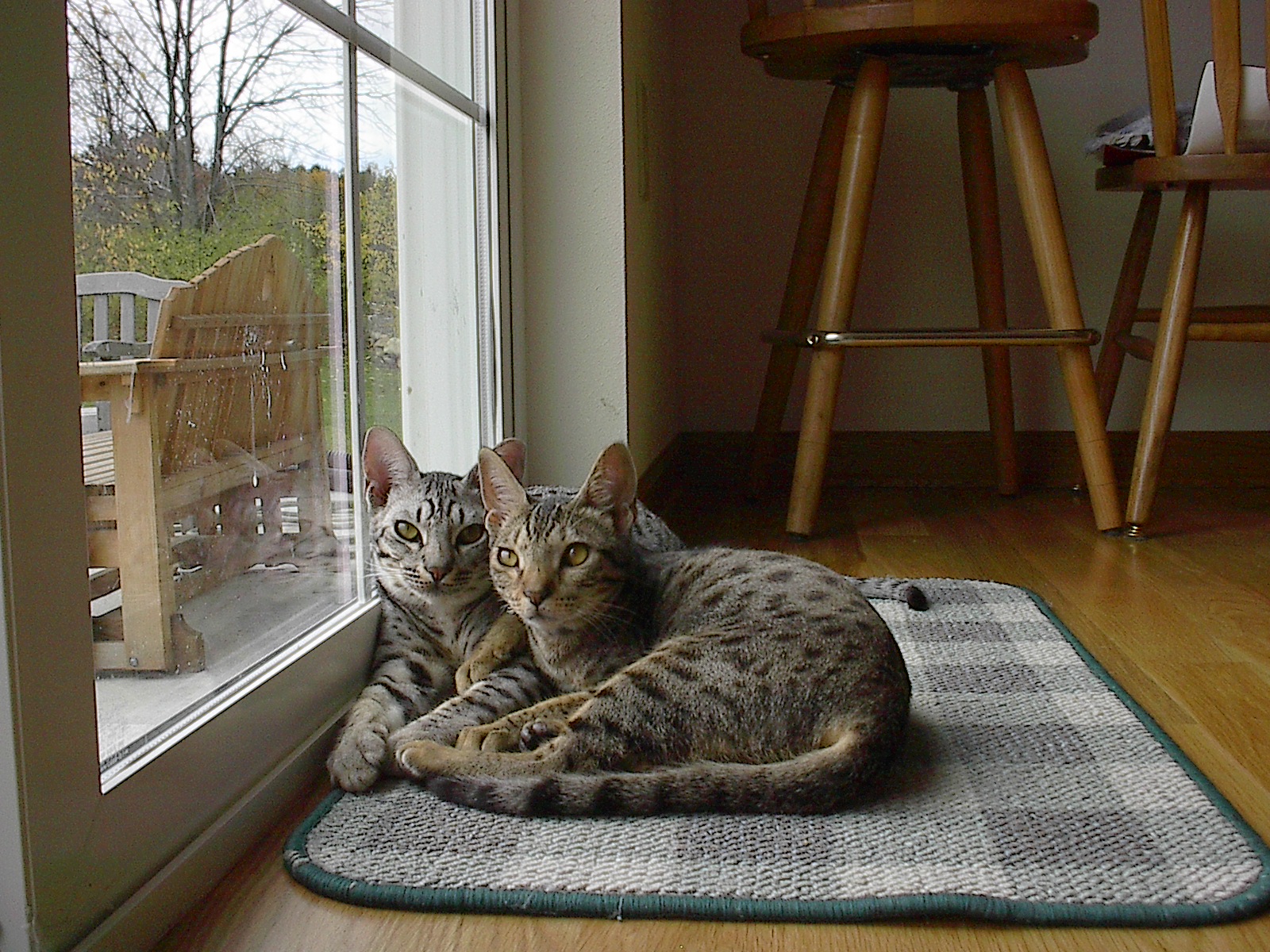
Ocicat gallery
Frequently asked questions about the Ocicat
- How long does a Ocicat live? ▾
- The life expectancy of the Ocicat is 12-18 años. A good diet, adequate exercise, annual veterinary check-ups and preventive care can help reach the upper end of that range.
- How much does a Ocicat weigh? ▾
- An adult Ocicat weighs between 2.5-7 kg, depending on its sex, genetics and condition. It is mediano-grande.
- Where does the Ocicat breed come from? ▾
- The Ocicat originates from Estados Unidos. An American breed with a wild, spotted appearance but entirely domestic genetics, created in the 1960s from the cross between the Siamese, the Abyssinian and the American Shorthair.
- How much exercise does a Ocicat need? ▾
- The Ocicat has alta energy. **Grooming:** according to coat (short = weekly · semi-long = 2-3 times · long = daily).
- Is the Ocicat good with children? ▾
- **Children:** good with respectful children. **Other cats:** sociable if raised together from a young age. **Dogs:** possible if calm.
- Who is the Ocicat NOT recommended for? ▾
- It isn't the right breed for: Homes where it would be alone for many hours. It's important to choose a breed that's compatible with your lifestyle.
- What health problems does the Ocicat have? ▾
- Hypertrophic cardiomyopathy (HCM) common in many breeds — genetic test recommended. PKD in Persian and derived breeds. Life expectancy 12-18 years.
- Does the Ocicat have wild blood? ▾
- No, despite its small-ocelot appearance. It comes from crossing the Abyssinian, the Siamese and the American Shorthair, all domestic, so it has the character of a companion cat with no wild instincts.
- Is it a very active cat? ▾
- Very. It is energetic, athletic and sociable, almost like a dog. It needs plenty of daily play, mental stimulation and company; it gets bored and frustrated if it spends many hours alone and idle.
- Can it learn tricks or walk on a harness? ▾
- Yes. It is one of the most intelligent and trainable breeds: it learns to fetch objects, to walk on a harness and to respond to its name through positive reinforcement.
- What health tests should I ask the breeder for? ▾
- Screening for hypertrophic cardiomyopathy and the genetic tests for pyruvate kinase deficiency (PK-Def) and retinal atrophy (PRA), present in its founding breeds.
- Does it get on well with children and other animals? ▾
- Yes, it is very sociable and playful. It lives happily with respectful children, other cats and dogs, and even appreciates having a companion to channel its energy.
Learn more about cats
Practical veterinary guides to support your Ocicat.
Sources and references
Content compiled from official breed standards and leading veterinary sources.
Want to adopt a ocicat?
There are ocicats in rescue shelters looking for a family. Filter by breed in the catalogue.