

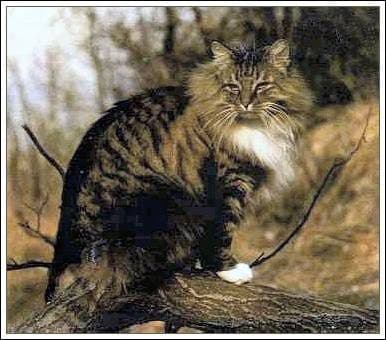
Bosque de Noruega
A historic Viking cat. Double coat adapted to extreme cold. A skilled hunter. An excellent climber. Similar to the Maine Coon.
Foto: Wikipedia Commons · CC BY-SA
Ideal for
- ✓Families with time to give affection
- ✓Flats
- ✓Anyone looking for a sociable cat
Reconsider if
- ×Homes where it would be left alone for many hours
Notify me when a Bosque de Noruega is up for adoption
We'll only email you when a verified rescue posts one available. No spam, unsubscribe in 1 click.
We'll only use your email for this alert. More info in our privacy policy.
Is the Bosque de Noruega a good match for you?
Indicative rating from 1 (low) to 5 (high).
💶 Estimated cost of ownership
55-90 €/month
Quality food for a large cat (35-55 €), litter and healthcare prevention/insurance (20-35 €). Initial investment in a tall, sturdy cat tree; higher spend on grooming/accessories during moults.
History and origin
A natural long-haired Scandinavian breed adapted to Norway's cold climate, present in Viking mythology and officially recognised by the FIFe in the 1970s.
Temperament and character
Character typical of its breed. Sociable or reserved depending on the individual. Early neutering (4-6 months) is the best preventive measure.
Living together
Children: good with respectful ones. **Other cats:** sociable if raised together from a young age. **Dogs:** possible if calm.
Life stages of the Bosque de Noruega
Each stage has its own care priorities. Life expectancy: 14-16 años.
Kitten
0-6 months
Vaccination, deworming and a growth diet; a slow-maturing breed that requires sustained nutritional support.
Junior
6 months-3 years
Prolonged growth up to 4-5 years; neutering, weight control and brushing of the dense double coat.
Adult
3-10 years
Cardiac check (auscultation/echo), weight control, frequent brushing and annual check-up.
Senior
11+ years
Six-monthly check-ups, cardiac and renal monitoring, joint health and coat management.
Care
Brushing: according to coat (short = weekly · semi-long = 2-3 times · long = daily).
Litter tray: N+1 trays (decision 70).
Feeding: quality wet + dry.
Vet: annual check-up + blood work from 7 years of age.
Care in detail
🍽️ Nutrition
Quality food for a large cat, portioned to prevent excess weight despite its good appetite. Combining wet and dry food supports hydration. A feeding bowl suited to its size and slow growth (matures at around 4-5 years).
✂️ Grooming
Double, water-resistant coat: brushing 2-3 times a week, daily during the spring and autumn moults, which are heavy. Unlike finer-coated breeds it is less prone to matting, but a comb is needed for the dense undercoat.
🎓 Training
A sociable, calm and well-balanced cat, easy to integrate with children, dogs and other cats. A great climber: it appreciates tall, sturdy vertical structures. Spacious N+1 litter trays, interactive play and early socialisation. Early neutering (4-6 months).
🏃 Exercise
Medium energy with a strong climbing and hunting instinct: it needs tall cat trees, high shelves and daily play. It is athletic and enjoys spaces where it can climb and observe from above.
Breed-specific health
Hypertrophic cardiomyopathy (HCM) common in many breeds — genetic test recommended. PKD in Persian and derived breeds. Life expectancy 14-16 years.
🩺 Health predispositions of this breed
Conditions this breed is more predisposed to. Knowing about them helps with prevention and early detection. A predisposition does not mean the animal will develop them.
Common diseases in cats
Learn the symptoms, prevention and when to see the vet. Reviewed indicative information that does not replace a veterinary consultation.
Screening and prevention for the Bosque de Noruega
Recommended tests and screenings
- ✓Genetic/echocardiographic test for Hypertrophic Cardiomyopathy (HCM)
- ✓Genetic test for Glycogen Storage Disease type IV (GSD IV, GBE1 deficiency)
- ✓Hip dysplasia radiography
- ✓Genetic test for Pyruvate Kinase Deficiency (PK-Def)
- ✓Renal monitoring in seniors
Prevention
Obtain from a breeder who tests the parents for GSD IV and HCM (glycogenosis is severe and specific to the breed). Regular brushing of the double coat, intensive during seasonal moults. Keep a healthy weight for a large breed and protect the joints. Early neutering.
Check-up schedule
Annual veterinary check-up with cardiac screening (HCM) as scheduled; preventive blood work from 7 years of age. In kittens from untested lines, assess their condition for possible GSD IV.
Warning signs
- !Laboured breathing, lethargy or exercise intolerance (HCM)
- !Severe muscle weakness, tremors or collapse in kittens (GSD IV)
- !Lameness or difficulty jumping (hip dysplasia)
- !Pale gums, weakness or lethargy (anaemia from PK-Def)
- !Mats in the coat, especially in friction areas
Frequently asked questions about the Bosque de Noruega
- How long does a Bosque de Noruega live? ▾
- The life expectancy of the Bosque de Noruega is 14-16 años. A good diet, adequate exercise, annual veterinary check-ups and preventive care can help reach the upper end of that range.
- How much does a Bosque de Noruega weigh? ▾
- An adult Bosque de Noruega weighs between 4-9 kg, depending on its sex, genetics and condition. It is grande.
- Where does the Bosque de Noruega breed come from? ▾
- The Bosque de Noruega originates from Noruega. A natural long-haired Scandinavian breed adapted to Norway's cold climate, present in Viking mythology and officially recognised by the FIFe in the 1970s.
- How much exercise does a Bosque de Noruega need? ▾
- The Bosque de Noruega has media energy. **Brushing:** according to coat (short = weekly · semi-long = 2-3 times · long = daily).
- Is the Bosque de Noruega good with children? ▾
- **Children:** good with respectful ones. **Other cats:** sociable if raised together from a young age. **Dogs:** possible if calm.
- Who is the Bosque de Noruega NOT recommended for? ▾
- It isn't the right breed for: Homes where it would be left alone for many hours. It's important to choose a breed that's compatible with your lifestyle.
- What health problems does the Bosque de Noruega have? ▾
- Hypertrophic cardiomyopathy (HCM) common in many breeds — genetic test recommended. PKD in Persian and derived breeds. Life expectancy 14-16 years.
- How does it differ from the Maine Coon? ▾
- They are alike in size and coat, but the Norwegian Forest Cat has a double water-resistant coat, a more triangular and straight facial profile, and a somewhat more independent character. Its origin is Nordic, adapted to extreme Scandinavian cold.
- How much coat care does it need? ▾
- Brushing 2-3 times a week and daily during the intense spring and autumn moults. Its coat tangles less than that of other long-haired breeds, but the dense undercoat needs a comb.
- Does it cope well with heat? ▾
- So-so. It is built for harsh winters, so its dense coat makes summer harder for it: provide shade, fresh water, a well-ventilated environment and extra brushing to remove dead hair.
- Is it a sociable cat and good with children? ▾
- Yes. It is balanced, calm and tolerant, which makes it excellent with children and compatible with dogs and other cats. It enjoys company without being overly demanding.
- What genetic diseases should I be aware of? ▾
- The main ones are hypertrophic cardiomyopathy (HCM), glycogen storage disease type IV (GSD IV, severe and specific to the breed) and hip dysplasia. Choosing breeders who test the parents is the best guarantee.
Learn more about cats
Practical veterinary guides to support your Bosque de Noruega.
Sources and references
Content compiled from official breed standards and leading veterinary sources.
Want to adopt a bosque de noruega?
There are bosque de noruegas in rescue shelters looking for a family. Filter by breed in the catalogue.