

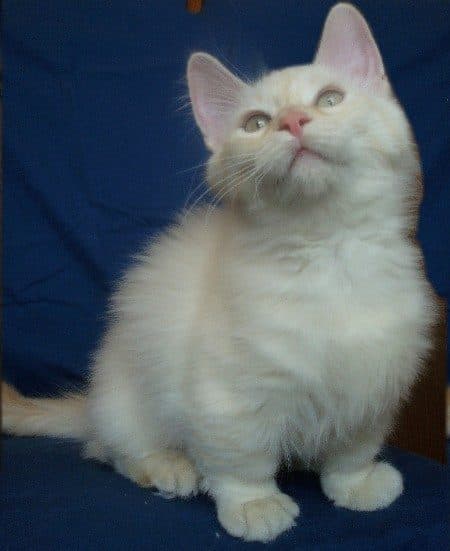
Munchkin
Short legs caused by a genetic mutation. Ethically controversial — some clubs do not accept it. Cheerful character.
Foto: Wikipedia Commons · CC BY-SA
Ideal for
- ✓Families with time for cuddling
- ✓Flats
- ✓Those looking for a sociable cat
Reconsider if
- ×Households where it is left alone for many hours
Notify me when a Munchkin is up for adoption
We'll only email you when a verified rescue posts one available. No spam, unsubscribe in 1 click.
We'll only use your email for this alert. More info in our privacy policy.
Is the Munchkin a good match for you?
Indicative rating from 1 (low) to 5 (high).
💶 Estimated cost of ownership
45-75 €/month
Food 20-30 €, litter 10-15 €, vet and vaccinations pro-rated 12-20 €, antiparasitics 4-6 €, contingency fund (orthopaedics/spine) 8-12 €.
History and origin
An American breed characterised by its short legs, the result of a chondrodysplastic dwarfism mutation. Its recognition is controversial; although it retains good mobility, possible spinal alterations (lordosis) and chest issues (pectus excavatum) are monitored.
Temperament and character
Character typical of its breed. Sociable or reserved depending on the individual. Early neutering (4-6 months) is the best preventive measure.
Living together
Children: good with respectful ones. **Other cats:** sociable if raised together from a young age. **Dogs:** possible if calm.
Life stages of the Munchkin
Each stage has its own care priorities. Life expectancy: 12-14 años.
Kitten
0-6 months
Vaccination, deworming, growth diet and chest and spinal examination.
Junior
6 months-2 years
Neutering, dental health and postural/skeletal monitoring.
Adult
2-10 years
Weight control to reduce joint load, dental health and annual check-ups.
Senior
11+ years
Joint management, renal/cardiac screening and geriatric diet.
Care
Brushing: according to coat (short = weekly · semi-long = 2-3 times · long = daily).
Litter tray: N+1 litter trays (rule 70).
Feeding: quality wet + dry food.
Vet: annual check-up + blood work from 7 years of age.
Care in detail
🍽️ Nutrition
Quality food with rigorous calorie control: being overweight is especially harmful to its spine and short joints. Wet food for hydration and measured portions.
✂️ Grooming
Depending on the variety (short or semi-long hair), brushing 1 to 3 times a week. Dental hygiene and nail checks. Because of its short legs it may have more difficulty grooming its hindquarters.
🎓 Training
Cheerful, sociable and playful. Learns the litter tray and simple tricks well with positive reinforcement. Get it used to ramps and low surfaces so it can reach places without jumping excessively.
🏃 Exercise
Active and curious despite its short legs; it runs and plays normally. Provide daily floor-level play and low structures with ramps, avoiding large jumps that strain the joints.
Breed-specific health
Hypertrophic cardiomyopathy (HCM) is common in many breeds — genetic testing recommended. PKD in Persian and derived breeds. Life expectancy 12-14 years.
Common diseases in cats
Learn the symptoms, prevention and when to see the vet. Reviewed indicative information that does not replace a veterinary consultation.
Screening and prevention for the Munchkin
Recommended tests and screenings
- ✓Spinal radiograph (lordosis and kyphosis associated with chondrodysplasia)
- ✓Chest evaluation (pectus excavatum)
- ✓Echocardiography for hypertrophic cardiomyopathy (HCM)
- ✓Orthopaedic assessment of the limbs and joints
- ✓Dental check
Prevention
Very strict weight control to avoid overloading the spine and joints, neutering, vaccination and deworming. Avoid jumps from great heights and provide ramps. Breeding only Munchkin x normal-legged cat (the gene is lethal in homozygosis).
Check-up schedule
Annual check-up with orthopaedic examination; monitoring of the spine and chest from kittenhood. Cardiac auscultation and blood work from 7 years of age.
Warning signs
- !Difficulty or reluctance to move, lameness or stiffness
- !Visible curvature of the back (lordosis) or chest deformity
- !Fatigue or laboured breathing (pectus/heart)
- !Overweight, which aggravates the joints
- !Lethargy or loss of appetite
Munchkin gallery

Frequently asked questions about the Munchkin
- How long does a Munchkin live? ▾
- The life expectancy of the Munchkin is 12-14 años. A good diet, adequate exercise, annual veterinary check-ups and preventive care can help reach the upper end of that range.
- How much does a Munchkin weigh? ▾
- An adult Munchkin weighs between 2-4 kg, depending on its sex, genetics and condition. It is pequeño.
- Where does the Munchkin breed come from? ▾
- The Munchkin originates from Estados Unidos. An American breed characterised by its short legs, the result of a chondrodysplastic dwarfism mutation. Its recognition is controversial; although it retains good mobility, possible spinal alterations (lordosis) and chest issues (pectus excavatum) are monitored.
- How much exercise does a Munchkin need? ▾
- The Munchkin has media energy. **Brushing:** according to coat (short = weekly · semi-long = 2-3 times · long = daily).
- Is the Munchkin good with children? ▾
- **Children:** good with respectful ones. **Other cats:** sociable if raised together from a young age. **Dogs:** possible if calm.
- Who is the Munchkin NOT recommended for? ▾
- It isn't the right breed for: Households where it is left alone for many hours. It's important to choose a breed that's compatible with your lifestyle.
- What health problems does the Munchkin have? ▾
- Hypertrophic cardiomyopathy (HCM) is common in many breeds — genetic testing recommended. PKD in Persian and derived breeds. Life expectancy 12-14 years.
- Does the Munchkin have problems because of its short legs? ▾
- Its short legs are due to chondrodysplasia. This can predispose it to spinal problems (lordosis) or chest issues (pectus excavatum), so weight control, ramps and orthopaedic check-ups are advisable, although many live healthy lives.
- Is it a controversial breed? ▾
- Yes. Some feline federations do not recognise it on ethical grounds, as it is selected for a mutation that can affect the skeleton. A responsible breeder who monitors health and does not cross two Munchkins together is important.
- Can it jump and move normally? ▾
- It runs, plays and climbs well, although it jumps less high than a normal cat. It is advisable to provide ramps and low platforms so it does not strain its joints with large jumps.
- Is it a good companion cat? ▾
- Yes, it is cheerful, affectionate, sociable and adapts very well to flats. It gets on well with respectful children, other cats and calm dogs.
- Why is controlling its weight so important? ▾
- Excess weight overloads its spine and short joints, increasing the risk of pain and mobility problems. A measured diet is key to its wellbeing.
Learn more about cats
Practical veterinary guides to support your Munchkin.
Sources and references
Content compiled from official breed standards and leading veterinary sources.
Want to adopt a munchkin?
There are munchkins in rescue shelters looking for a family. Filter by breed in the catalogue.