

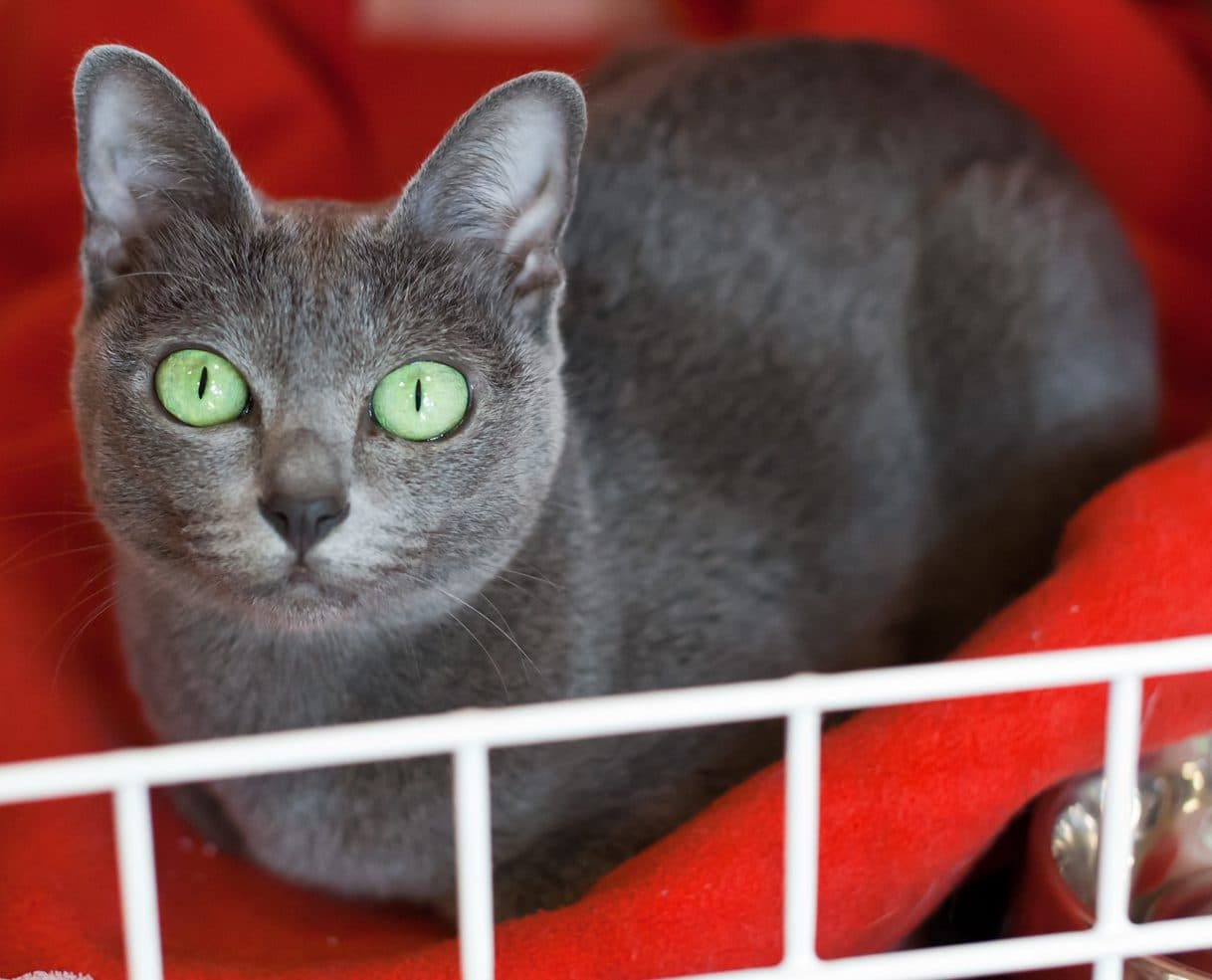
Korat
One of the oldest breeds. Unique silver-blue coat. Emerald-green eyes. Reserved, loyal temperament.
Foto: Wikipedia Commons · CC BY-SA
Ideal for
- ✓Families with time for cuddles
- ✓Flats
- ✓Anyone looking for a sociable cat
Reconsider if
- ×Households where it is left alone for many hours
Notify me when a Korat is up for adoption
We'll only email you when a verified rescue posts one available. No spam, unsubscribe in 1 click.
We'll only use your email for this alert. More info in our privacy policy.
Is the Korat a good match for you?
Indicative rating from 1 (low) to 5 (high).
💶 Estimated cost of ownership
45-70 €/month
Food 20-30 €, litter 10-15 €, vet and vaccinations pro-rated 12-18 €, antiparasitics 4-6 €, contingency fund 6-10 €.
History and origin
A natural Thai breed with a silver-blue coat, regarded as a symbol of good luck in its homeland. Its only significant hereditary disorder is GM1/GM2 gangliosidosis (a neurological disease), now controlled through genetic testing in breeding programmes.
Temperament and character
Temperament typical of the breed. Sociable or reserved depending on the individual. Early neutering (4-6 months) is the best preventive measure.
Living together
Children: good with respectful ones. **Other cats:** sociable if raised together from a young age. **Dogs:** possible if the dog is calm.
Life stages of the Korat
Each stage has its own care priorities. Life expectancy: 10-15 años.
Kitten
0-6 months
Socialisation, vaccination, deworming and, in breeding animals, GM1/GM2 gangliosidosis genetic testing.
Junior
6 months-2 years
Neutering, dental health and enrichment for its active, attached nature.
Adult
2-10 years
Weight control, dental health and annual check-ups.
Senior
11+ years
Renal and cardiac screening, weight control and a geriatric diet.
Care
Brushing: according to coat type (short = weekly · semi-long = 2-3 times · long = daily).
Litter tray: N+1 litter trays (the 70 rule).
Feeding: quality wet + dry food.
Vet: annual check-up + blood work from 7 years of age.
Care in detail
🍽️ Nutrition
Quality food with good protein content, combined with wet food for hydration. This is a medium-sized breed with no marked tendency to gain weight, but portions should still be measured to preserve its muscular silhouette.
✂️ Grooming
Short, fine coat with little undercoat: weekly brushing keeps its characteristic silver-blue sheen. Dental hygiene and routine checks of ears and claws.
🎓 Training
An intelligent, sensitive cat, deeply bonded to one person. It readily learns routines through positive reinforcement; it prefers calm surroundings and stable routines, as it dislikes noise and sudden changes.
🏃 Exercise
Medium energy. Enjoys interactive play and companionship. Not hyperactive, but it needs daily stimulation and a predictable environment to feel secure.
Breed-specific health
Hypertrophic cardiomyopathy (HCM) is common in many breeds — genetic testing recommended. PKD in Persian and derived breeds. Life expectancy 10-15 years.
Common diseases in cats
Learn the symptoms, prevention and when to see the vet. Reviewed indicative information that does not replace a veterinary consultation.
Screening and prevention for the Korat
Recommended tests and screenings
- ✓Genetic test for GM1 and GM2 gangliosidosis (breed-specific)
- ✓Echocardiography for hypertrophic cardiomyopathy (HCM)
- ✓General blood work prior to breeding
- ✓Dental and gum examination
- ✓Neuromuscular assessment in kittens
Prevention
GM1/GM2 genetic screening is mandatory before breeding (only clear animals, or carriers crossed with clear animals, should be bred). Early neutering, vaccination, deworming and a quality diet.
Check-up schedule
Annual check-up; neurological monitoring in kittens from untested lines. Blood work and cardiac auscultation from 7 years of age.
Warning signs
- !Tremors, incoordination or progressive weakness in kittens (gangliosidosis)
- !Stunted growth or mobility problems
- !Lethargy or rapid breathing (cardiac signs)
- !Bad breath or inflamed gums
- !Loss of appetite or behavioural changes
Frequently asked questions about the Korat
- How long does a Korat live? ▾
- The life expectancy of the Korat is 10-15 años. A good diet, adequate exercise, annual veterinary check-ups and preventive care can help reach the upper end of that range.
- How much does a Korat weigh? ▾
- An adult Korat weighs between 3-5 kg, depending on its sex, genetics and condition. It is mediano.
- Where does the Korat breed come from? ▾
- The Korat originates from Tailandia. A natural Thai breed with a silver-blue coat, regarded as a symbol of good luck in its homeland. Its only significant hereditary disorder is GM1/GM2 gangliosidosis (a neurological disease), now controlled through genetic testing in breeding programmes.
- How much exercise does a Korat need? ▾
- The Korat has media energy. **Brushing:** according to coat type (short = weekly · semi-long = 2-3 times · long = daily).
- Is the Korat good with children? ▾
- **Children:** good with respectful ones. **Other cats:** sociable if raised together from a young age. **Dogs:** possible if the dog is calm.
- Who is the Korat NOT recommended for? ▾
- It isn't the right breed for: Households where it is left alone for many hours. It's important to choose a breed that's compatible with your lifestyle.
- What health problems does the Korat have? ▾
- Hypertrophic cardiomyopathy (HCM) is common in many breeds — genetic testing recommended. PKD in Persian and derived breeds. Life expectancy 10-15 years.
- What is gangliosidosis and why is it important in the Korat? ▾
- It is a fatal hereditary neurological disease (GM1/GM2) specific to the breed. A genetic test exists, so you should only buy kittens from breeders who can demonstrate that the parents are clear or are not at-risk carriers.
- Is the Korat a quiet, calm cat? ▾
- It is more reserved and less vocal than its Siamese relatives. It is gentle but sensitive to noise and change; it appreciates a stable home and predictable routines.
- Does it become very attached to a single person? ▾
- Yes, it tends to form an intense bond with its main carer and follows them around the house. It is loyal and affectionate, though somewhat wary of strangers.
- Does it get on well with children and other animals? ▾
- Best with older, respectful children and in calm homes. It lives well with other cats and dogs if introductions are gradual, but it prefers a stress-free environment.
- Does it need a lot of coat maintenance? ▾
- No. Its short, fine coat only needs weekly brushing and sheds little, making it very easy to maintain.
Learn more about cats
Practical veterinary guides to support your Korat.
Sources and references
Content compiled from official breed standards and leading veterinary sources.
Want to adopt a korat?
There are korats in rescue shelters looking for a family. Filter by breed in the catalogue.