

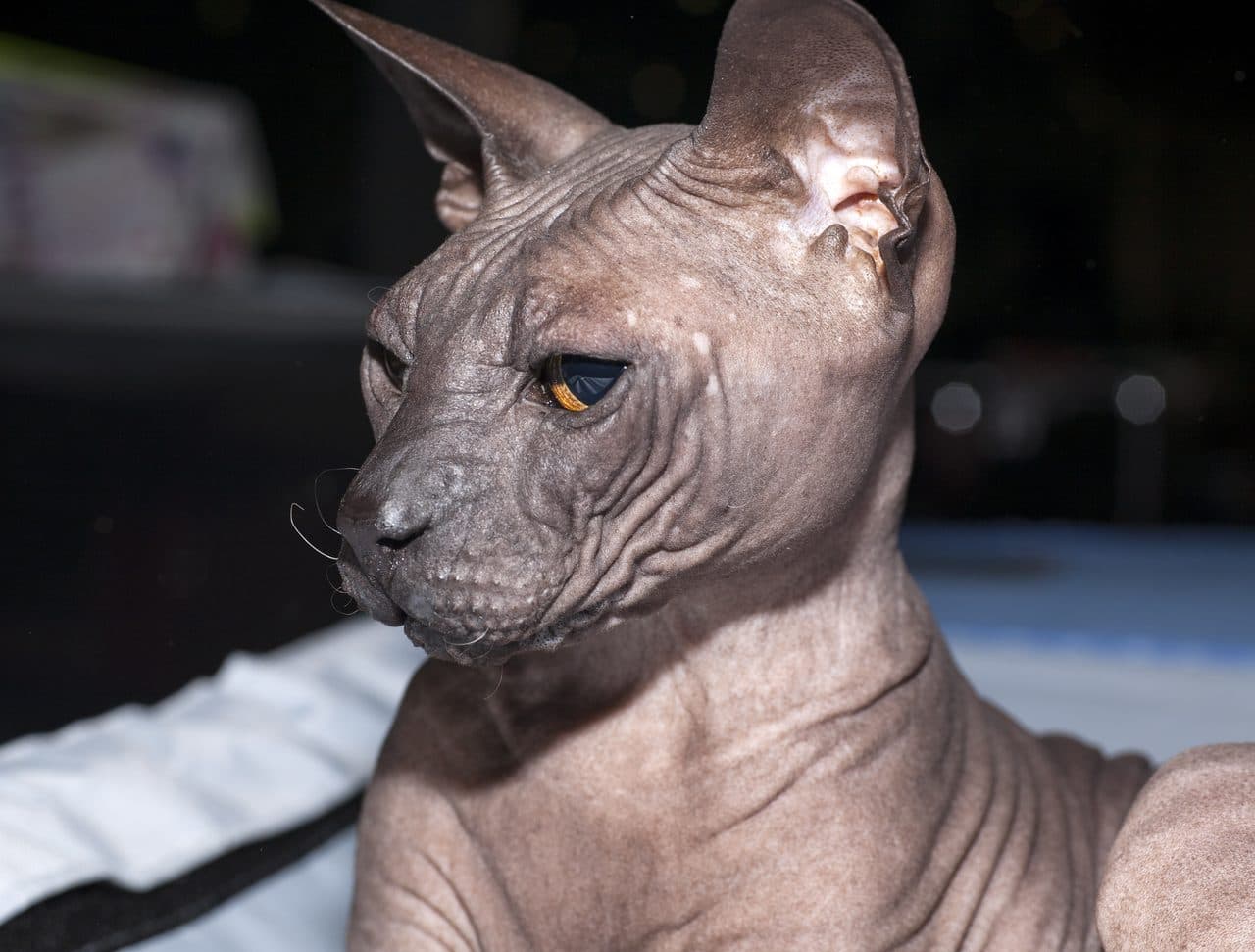
Don Sphynx
Hairless. A different mutation from the Sphynx (dominant rather than recessive). Affectionate nature.
Foto: Wikipedia Commons · CC BY-SA
Ideal for
- ✓Families with time for cuddles
- ✓Flats
- ✓Those looking for a sociable cat
Reconsider if
- ×Homes where it is left alone for many hours
Notify me when a Don Sphynx is up for adoption
We'll only email you when a verified rescue posts one available. No spam, unsubscribe in 1 click.
We'll only use your email for this alert. More info in our privacy policy.
Is the Don Sphynx a good match for you?
Indicative rating from 1 (low) to 5 (high).
💶 Estimated cost of ownership
50-85 €/month
Quality calorie-dense food (28-42 €), litter (8-12 €), prorated preventive vet care (12-20 €), skin hygiene -wipes, baths- and clothing/coats (8-15 €). Separately: annual check-up with skin and heart monitoring (40-70 €).
History and origin
A Russian breed from the Rostov-on-Don region, discovered in 1987; unlike the Sphynx, its hairlessness is caused by a dominant gene and some individuals are born with hair that they lose with age.
Temperament and character
Character typical of its breed. Sociable or reserved depending on the individual. Early neutering (4-6 months) is the best preventive measure.
Living together
Children: good with respectful ones. **Other cats:** sociable if living together from a young age. **Dogs:** possible if calm.
Life stages of the Don Sphynx
Each stage has its own care priorities. Life expectancy: 12-15 años.
Kitten
0-6 months
Socialisation, vaccination and deworming; thermal and sun protection of the bare skin.
Junior
6 months-2 years
Neutering, adult diet, cleaning of the oily skin and dental monitoring.
Adult
3-10 years
Skin care (acne, solar dermatitis), gingival health, warmth in the cold and annual check-up.
Senior
11+ years
Six-monthly check-ups, cardiac and renal monitoring, skin, dental and thermoregulation care.
Care
Brushing: according to coat (short = weekly · semi-long = 2-3 times · long = daily).
Litter tray: N+1 trays (decision 70).
Feeding: wet + quality dry food.
Vet: annual check-up + blood work from 7 years of age.
Care in detail
🍽️ Nutrition
Fast metabolism to maintain its temperature: it eats a fair amount for its size. Quality calorie-dense food in several meals, without letting it lose weight.
✂️ Grooming
Although it has no hair, it is not low-maintenance: the skin accumulates oil and needs regular baths or wipes, ear cleaning and sun protection. Keep it warm with clothing or blankets.
🎓 Training
Very affectionate, sociable and demanding of contact; it learns routines and games easily and seeks out laps for warmth and affection.
🏃 Exercise
Active and playful: it needs daily play, company and a warm environment. It hates being left alone and getting cold.
Breed-specific health
Hypertrophic cardiomyopathy (HCM) common in many breeds — genetic test recommended. PKD in Persian and derived breeds. Life expectancy 12-15 years.
🩺 Health predispositions of this breed
Conditions this breed is more predisposed to. Knowing about them helps with prevention and early detection. A predisposition does not mean the animal will develop them.
Common diseases in cats
Learn the symptoms, prevention and when to see the vet. Reviewed indicative information that does not replace a veterinary consultation.
Screening and prevention for the Don Sphynx
Recommended tests and screenings
- ✓Screening echocardiography for hypertrophic cardiomyopathy (HCM)
- ✓Dermatological check (seborrhoea, dermatitis, sunburn)
- ✓Dental assessment (gingivitis, agenesis/early tooth loss)
- ✓Monitoring of body temperature and thermal needs
Prevention
Early neutering, regular baths or cleaning to remove excess skin oil, protection from cold and sun, and dental hygiene. This is a breed that demands more skin care than an ordinary cat.
Check-up schedule
Annual check-up with dermatological, dental and cardiac assessment; preventive blood work from 7 years of age.
Warning signs
- !Greasy skin, spots, redness or scabs
- !Inflamed gums or tooth loss
- !Shivering, constantly seeking warmth (cold intolerance)
- !Laboured breathing or lethargy (heart disease)
Don Sphynx gallery

Frequently asked questions about the Don Sphynx
- How long does a Don Sphynx live? ▾
- The life expectancy of the Don Sphynx is 12-15 años. A good diet, adequate exercise, annual veterinary check-ups and preventive care can help reach the upper end of that range.
- How much does a Don Sphynx weigh? ▾
- An adult Don Sphynx weighs between 3-5 kg, depending on its sex, genetics and condition. It is mediano.
- Where does the Don Sphynx breed come from? ▾
- The Don Sphynx originates from Rusia (Rostov del Don). A Russian breed from the Rostov-on-Don region, discovered in 1987; unlike the Sphynx, its hairlessness is caused by a dominant gene and some individuals are born with hair that they lose with age.
- How much exercise does a Don Sphynx need? ▾
- The Don Sphynx has alta energy. **Brushing:** according to coat (short = weekly · semi-long = 2-3 times · long = daily).
- Is the Don Sphynx good with children? ▾
- **Children:** good with respectful ones. **Other cats:** sociable if living together from a young age. **Dogs:** possible if calm.
- Who is the Don Sphynx NOT recommended for? ▾
- It isn't the right breed for: Homes where it is left alone for many hours. It's important to choose a breed that's compatible with your lifestyle.
- What health problems does the Don Sphynx have? ▾
- Hypertrophic cardiomyopathy (HCM) common in many breeds — genetic test recommended. PKD in Persian and derived breeds. Life expectancy 12-15 years.
- Is it the same as the classic Sphynx? ▾
- No. The Don Sphynx comes from a different mutation (dominant, arising in Russia) and should not be crossed with the Canadian Sphynx, even though both are hairless.
- Since it has no hair, is it no trouble? ▾
- On the contrary. The oil that the coat normally absorbs stays on the skin: it needs regular baths or cleaning, ear care and thermal protection.
- Does it get cold? ▾
- Very much so. Without hair it loses heat quickly; it constantly seeks warm spots and appreciates clothing, blankets and a warm home.
- Is it hypoallergenic? ▾
- No. Although it doesn't shed hair, it still produces the Fel d1 allergen in its saliva and skin, so it can still trigger allergies.
- Does it need sun protection? ▾
- Yes. Its bare skin burns in the sun; avoid prolonged direct exposure by windows or outdoors.
Learn more about cats
Practical veterinary guides to support your Don Sphynx.
Sources and references
Content compiled from official breed standards and leading veterinary sources.
Want to adopt a don sphynx?
There are don sphynxs in rescue shelters looking for a family. Filter by breed in the catalogue.