

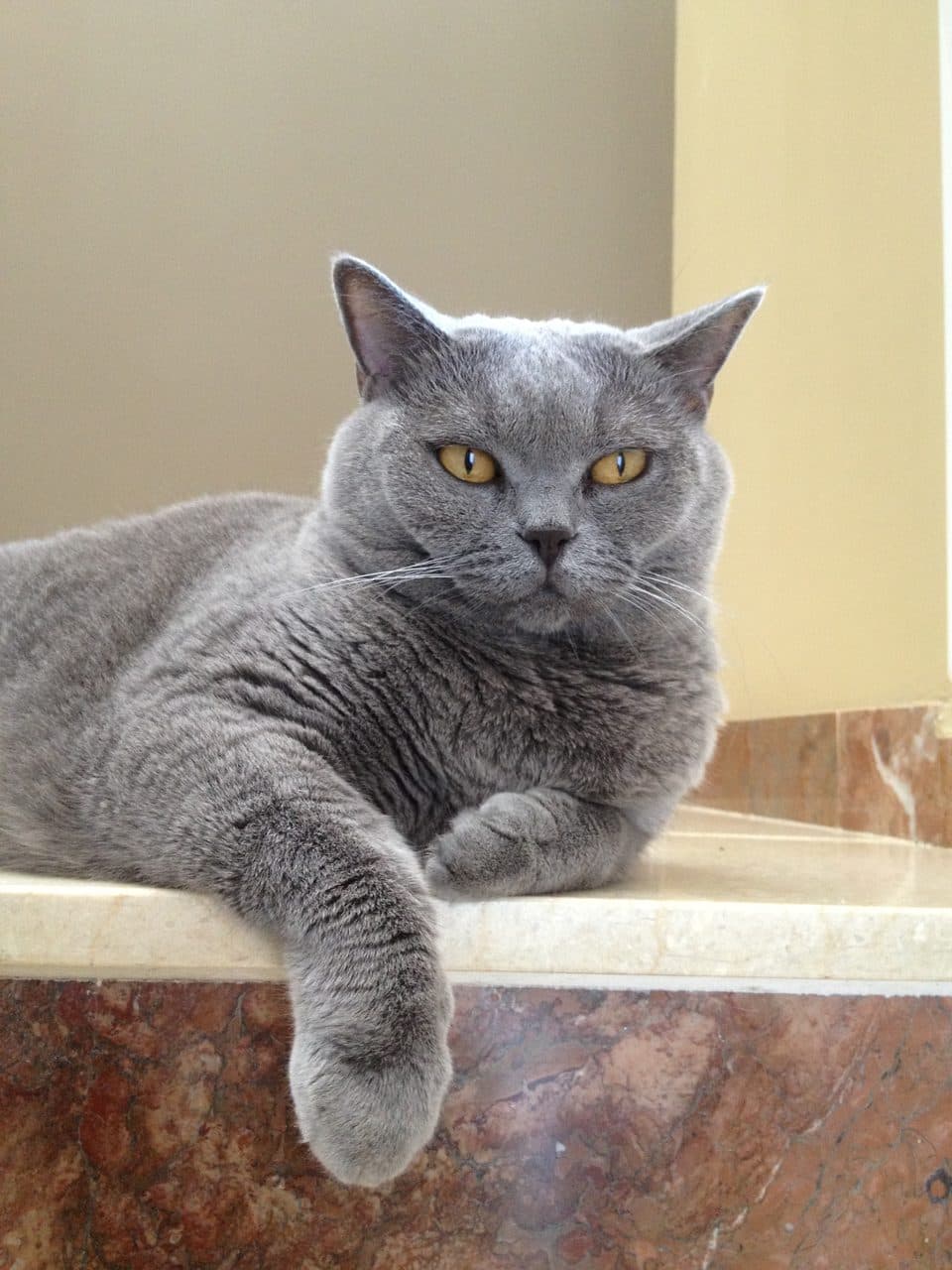
Británico de Pelo Corto
A sturdy cat with a round face and a "Cheshire cat" smile. Serene, independent, patient character. Excellent for quiet homes. The blue British is the iconic variety.
Foto: Wikipedia Commons · CC BY-SA
Ideal for
- ✓Quiet families
- ✓Flats
- ✓Anyone wanting a serene, independent cat
Reconsider if
- ×Very noisy homes
- ×Anyone looking for a very demonstrative "dog-like" cat
Notify me when a Británico de Pelo Corto is up for adoption
We'll only email you when a verified rescue posts one available. No spam, unsubscribe in 1 click.
We'll only use your email for this alert. More info in our privacy policy.
Is the Británico de Pelo Corto a good match for you?
Indicative rating from 1 (low) to 5 (high).
💶 Estimated cost of ownership
45-75 €/month
Food 22-35 €, litter 6-10 €, veterinary allowance 12-20 € (cardiac/renal screening), toys and deworming 5-10 €.
History and origin
Descended from cats brought to Britain by the Romans. Reselected in the 19th century by Harrison Weir. After almost disappearing in WWII, it was recovered through crosses with Persians.
Recognised by the main feline federations (FIFé, CFA, TICA). Early neutering (4-6 months) is the best preventive measure against behavioural problems and reproductive conditions.
Temperament and character
Serene, patient, independent. Affectionate in its own way (not a typical lap cat). Tolerant with children and other animals. Intelligent. Needs daily mental stimulation — scent games, food kongs and short tricks channel its energy better than physical exercise alone. Responds best to positive reinforcement: physical punishment creates fear, anxiety and reactivity — coercive methods are NOT recommended by veterinary behaviourists. Sensitive to its family's mood: it picks up tension and takes it on.
Living together
Children: good (patient). Other cats: tolerant. Dogs: coexists if calm.
Life stages of the Británico de Pelo Corto
Each stage has its own care priorities. Life expectancy: 12-17 años.
Kitten
0-9 months
Socialisation, vaccination, deworming and a growth diet (a slow-maturing breed).
Junior
9 months-2 years
Neutering, PKD screening, dental control and weight monitoring due to obesity tendency.
Adult
2-10 years
HCM echocardiography, strict weight/diet control and annual check-ups.
Senior
11+ years
Cardiac and renal monitoring, weight control and a geriatric diet.
Care
Exercise: 30-45 min/day split into at least 2 sessions. Calm walks + mental play.
Grooming: 2-3 times/week; intensive during moults (spring and autumn).
Feeding: quality food suited to life stage (kitten/adult/senior) and size. Weight control: obesity is the main preventable cause of joint problems.
Vet: annual check-up with preventive blood work from age 5 (7 years in giants); twice a year from age 8.
Weekly grooming (dense but short). Weight control (tendency to obesity). Moderate exercise with toys. Elevated space.
Care in detail
🍽️ Nutrition
Quality food with calorie control: it is very prone to being overweight. Combine with wet food and watch the portion, as it is not very active.
✂️ Grooming
Weekly grooming; its coat is dense but short. Increase the frequency during moults to remove the undercoat.
🎓 Training
Serene and independent, it does not seek training. It accepts routines and the litter tray well; respect its reserved, undemonstrative character.
🏃 Exercise
Moderate exercise: 30-45 min/day of play, split up. It needs stimulation to avoid falling into inactivity and obesity.
Breed-specific health
Hypertrophic cardiomyopathy (genetic test recommended). PKD (polycystic kidney disease). Life expectancy 12-17 years. Life expectancy 12-17 years with proper care. Pre-breeding tests recommended in responsible catteries (dysplasia + cardiac + ophthalmology according to the breed's conditions). When adopting, ask the shelter for a vet report on the current status.
🩺 Health predispositions of this breed
Conditions this breed is more predisposed to. Knowing about them helps with prevention and early detection. A predisposition does not mean the animal will develop them.
Common diseases in cats
Learn the symptoms, prevention and when to see the vet. Reviewed indicative information that does not replace a veterinary consultation.
Screening and prevention for the Británico de Pelo Corto
Recommended tests and screenings
- ✓Echocardiography/genetic test for hypertrophic cardiomyopathy (HCM)
- ✓Ultrasound or genetic test for polycystic kidney disease (PKD)
- ✓Blood work with renal function
- ✓Weight control (tendency to obesity)
- ✓Dental check
Prevention
Cardiac (HCM) and renal (PKD) screening recommended, strict weight control (a breed prone to obesity) and early neutering. Elevated enrichment despite its calm nature.
Check-up schedule
Annual check-up with cardiac auscultation; twice a year from age 8 with renal blood work.
Warning signs
- !Laboured breathing, lethargy or exercise intolerance (HCM)
- !Increased thirst/urination and weight loss (PKD/renal)
- !Visible overweight or extreme inactivity
- !Changes in appetite or frequent vomiting
Británico de Pelo Corto gallery

Frequently asked questions about the Británico de Pelo Corto
- How long does a Británico de Pelo Corto live? ▾
- The life expectancy of the Británico de Pelo Corto is 12-17 años. A good diet, adequate exercise, annual veterinary check-ups and preventive care can help reach the upper end of that range.
- How much does a Británico de Pelo Corto weigh? ▾
- An adult Británico de Pelo Corto weighs between 4-8 kg, depending on its sex, genetics and condition. It is mediano-grande.
- Where does the Británico de Pelo Corto breed come from? ▾
- The Británico de Pelo Corto originates from Reino Unido. Descended from cats brought to Britain by the Romans. Reselected in the 19th century by Harrison Weir. After almost disappearing in WWII, it was recovered through crosses with Persians.
- How much exercise does a Británico de Pelo Corto need? ▾
- The Británico de Pelo Corto has baja energy. **Exercise:** 30-45 min/day split into at least 2 sessions. Calm walks + mental play.
- Is the Británico de Pelo Corto good with children? ▾
- Children: good (patient). Other cats: tolerant. Dogs: coexists if calm.
- Who is the Británico de Pelo Corto NOT recommended for? ▾
- It isn't the right breed for: Very noisy homes. Anyone looking for a very demonstrative "dog-like" cat. It's important to choose a breed that's compatible with your lifestyle.
- What health problems does the Británico de Pelo Corto have? ▾
- Hypertrophic cardiomyopathy (genetic test recommended). PKD (polycystic kidney disease). Life expectancy 12-17 years. Life expectancy 12-17 years with proper care. Pre-breeding tests recommended in responsible catteries (dysplasia + cardiac + ophthalmology according to the breed's conditions). When adopting, ask the shelter for a vet report on the current status.
- Is it an affectionate cat? ▾
- It is affectionate in its own way, but not a lap cat. Serene and independent, it enjoys company without demanding constant contact. Ideal for anyone looking for a calm, undemanding cat.
- What health problems should I watch for? ▾
- Mainly hypertrophic cardiomyopathy (HCM) and polycystic kidney disease (PKD), both with a genetic test available. Also its strong tendency to obesity, which must be controlled through diet.
- Does it gain weight easily? ▾
- Yes. It is sturdy, calm and not very active, which makes it prone to being overweight. Control the portion and encourage daily play to keep it in shape.
- Does it get on well with children and other pets? ▾
- Very well. Its patient, tolerant character makes it good with respectful children, other cats and calm dogs, always with gradual introductions.
Related and similar breeds
Learn more about cats
Practical veterinary guides to support your Británico de Pelo Corto.
Sources and references
Content compiled from official breed standards and leading veterinary sources.
Want to adopt a británico de pelo corto?
There are británico de pelo cortos in rescue shelters looking for a family. Filter by breed in the catalogue.