

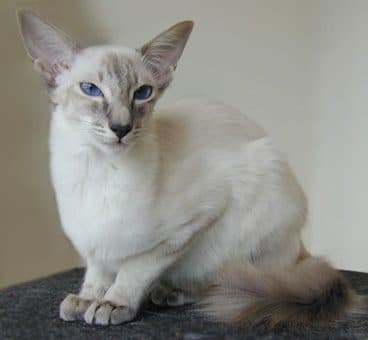
Balinés
The long-haired variety of the Siamese. Chatty, sociable character. Attached to its family.
Foto: Wikipedia Commons · CC BY-SA
Ideal for
- ✓Families with time to pet them
- ✓Flats
- ✓Anyone looking for a sociable cat
Reconsider if
- ×Homes where it would be alone for many hours
Notify me when a Balinés is up for adoption
We'll only email you when a verified rescue posts one available. No spam, unsubscribe in 1 click.
We'll only use your email for this alert. More info in our privacy policy.
Is the Balinés a good match for you?
Indicative rating from 1 (low) to 5 (high).
💶 Estimated cost of ownership
45-75 €/month
Mid-to-high-range food (25-40 €), litter (8-12 €), prorated veterinary prevention (10-18 €) and accessories -scratchers, toys- (5-10 €). Separately: annual check-up with ophthalmological and dental control (40-70 €).
History and origin
A semi-long-haired variety of the Siamese cat, arising from spontaneous mutations. It shares its genetic pool and therefore a predisposition to feline asthma, retinal atrophy and lymphomatous processes.
Temperament and character
Character typical of its breed. Sociable or reserved depending on the individual. Early neutering (4-6 months) is the best preventive measure.
Living together
Children: good with respectful ones. **Other cats:** sociable if living together from a young age. **Dogs:** possible if calm.
Life stages of the Balinés
Each stage has its own care priorities. Life expectancy: 15-20 años.
Kitten
0-6 months
Socialisation, vaccination, deworming and encouragement of bonding and activity.
Junior
6 months-2 years
Neutering, respiratory control (asthma), dental health and enrichment.
Adult
2-10 years
Respiratory monitoring, ophthalmological check-ups, weight control and annual check-up.
Senior
11+ years
Renal and cardiac screening, oncological monitoring (lymphoma) and geriatric diet.
Care
Brushing: according to coat (short = weekly · semi-long = 2-3 times · long = daily).
Litter tray: N+1 litter trays (decision 70).
Feeding: quality wet + dry food.
Veterinary care: annual check-up + blood work from the age of 7.
Care in detail
🍽️ Nutrition
Quality kibble and wet food with a good protein content, in measured portions. Look after dental health with the right food and check-ups, as it is prone to oral problems.
✂️ Grooming
Semi-long coat with no woolly undercoat, which does not mat: brushing 1-2 times a week keeps it perfect. Moderate shedding.
🎓 Training
Very intelligent and chatty; it learns to walk on a harness, to fetch and to do tricks with positive reinforcement. It needs plenty of mental stimulation to avoid boredom.
🏃 Exercise
An active, athletic cat: cat trees, shelves, toys and daily interactive play sessions are essential.
Breed-specific health
Hypertrophic cardiomyopathy (HCM) is common in many breeds — genetic testing recommended. PKD in Persian and derived breeds. Life expectancy 15-20 years.
🩺 Health predispositions of this breed
Conditions this breed is more predisposed to. Knowing about them helps with prevention and early detection. A predisposition does not mean the animal will develop them.
Common diseases in cats
Learn the symptoms, prevention and when to see the vet. Reviewed indicative information that does not replace a veterinary consultation.
Screening and prevention for the Balinés
Recommended tests and screenings
- ✓Genetic test for progressive retinal atrophy (PRA-rdAc of the Siamese/Balinese)
- ✓Screening echocardiography for hypertrophic cardiomyopathy (HCM)
- ✓Assessment for hepatic/renal amyloidosis in affected lines
- ✓Ophthalmological examination (strabismus, vision problems)
Prevention
Early neutering, a quality wet diet, dental control (a breed prone to gingivitis) and a stress-free environment. A smoke-free environment to protect its respiratory system (predisposition to feline asthma).
Check-up schedule
Annual check-up with ophthalmological and dental examination; blood work including liver and kidney function from the age of 7.
Warning signs
- !Coughing or wheezing breathing (feline asthma)
- !Loss of night vision or stumbling (PRA)
- !Vomiting, weight loss or jaundice (amyloidosis)
- !Bad breath and red gums (dental disease)
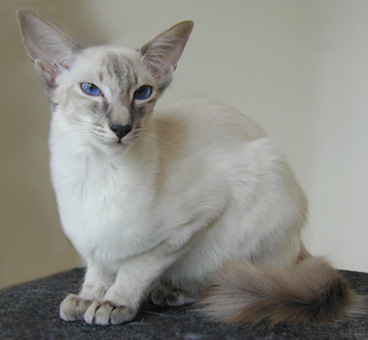
Balinés gallery
Frequently asked questions about the Balinés
- How long does a Balinés live? ▾
- The life expectancy of the Balinés is 15-20 años. A good diet, adequate exercise, annual veterinary check-ups and preventive care can help reach the upper end of that range.
- How much does a Balinés weigh? ▾
- An adult Balinés weighs between 2-5 kg, depending on its sex, genetics and condition. It is mediano.
- Where does the Balinés breed come from? ▾
- The Balinés originates from Estados Unidos. A semi-long-haired variety of the Siamese cat, arising from spontaneous mutations. It shares its genetic pool and therefore a predisposition to feline asthma, retinal atrophy and lymphomatous processes.
- How much exercise does a Balinés need? ▾
- The Balinés has alta energy. **Brushing:** according to coat (short = weekly · semi-long = 2-3 times · long = daily).
- Is the Balinés good with children? ▾
- **Children:** good with respectful ones. **Other cats:** sociable if living together from a young age. **Dogs:** possible if calm.
- Who is the Balinés NOT recommended for? ▾
- It isn't the right breed for: Homes where it would be alone for many hours. It's important to choose a breed that's compatible with your lifestyle.
- What health problems does the Balinés have? ▾
- Hypertrophic cardiomyopathy (HCM) is common in many breeds — genetic testing recommended. PKD in Persian and derived breeds. Life expectancy 15-20 years.
- Is it as talkative as the Siamese? ▾
- Yes. The Balinese is the long-haired variety of the Siamese and shares its characteristic voice: it vocalises a lot to communicate with its family.
- Does its long coat get tangled? ▾
- Rarely. It lacks a woolly undercoat, so brushing a couple of times a week is enough.
- Does it tolerate being alone? ▾
- Poorly. It is very attached and demanding; it suffers if it spends many hours alone. Human company or that of another cat is better.
- What health problems should be watched for? ▾
- Above all retinal atrophy (with a genetic test), dental problems and a predisposition to feline asthma.
- Is it good for first-time owners? ▾
- Yes, if you have the time: it is sociable and easy to handle, but it demands daily attention and interaction.
Learn more about cats
Practical veterinary guides to support your Balinés.
Sources and references
Content compiled from official breed standards and leading veterinary sources.
Want to adopt a balinés?
There are balinéss in rescue shelters looking for a family. Filter by breed in the catalogue.