

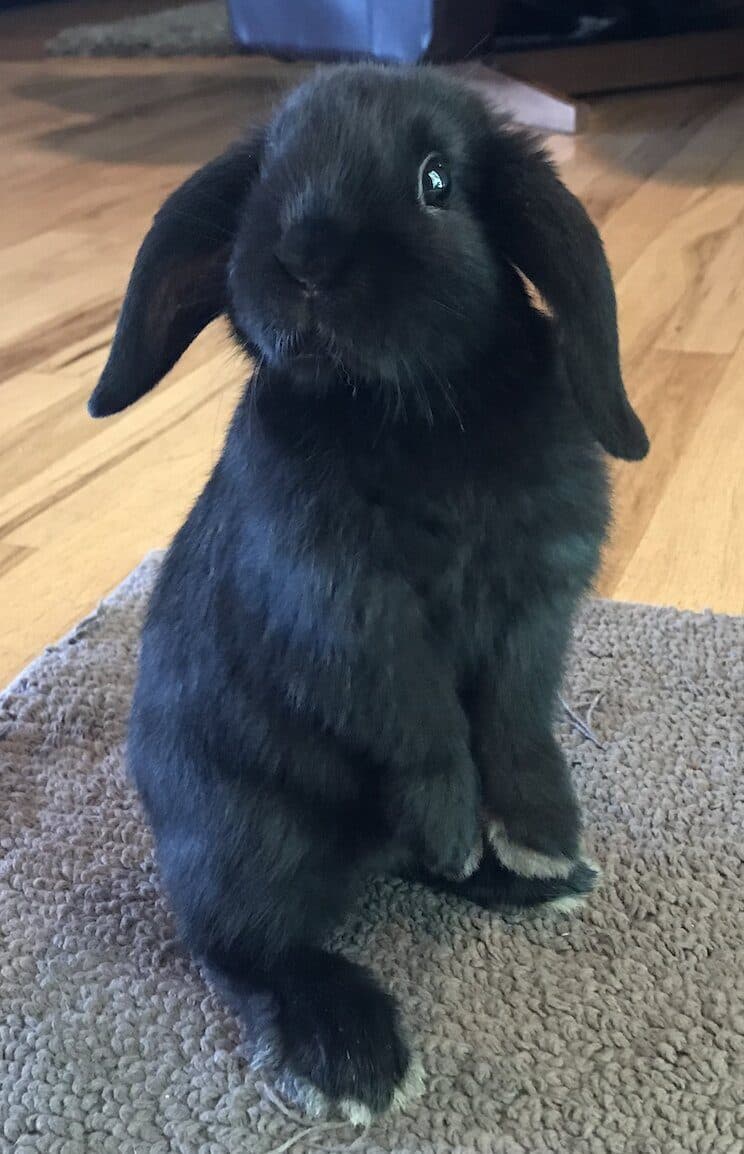
Bélier Holandés (Holland Lop)
Traditional lop ears. Sweet, playful character. Excellent as a family pet. One of the most popular breeds in the UK.
Foto: Wikipedia Commons · CC BY-SA
Ideal for
- ✓Families with time for daily care
- ✓Homes with space for a free-roaming area
- ✓Those looking for a quiet pet
Reconsider if
- ×Homes with loose hunting dogs
- ×Small, rough children (rabbits are easily frightened)
- ×Life 100% in a cage (cruel · they need 4 h/day free)
Notify me when a Bélier Holandés (Holland Lop) is up for adoption
We'll only email you when a verified rescue posts one available. No spam, unsubscribe in 1 click.
We'll only use your email for this alert. More info in our privacy policy.
Is the Bélier Holandés (Holland Lop) a good match for you?
Indicative rating from 1 (low) to 5 (high).
💶 Estimated cost of ownership
25-45 €/month
Hay and vegetables: 12-20 € · Substrate/bedding and accessories: 6-12 € · Exotics vet and vaccines: 7-13 €
History and origin
Recognised by ARBA. Originating from the Netherlands. Traditional lop ears.
Temperament and character
Shy by nature (a prey animal). Gains confidence with patience. Sociable with other neutered rabbits. NOT solitary — a pair is always better.
Living together
Children: with respectful ones from age 8 (no rough handling). **Other rabbits:** yes (neutered, gradual introduction). **Dogs:** avoid hunting dogs. **Cats:** possible, supervise.
Life stages of the Bélier Holandés (Holland Lop)
Each stage has its own care priorities. Life expectancy: 7-12 años.
Kit
0-4 months
Mother's milk and gradual transition to hay and kit pellets; avoid diarrhoea
Junior
4-8 months
Grass hay ad libitum, introduce fresh vegetables gradually; watch dentition
Adult
8 months-5 years
Unlimited hay as the base, a measured ration of pellets and vegetables; dental and weight control
Senior
5-6 years onwards
Adjust the diet if there is dental wear or weight loss; regular vet check-ups and comfortable flooring
Care
Space: minimum 4 h/day out of the cage in a safe area. Cage = rest/night-time only.
Feeding: 80% quality hay (Timothy/Italian Ryegrass), 15% fresh vegetables, 5% quality pellets (limit).
Grooming: 2-3 times/week (daily during moults + long-haired breeds).
Vet: exotics vet (NOT a regular vet — different anatomy/pharmacology). Annual myxomatosis + RHD vaccine. Neutering at 4-6 months (prevents uterine cancer in 80%+ of intact females).
Care in detail
🍽️ Nutrition
80% quality hay (Timothy or Italian Ryegrass) available ad libitum, 15% varied fresh vegetables and only 5% specific pellets. Water always available.
✂️ Grooming
Brushing 2-3 times a week, daily during moults. Check the nails and the perianal area.
🎓 Training
It is a prey animal by nature: shy at first, gains confidence with patience. Work on gentle handling and socialisation; it can learn to use a litter tray and to come when called.
🏃 Exercise
A minimum of 4 hours a day loose in a safe, escape-proof, cable-chew-proof area; the cage is only for rest, never its permanent space.
Breed-specific health
Common conditions in rabbits: GI Stasis (digestive shutdown · EMERGENCY), dental malocclusion (check every 6 months), encephalitozoonosis. Life expectancy 7-12 years with proper care.
🩺 Health predispositions of this breed
Conditions this breed is more predisposed to. Knowing about them helps with prevention and early detection. A predisposition does not mean the animal will develop them.
Common diseases in rabbits
Learn the symptoms, prevention and when to see the vet. Reviewed indicative information that does not replace a veterinary consultation.
Screening and prevention for the Bélier Holandés (Holland Lop)
Recommended tests and screenings
- ✓Dental check every 6 months (malocclusion)
- ✓Digestive and intestinal transit monitoring
- ✓Encephalitozoonosis screening if neurological symptoms appear
- ✓Myxomatosis and haemorrhagic disease (RHD) vaccination
Prevention
A diet based on hay available ad libitum to wear down the teeth and maintain gut transit, annual vaccination against myxomatosis and RHD, neutering (4-6 months, prevents uterine cancer in females) and an exotics specialist vet.
Check-up schedule
Six-monthly dental check and annual vaccination with an exotics vet.
Warning signs
- !Stops eating or defecating (intestinal shutdown or GI stasis, EMERGENCY)
- !Drooling, difficulty eating or weight loss (dental malocclusion)
- !Head tilt or loss of balance (encephalitozoonosis)
- !Diarrhoea or scant, misshapen droppings
Bélier Holandés (Holland Lop) gallery

Frequently asked questions about the Bélier Holandés (Holland Lop)
- How long does a Bélier Holandés (Holland Lop) live? ▾
- The life expectancy of the Bélier Holandés (Holland Lop) is 7-12 años. A good diet, adequate exercise, annual veterinary check-ups and preventive care can help reach the upper end of that range.
- How much does a Bélier Holandés (Holland Lop) weigh? ▾
- An adult Bélier Holandés (Holland Lop) weighs between 1.4-1.8 kg, depending on its sex, genetics and condition. It is pequeño.
- Where does the Bélier Holandés (Holland Lop) breed come from? ▾
- The Bélier Holandés (Holland Lop) originates from Países Bajos. Recognised by ARBA. Originating from the Netherlands. Traditional lop ears.
- How much exercise does a Bélier Holandés (Holland Lop) need? ▾
- The Bélier Holandés (Holland Lop) has media energy. **Space:** minimum 4 h/day out of the cage in a safe area. Cage = rest/night-time only.
- Is the Bélier Holandés (Holland Lop) good with children? ▾
- **Children:** with respectful ones from age 8 (no rough handling). **Other rabbits:** yes (neutered, gradual introduction). **Dogs:** avoid hunting dogs. **Cats:** possible, supervise.
- Who is the Bélier Holandés (Holland Lop) NOT recommended for? ▾
- It isn't the right breed for: Homes with loose hunting dogs. Small, rough children (rabbits are easily frightened). Life 100% in a cage (cruel · they need 4 h/day free). It's important to choose a breed that's compatible with your lifestyle.
- What health problems does the Bélier Holandés (Holland Lop) have? ▾
- Common conditions in rabbits: GI Stasis (digestive shutdown · EMERGENCY), dental malocclusion (check every 6 months), encephalitozoonosis. Life expectancy 7-12 years with proper care.
- Can it live in a cage all the time? ▾
- No, that is cruel. It needs at least 4 hours a day loose in a safe area; the cage should only be its resting place, not its permanent habitat.
- What should a Holland Lop eat? ▾
- Mainly quality hay available ad libitum (80% of the diet), supplemented with fresh vegetables and a small amount of specific pellets. Hay is key for its teeth and digestion.
- Does it need a special vet? ▾
- Yes, an exotic animal vet. Its anatomy and pharmacology are different and many dog or cat medications are dangerous for them.
- Is it good with children? ▾
- With children over about 8 years old and respectful, yes. It is easily frightened and fragile, so it does not tolerate being shaken or picked up roughly.
- Why does it need vaccinating? ▾
- To protect it from myxomatosis and viral haemorrhagic disease (RHD), two deadly and common diseases in the UK. Vaccination is annual.
Learn more about rabbits
Practical veterinary guides to support your Bélier Holandés (Holland Lop).
Sources and references
Content compiled from official breed standards and leading veterinary sources.
- WikipediaHolland Lop (Spanish Wikipedia) ↗
- American Rabbit Breeders AssociationARBA ↗
- British Rabbit CouncilBritish Rabbit Council ↗
Want to adopt a bélier holandés (holland lop)?
There are bélier holandés (holland lop)s in rescue shelters looking for a family. Filter by breed in the catalogue.