

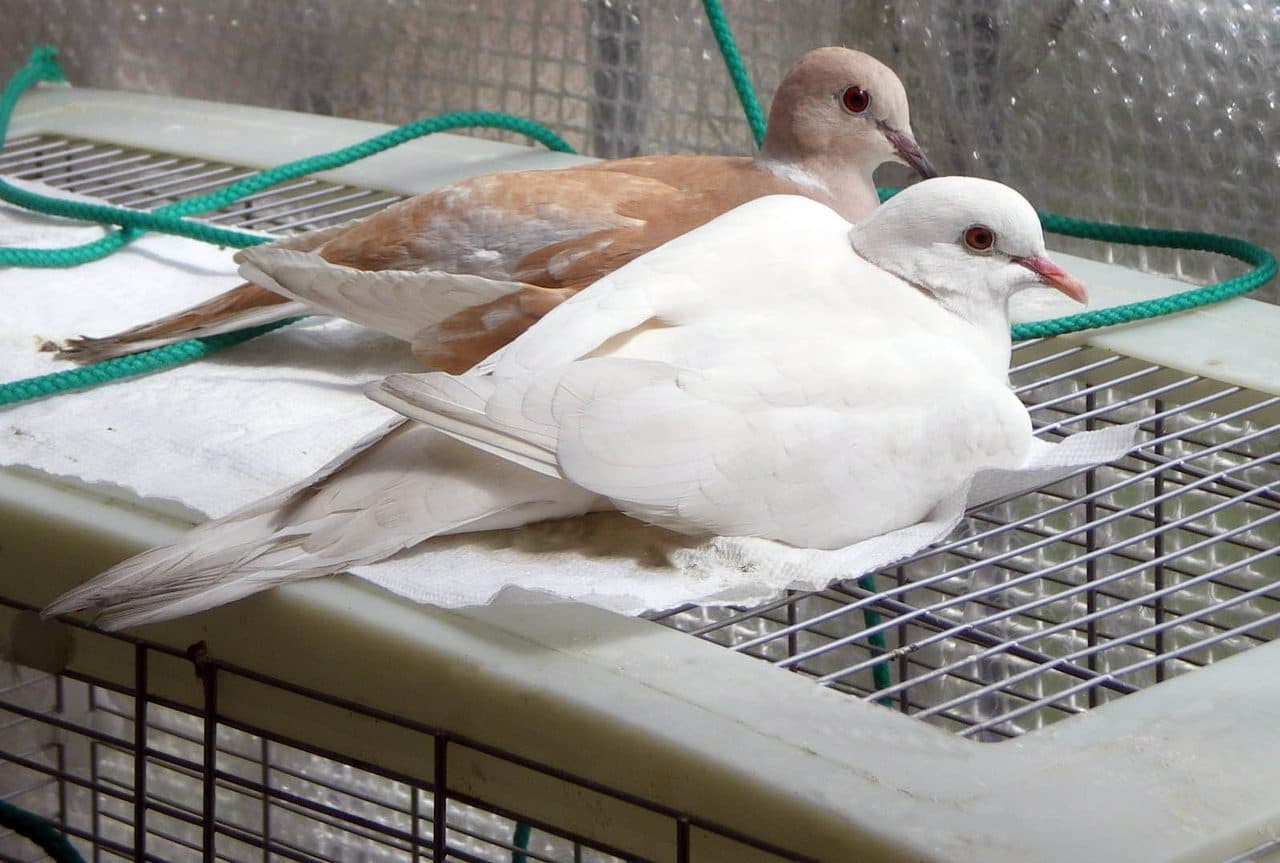
Tórtola Doméstica
Cream plumage with a black collar. Soft song (cooing). Good for beginners.
Foto: Wikipedia Commons · CC BY-SA
Ideal for
- ✓Families with time for daily interaction
- ✓Spacious flats (large birds require a dedicated room)
- ✓Anyone who accepts a decades-long commitment (parrots live a long time)
Reconsider if
- ×Households with no time to socialise
- ×Anyone who cannot tolerate noise (all parrots vocalise)
- ×Flats with no space to fly
Notify me when a Tórtola Doméstica is up for adoption
We'll only email you when a verified rescue posts one available. No spam, unsubscribe in 1 click.
We'll only use your email for this alert. More info in our privacy policy.
Is the Tórtola Doméstica a good match for you?
Indicative rating from 1 (low) to 5 (high).
💶 Estimated cost of ownership
15-30 €/month
Seed mix, millet, grit and cuttlebone (7-13 €), hygiene and maintenance (4-8 €). Separately: vet check-up/faecal test (30-55 €/year) and a spacious cage (50-120 €). A long-lived and inexpensive bird.
History and origin
Native to North Africa. Cream plumage with a black collar.
Temperament and character
Intelligence varies by species. Parrots form strong bonds with their humans. They need daily mental stimulation · NOT just a cage.
Living together
Children: depends on the species + individual character. **Other birds:** better in a pair/group (except territorial species). **Larger pets:** avoid — a real risk of predation.
Life stages of the Tórtola Doméstica
Each stage has its own care priorities. Life expectancy: 12-25 años.
Squab
0-1 month
Crop milk; nidicolous, highly dependent on the breeding pair.
Juvenile
1-6 months
Appearance of the black collar on the nape; adaptation to the pigeon seed mix.
Adult
6 months-12 years
A docile and long-lived bird; calcium, grit and a spacious cage for flight.
Senior
13-25 years
Reduce breeding; watch for arthritis, being overweight and trichomoniasis.
Care
Cage: at least twice the size of the bird with its wings outstretched. A dedicated room is better.
Feeding: SEEDS are NOT a complete diet. A combination of pellets + fresh fruit/vegetables daily.
Free flight: at least 1-2 hours/day outside the cage in a safe area.
Vet: an avian specialist vet (exotics vet). Annual check-up.
Care in detail
🍽️ Nutrition
A seed and millet mix for doves/pigeons with grit, cuttlebone and a little fresh vegetable matter. Clean water daily to prevent trichomoniasis.
✂️ Grooming
Needs no grooming; it appreciates shallow water baths. Frequent cleaning of the cage and perches.
🎓 Training
Very gentle and docile; it usually gets used to the hand and to human presence, though it is not a trick bird. Its cooing is soothing.
🏃 Exercise
Low energy: calm and sedentary, it is content with a spacious cage and a serene environment. Better with company.
Breed-specific health
Aspergillosis (fungal), psittacosis (chlamydiosis), feather problems from stress/deficiencies. Life expectancy 12-25 years with proper care. Before adopting a large parrot, bear in mind that you will share your entire adult life with it.
🩺 Health predispositions of this breed
Conditions this breed is more predisposed to. Knowing about them helps with prevention and early detection. A predisposition does not mean the animal will develop them.
Common diseases in birds
Learn the symptoms, prevention and when to see the vet. Reviewed indicative information that does not replace a veterinary consultation.
Screening and prevention for the Tórtola Doméstica
Recommended tests and screenings
- ✓Faecal test for trichomonas (canker) and coccidia
- ✓Periodic internal deworming
- ✓Paramyxovirus (PMV) vaccination/monitoring as appropriate
- ✓Screening for psittacosis/ornithosis if symptoms appear
Prevention
Scrupulous hygiene of water and feeders (prone to trichomoniasis), grit and calcium supplementation, a calm environment and quarantine of new birds. It is one of the longest-lived and hardiest birds if hygiene is maintained.
Check-up schedule
Check-up with an avian vet on acquisition and periodic faecal tests; daily observation.
Warning signs
- !Yellow plaques in the mouth or difficulty swallowing (canker)
- !Torticollis or uncoordinated movements (paramyxovirus)
- !Diarrhoea or ruffled plumage
- !Lethargy or weight loss
Tórtola Doméstica gallery

Frequently asked questions about the Tórtola Doméstica
- How long does a Tórtola Doméstica live? ▾
- The life expectancy of the Tórtola Doméstica is 12-25 años. A good diet, adequate exercise, annual veterinary check-ups and preventive care can help reach the upper end of that range.
- How much does a Tórtola Doméstica weigh? ▾
- An adult Tórtola Doméstica weighs between 120-180g, depending on its sex, genetics and condition. It is mediano.
- Where does the Tórtola Doméstica breed come from? ▾
- The Tórtola Doméstica originates from Norte África. Native to North Africa. Cream plumage with a black collar.
- How much exercise does a Tórtola Doméstica need? ▾
- The Tórtola Doméstica has media energy. **Cage:** at least twice the size of the bird with its wings outstretched. A dedicated room is better.
- Is the Tórtola Doméstica good with children? ▾
- **Children:** depends on the species + individual character. **Other birds:** better in a pair/group (except territorial species). **Larger pets:** avoid — a real risk of predation.
- Who is the Tórtola Doméstica NOT recommended for? ▾
- It isn't the right breed for: Households with no time to socialise. Anyone who cannot tolerate noise (all parrots vocalise). Flats with no space to fly. It's important to choose a breed that's compatible with your lifestyle.
- What health problems does the Tórtola Doméstica have? ▾
- Aspergillosis (fungal), psittacosis (chlamydiosis), feather problems from stress/deficiencies. Life expectancy 12-25 years with proper care. Before adopting a large parrot, bear in mind that you will share your entire adult life with it.
- Is it suitable for beginners? ▾
- Very much so. It is docile, quiet, long-lived (it can exceed 20 years) and very hardy; it only requires strict hygiene of its water. One of the best birds to start with.
- Is it noisy? ▾
- No. It gives a soft, rhythmic cooing that is very pleasant, perfectly compatible with flat living.
- Why be so careful with the water and food? ▾
- Doves are prone to trichomoniasis ('canker') from dirty water and feeders. Daily cleaning is the most effective prevention.
- How long does it live? ▾
- It is very long-lived: with good care it can live between 12 and 25 years, a long commitment to bear in mind.
- Can it live alone? ▾
- It tolerates solitude if given attention, but it is gregarious and lives more happily in a pair or small group.
Learn more about birds
Practical veterinary guides to support your Tórtola Doméstica.
Sources and references
Content compiled from official breed standards and leading veterinary sources.
Want to adopt a tórtola doméstica?
There are tórtola domésticas in rescue shelters looking for a family. Filter by breed in the catalogue.