

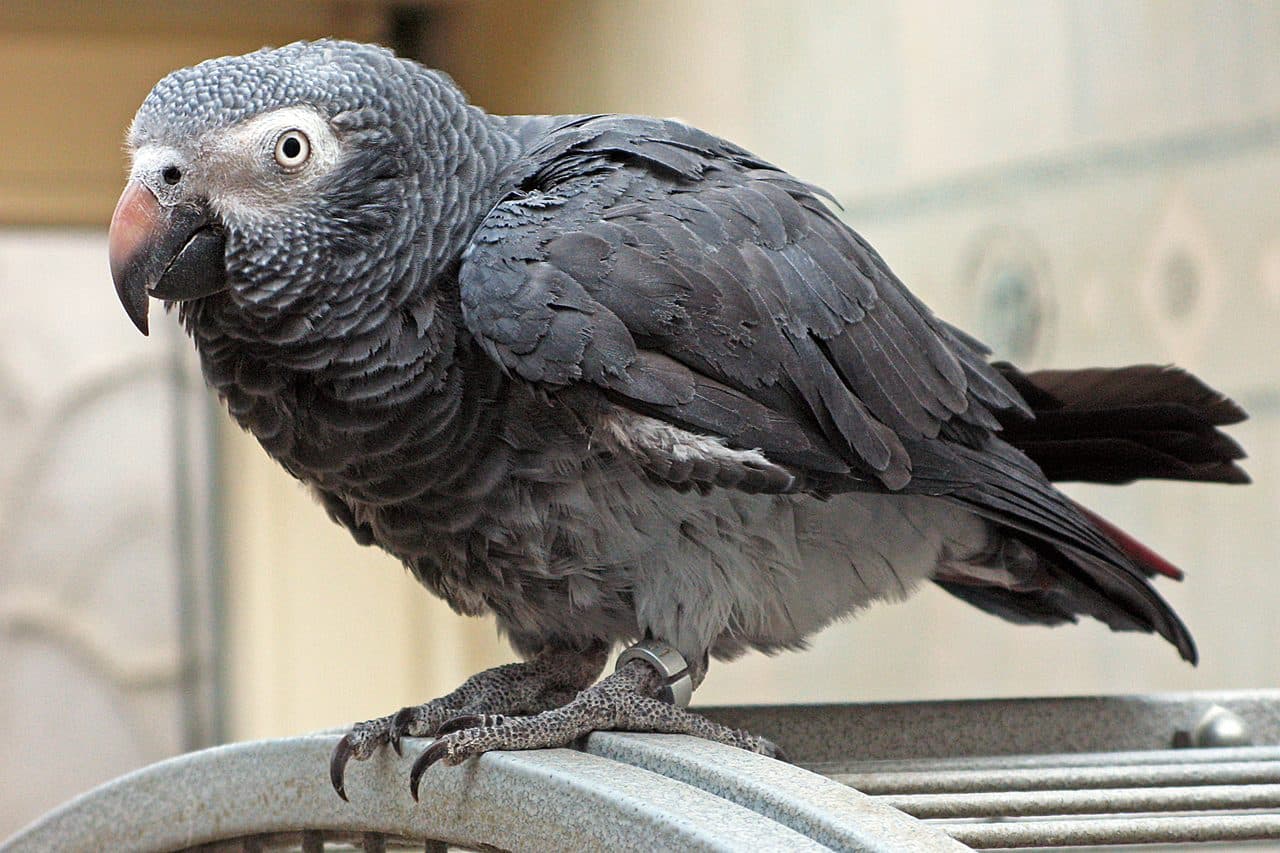
Loro Timneh (Timneh African Grey)
The smaller variety of the African Grey. Same level of intelligence. Maroon tail instead of red.
Foto: Wikipedia Commons · CC BY-SA
Ideal for
- ✓Families with time for daily interaction
- ✓Spacious homes (large birds require a dedicated room)
- ✓Those willing to make a decades-long commitment (parrots live a long time)
Reconsider if
- ×Homes with no time to socialise the bird
- ×Those who cannot tolerate noise (all parrots vocalise)
- ×Homes with no space for flight
Notify me when a Loro Timneh (Timneh African Grey) is up for adoption
We'll only email you when a verified rescue posts one available. No spam, unsubscribe in 1 click.
We'll only use your email for this alert. More info in our privacy policy.
Is the Loro Timneh (Timneh African Grey) a good match for you?
Indicative rating from 1 (low) to 5 (high).
💶 Estimated cost of ownership
40-80 €/month
Quality pellets, fresh vegetables and fruit (20-35 €), foraging and chew toys -high consumption- (12-25 €) and prorated preventive care (8-20 €). Separately: an annual check-up with an avian vet (50-90 €) and a high initial outlay on a spacious cage (200-500 €).
History and origin
Timneh grey parrot from West Africa, smaller and darker than the Congo African Grey; recognised as a separate species in 2012.
Temperament and character
Intelligence varies by species. Parrots form strong bonds with their humans. They need daily mental stimulation · NOT just a cage.
Living together
Children: depends on the species + individual character. **Other birds:** best kept in a pair/group (except territorial species). **Older pets:** avoid — a real risk of predation.
Life stages of the Loro Timneh (Timneh African Grey)
Each stage has its own care priorities. Life expectancy: 50 años.
Chick
0-5 months
Hand-rearing, weaning, calcium intake
Juvenile
5 months-5 years
Socialisation, cognitive enrichment, pelleted diet
Adult
5-30 years
Hypocalcaemia, feather plucking, exercise
Senior
30-50 years
Atherosclerosis, arthritis, renal/hepatic check-ups
Care
Cage: at least twice the size of the bird with its wings extended. A dedicated room is even better.
Feeding: SEEDS are NOT a complete diet. A combination of pellets + fresh fruit/vegetables daily.
Free flight: at least 1-2 hours/day out of the cage in a safe area.
Vet: an avian specialist vet (exotics vet). Annual blood work.
Care in detail
🍽️ Nutrition
A base of pellets formulated for grey parrots plus vegetables and a little fruit; controlled calcium and vitamin D3 intake given their tendency towards hypocalcaemia. Seeds only as an occasional treat.
✂️ Grooming
Frequent baths or misting for feather health. Access to UVB light or supplementation. Do not clip the wings without veterinary guidance.
🎓 Training
Exceptional intelligence, comparable to that of the Congo African Grey: it learns many words, concepts and tricks. It needs daily cognitive work and positive reinforcement, never punishment.
🏃 Exercise
At least 2-3 hours a day out of the cage in a safe area, with foraging, destructible toys and puzzles to keep its mind occupied.
Breed-specific health
Aspergillosis (fungal), psittacosis (chlamydiosis), feather problems from stress/deficiencies. Life expectancy 50 years with proper care. Before adopting a large parrot, bear in mind you will share your entire adult life with it.
🩺 Health predispositions of this breed
Conditions this breed is more predisposed to. Knowing about them helps with prevention and early detection. A predisposition does not mean the animal will develop them.
Common diseases in birds
Learn the symptoms, prevention and when to see the vet. Reviewed indicative information that does not replace a veterinary consultation.
Screening and prevention for the Loro Timneh (Timneh African Grey)
Recommended tests and screenings
- ✓Psittacosis/chlamydiosis screening (PCR)
- ✓PBFD (psittacine beak and feather disease) and polyomavirus testing
- ✓Blood calcium/blood panel (grey parrot hypocalcaemia syndrome)
- ✓Aspergillosis culture or screening if respiratory signs appear
Prevention
A diet based on quality pellets with vegetables, sunlight/UVB or a vitamin D3 and calcium supplement to prevent the hypocalcaemia typical of greys, plenty of enrichment to avoid feather plucking, and check-ups with an avian vet. Avoid seed-only diets.
Check-up schedule
A check-up with an avian vet at acquisition and an annual check-up with blood work; regular weighing at home.
Warning signs
- !Tremors, weakness or seizures (hypocalcaemia)
- !Pulling out feathers or feather plucking
- !Breathing with a pumping tail, respiratory noises (aspergillosis)
- !Dystrophic feathers or beak abnormalities (PBFD)
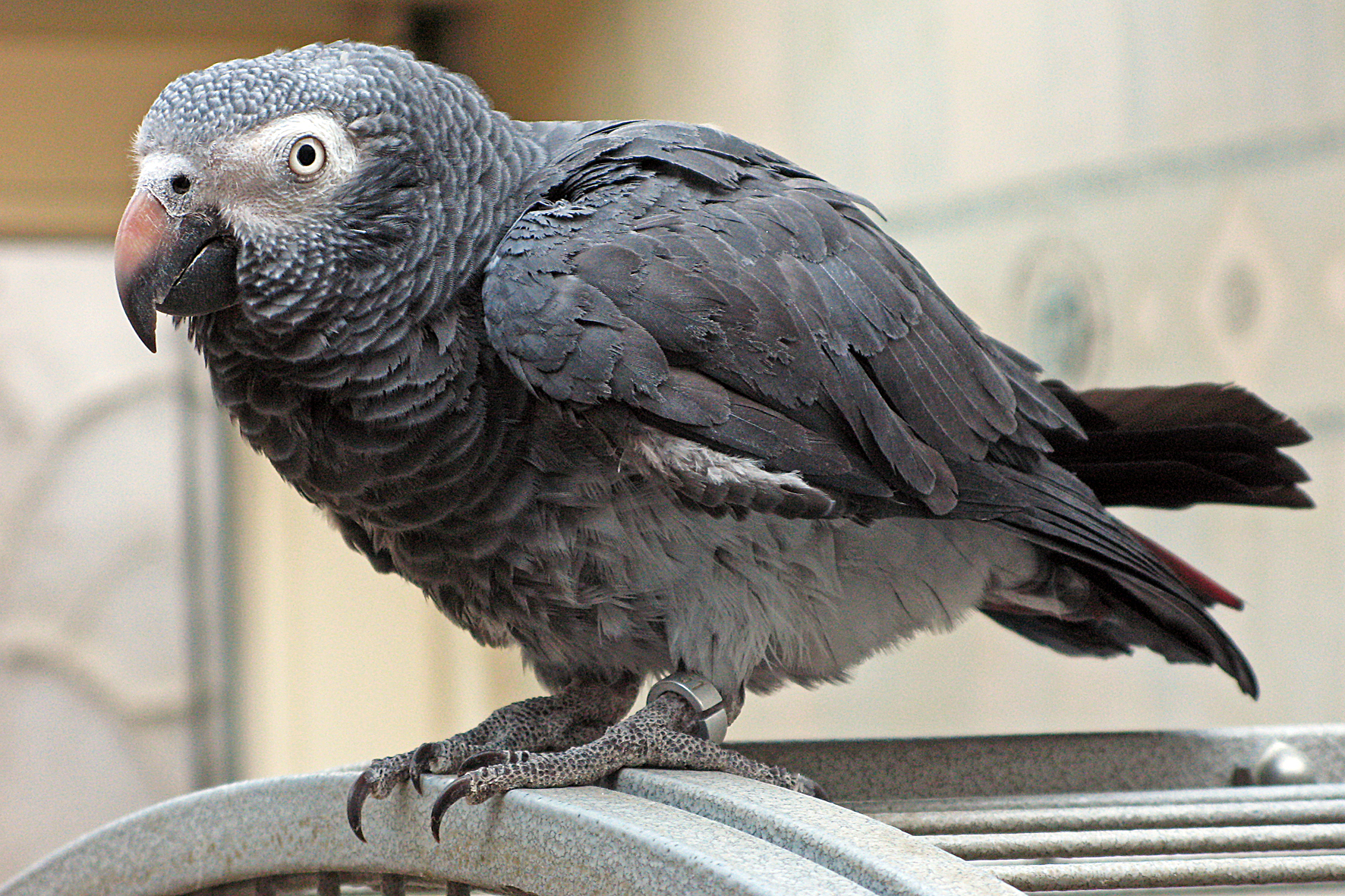
Loro Timneh (Timneh African Grey) gallery
Frequently asked questions about the Loro Timneh (Timneh African Grey)
- How long does a Loro Timneh (Timneh African Grey) live? ▾
- The life expectancy of the Loro Timneh (Timneh African Grey) is 50 años. A good diet, adequate exercise, annual veterinary check-ups and preventive care can help reach the upper end of that range.
- How much does a Loro Timneh (Timneh African Grey) weigh? ▾
- An adult Loro Timneh (Timneh African Grey) weighs between 275-375g, depending on its sex, genetics and condition. It is grande.
- Where does the Loro Timneh (Timneh African Grey) breed come from? ▾
- The Loro Timneh (Timneh African Grey) originates from África Occidental. Timneh grey parrot from West Africa, smaller and darker than the Congo African Grey; recognised as a separate species in 2012.
- How much exercise does a Loro Timneh (Timneh African Grey) need? ▾
- The Loro Timneh (Timneh African Grey) has media energy. **Cage:** at least twice the size of the bird with its wings extended. A dedicated room is even better.
- Is the Loro Timneh (Timneh African Grey) good with children? ▾
- **Children:** depends on the species + individual character. **Other birds:** best kept in a pair/group (except territorial species). **Older pets:** avoid — a real risk of predation.
- Who is the Loro Timneh (Timneh African Grey) NOT recommended for? ▾
- It isn't the right breed for: Homes with no time to socialise the bird. Those who cannot tolerate noise (all parrots vocalise). Homes with no space for flight. It's important to choose a breed that's compatible with your lifestyle.
- What health problems does the Loro Timneh (Timneh African Grey) have? ▾
- Aspergillosis (fungal), psittacosis (chlamydiosis), feather problems from stress/deficiencies. Life expectancy 50 years with proper care. Before adopting a large parrot, bear in mind you will share your entire adult life with it.
- Is it very different from the Congo African Grey (red-tailed grey)? ▾
- It is somewhat smaller and has a maroon tail instead of a red one, but its intelligence and speaking ability are comparable; it is usually just as capable and sometimes a little calmer.
- How long does it live? ▾
- It can reach 50 years. Adopting a Timneh is a commitment for the whole of your adult life, even planning who will care for it afterwards.
- Why do greys pluck out their feathers? ▾
- Feather plucking is usually caused by boredom, stress, loneliness or health/diet problems. Enrichment, a stable routine and a veterinary check-up are key.
- Why does it need so much calcium? ▾
- Grey parrots are prone to a hypocalcaemia syndrome with tremors and seizures; they require adequate calcium, vitamin D3 and UVB light.
- Is it a good bird for beginners? ▾
- Not really. Its huge intelligence demands time, stimulation and experience; if poorly cared for it develops feather plucking and screaming.
Learn more about birds
Practical veterinary guides to support your Loro Timneh (Timneh African Grey).
Sources and references
Content compiled from official breed standards and leading veterinary sources.
- WikipediaPsittacus timneh ↗
- World Parrot TrustTimneh Parrot - Parrot Encyclopedia ↗
Want to adopt a loro timneh (timneh african grey)?
There are loro timneh (timneh african grey)s in rescue shelters looking for a family. Filter by breed in the catalogue.