

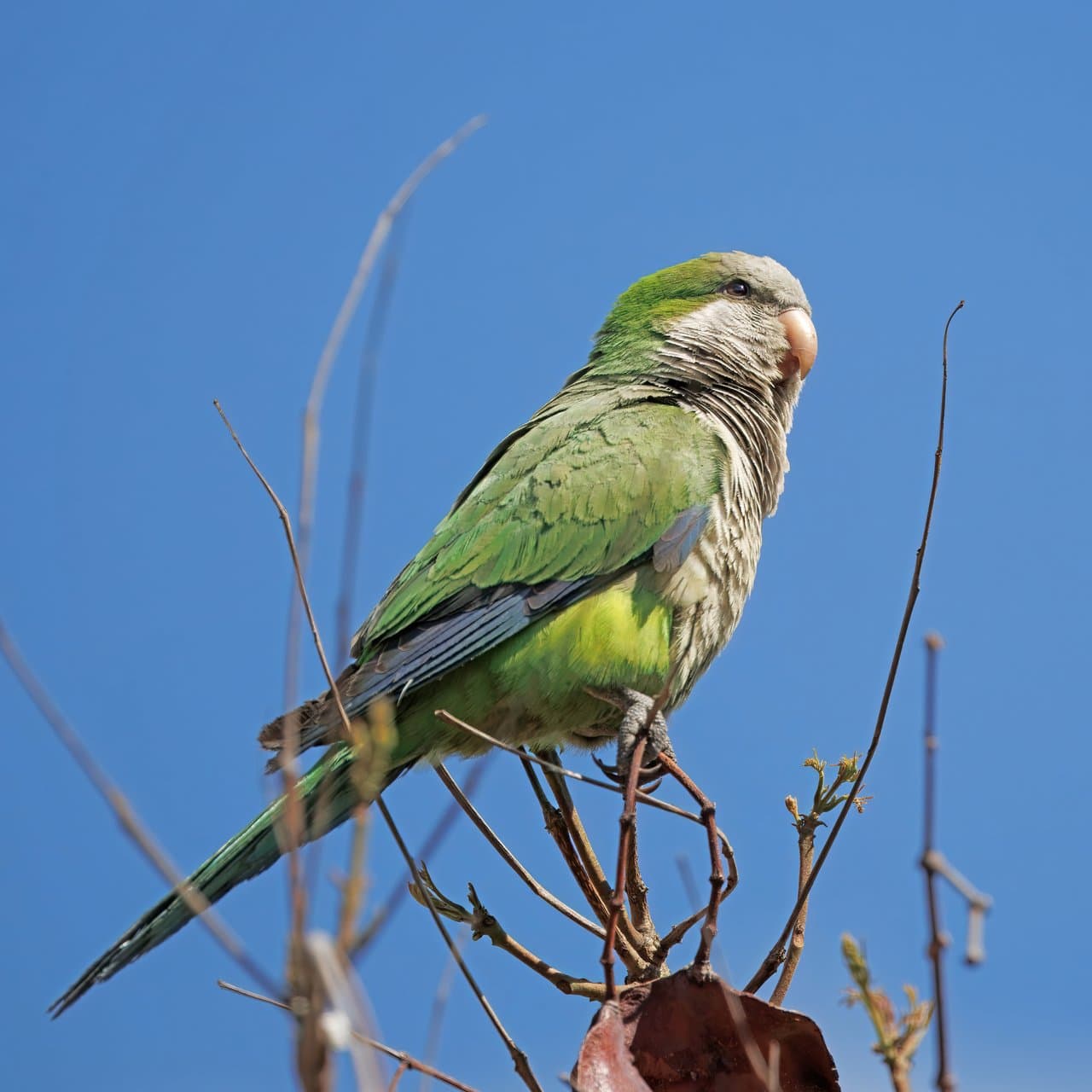
Quaker (Cotorra Monje)
= the monk parakeet. In the UK it is a controlled invasive species, and keeping or releasing it is restricted.
Foto: Wikipedia Commons · CC BY-SA
Ideal for
- ✓Families with time for daily interaction
- ✓Spacious homes (large birds need a room)
- ✓Those who accept a decades-long commitment (parrots live a long time)
Reconsider if
- ×Homes without time to socialise the bird
- ×Those who cannot tolerate noise (all parrots vocalise)
- ×Homes without space for flight
Notify me when a Quaker (Cotorra Monje) is up for adoption
We'll only email you when a verified rescue posts one available. No spam, unsubscribe in 1 click.
We'll only use your email for this alert. More info in our privacy policy.
Is the Quaker (Cotorra Monje) a good match for you?
Indicative rating from 1 (low) to 5 (high).
💶 Estimated cost of ownership
30-60 €/month
Pellets, vegetables and fruit (15-28 €), toys for chewing and foraging (10-20 €) and pro-rated prevention (8-15 €). Separately: annual check-up with an avian vet (45-80 €) and a spacious initial cage (120-300 €).
History and origin
Originating from South America. = the monk parakeet.
Temperament and character
Intelligence varies by species. Parrots form strong bonds with their humans. They need daily mental stimulation · NOT just a cage.
Living together
Children: depends on the species + individual character. **Other birds:** better in a pair/group (except territorial species). **Larger pets:** avoid — a real risk of predation.
Life stages of the Quaker (Cotorra Monje)
Each stage has its own care priorities. Life expectancy: 20-30 años.
Chick
0-3 months
Hand-feeding formula and warmth; the only psittacine that builds a nest of twigs
Juvenile
3-12 months
Weaning, strong talking ability and early socialisation
Adult
1-15 years
Low-fat diet; monitor lipomas and plumage (feather syndrome)
Senior
15-30 years
Weight and liver control and regular check-ups
Care
Cage: at least twice the size of the bird with its wings spread. A dedicated room is better.
Feeding: SEEDS are NOT a complete diet. A combination of pellets + fresh fruit/vegetables daily.
Free flight: at least 1-2 hours/day out of the cage in a safe area.
Vet: an avian specialist vet (exotics vet). Annual check-up.
Care in detail
🍽️ Nutrition
A pellet base with plenty of vegetables and some fruit; limit fatty seeds (sunflower) due to its strong tendency towards fatty liver. Fresh water daily.
✂️ Grooming
Regular baths or misting. It is one of the few birds that builds elaborate nests: offer it safe material to chew and manipulate.
🎓 Training
Very intelligent, sociable and a good mimic of speech; learns tricks and words with positive reinforcement. It can become territorial over its cage if not well socialised.
🏃 Exercise
High energy: needs several hours a day out of the cage, chew toys and plenty of interaction to avoid screaming or self-mutilating.
Breed-specific health
Aspergillosis (fungal), psittacosis (chlamydiosis), feather problems from stress/deficiencies. Life expectancy of 20-30 years with appropriate care. Before taking on a large parrot, consider that you will share your entire adult life with it.
🩺 Health predispositions of this breed
Conditions this breed is more predisposed to. Knowing about them helps with prevention and early detection. A predisposition does not mean the animal will develop them.
Common diseases in birds
Learn the symptoms, prevention and when to see the vet. Reviewed indicative information that does not replace a veterinary consultation.
Screening and prevention for the Quaker (Cotorra Monje)
Recommended tests and screenings
- ✓Psittacosis/chlamydiosis screening (PCR)
- ✓PBFD (beak and feather disease) and polyomavirus testing
- ✓Liver panel / assessment of hepatic lipidosis (fatty liver)
- ✓Behavioural assessment of Quaker self-mutilation syndrome
Prevention
A diet of pellets and vegetables, avoiding excess fatty seeds (a predisposition to fatty liver), plenty of social and physical enrichment to prevent self-mutilation, and check-ups with an avian vet. Check the legal status first: in the UK it is a controlled invasive species.
Check-up schedule
A check-up with an avian vet at the time of acquisition and an annual check-up; regular weighing.
Warning signs
- !Biting/self-mutilating the chest or feet
- !Lethargy, fluffed-up plumage or breathing difficulty
- !Overweight or lethargy (fatty liver)
- !Abnormal feathers or beak lesions (PBFD)
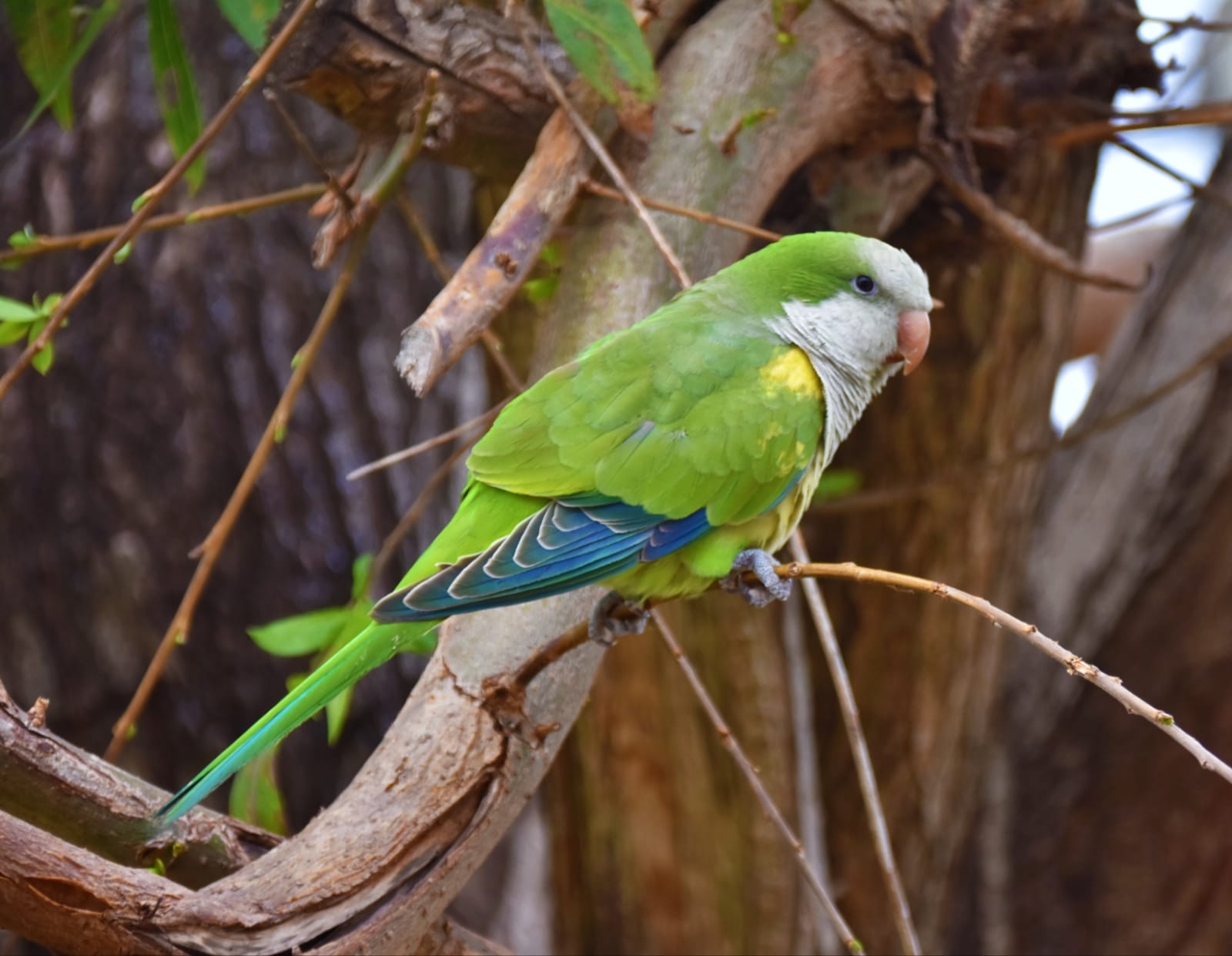
Quaker (Cotorra Monje) gallery
Frequently asked questions about the Quaker (Cotorra Monje)
- How long does a Quaker (Cotorra Monje) live? ▾
- The life expectancy of the Quaker (Cotorra Monje) is 20-30 años. A good diet, adequate exercise, annual veterinary check-ups and preventive care can help reach the upper end of that range.
- How much does a Quaker (Cotorra Monje) weigh? ▾
- An adult Quaker (Cotorra Monje) weighs between 90-150g, depending on its sex, genetics and condition. It is mediano.
- Where does the Quaker (Cotorra Monje) breed come from? ▾
- The Quaker (Cotorra Monje) originates from Sudamérica. Originating from South America. = the monk parakeet.
- How much exercise does a Quaker (Cotorra Monje) need? ▾
- The Quaker (Cotorra Monje) has media energy. **Cage:** at least twice the size of the bird with its wings spread. A dedicated room is better.
- Is the Quaker (Cotorra Monje) good with children? ▾
- **Children:** depends on the species + individual character. **Other birds:** better in a pair/group (except territorial species). **Larger pets:** avoid — a real risk of predation.
- Who is the Quaker (Cotorra Monje) NOT recommended for? ▾
- It isn't the right breed for: Homes without time to socialise the bird. Those who cannot tolerate noise (all parrots vocalise). Homes without space for flight. It's important to choose a breed that's compatible with your lifestyle.
- What health problems does the Quaker (Cotorra Monje) have? ▾
- Aspergillosis (fungal), psittacosis (chlamydiosis), feather problems from stress/deficiencies. Life expectancy of 20-30 years with appropriate care. Before taking on a large parrot, consider that you will share your entire adult life with it.
- Is it legal to keep a Quaker in the UK? ▾
- It depends on the jurisdiction. The monk/Quaker parakeet is listed as an invasive alien species, and keeping and breeding it are regulated or prohibited in various places. Find out before acquiring one.
- Does it talk well? ▾
- Yes. Despite its medium size it is a great mimic, able to learn many words and phrases in a clear voice.
- Why is it called 'monk'? ▾
- Because of the grey plumage on its chest and face that resembles a monk's habit. That is why it is known as the monk parakeet.
- Is it noisy? ▾
- Fairly. It vocalises a lot, especially when bored or demanding attention; it needs stimulation and company to avoid excessive screaming.
- Why does it pluck its feathers? ▾
- Quaker self-mutilation syndrome is associated with stress, boredom or health problems. Enrichment, routine and a veterinary check-up are essential.
Learn more about birds
Practical veterinary guides to support your Quaker (Cotorra Monje).
Sources and references
Content compiled from official breed standards and leading veterinary sources.
- WikipediaMyiopsitta monachus (Monk Parakeet) ↗
- World Parrot TrustMonk Parakeet ↗
Want to adopt a quaker (cotorra monje)?
There are quaker (cotorra monje)s in rescue shelters looking for a family. Filter by breed in the catalogue.