


Mona Negra (Black-capped Lory)
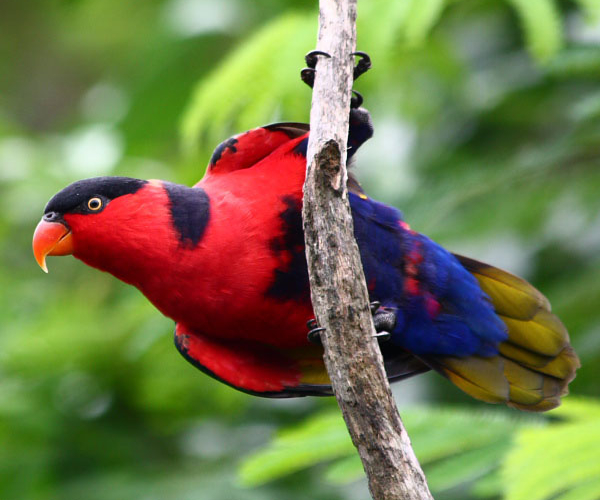
Bright red plumage with a black cap. Active and noisy. Nectar diet.
Foto: Wikipedia Commons · CC BY-SA
Ideal for
- ✓Families with time for daily interaction
- ✓Spacious homes (large birds require a room)
- ✓Those who accept a decades-long commitment (parrots live a long time)
Reconsider if
- ×Homes without time to socialise
- ×Those who cannot tolerate noise (all parrots vocalise)
- ×Homes without space for flight
Notify me when a Mona Negra (Black-capped Lory) is up for adoption
We'll only email you when a verified rescue posts one available. No spam, unsubscribe in 1 click.
We'll only use your email for this alert. More info in our privacy policy.
Is the Mona Negra (Black-capped Lory) a good match for you?
Indicative rating from 1 (low) to 5 (high).
💶 Estimated cost of ownership
30-55 €/month
Commercial nectar and fruit 18-30 €; toys 6-12 €; a share of avian vet costs 7-15 €. A large cage and the bird itself are the initial investment.
History and origin
Originated in Indonesia. Bright red plumage with a black cap.
Temperament and character
Intelligence varies by species. Parrots form strong bonds with their humans. They need daily mental stimulation · NOT just a cage.
Living together
Children: depends on species + individual temperament. **Other birds:** best kept in a pair/group (except territorial species). **Larger pets:** avoid — a real risk of predation.
Life stages of the Mona Negra (Black-capped Lory)
Each stage has its own care priorities. Life expectancy: 15-25 años.
Chick
0-3 months
Reared on mash/nectar; warmth and development of the black cap and red breast
Juvenile
3-12 months
Weaning onto a nectar/pollen diet; papillate tongue and active flight
Adult
1-15 years
Specific liquid lory diet; frequent baths and hygiene
Senior
15-25 years
Liver/kidney monitoring, weight and check-ups due to the sugary diet
Care
Cage: at least twice the size of the bird with its wings outstretched. A dedicated room is better.
Feeding: SEEDS are NOT a complete diet. A combination of pellets + fresh fruit/vegetables daily.
Free flight: at least 1-2 hours/day outside the cage in a safe area.
Vet: avian specialist vet (exotic vet). Annual check-up.
Care in detail
🍽️ Nutrition
A nectarivorous lory: specific commercial nectar or mash plus varied fresh fruit and some vegetables. Avoid seeds as the basis of the diet.
✂️ Grooming
Frequent baths and daily cleaning of the cage and surroundings because of its liquid droppings. Natural perches for the nails and beak.
🎓 Training
A very active, clownish and sociable lory; it learns tricks and sounds with positive reinforcement. Very curious and restless.
🏃 Exercise
A great need for activity: several hours a day of flight, play and foraging to prevent screaming and stress.
Breed-specific health
Aspergillosis (fungal), psittacosis (chlamydiosis), feather problems from stress/deficiencies. Life expectancy 15-25 years with proper care. Before adopting a large parrot, consider that you will share your whole adult life with it.
🩺 Health predispositions of this breed
Conditions this breed is more predisposed to. Knowing about them helps with prevention and early detection. A predisposition does not mean the animal will develop them.
Common diseases in birds
Learn the symptoms, prevention and when to see the vet. Reviewed indicative information that does not replace a veterinary consultation.
Screening and prevention for the Mona Negra (Black-capped Lory)
Recommended tests and screenings
- ✓PCR for psittacosis (Chlamydia psittaci)
- ✓PCR for PBFD and polyomavirus
- ✓Faecal test and culture (risk of candidiasis due to liquid diet)
- ✓Complete blood count and biochemistry
- ✓DNA sexing
Prevention
A specific nectarivorous diet (commercial lory nectar and fruit), not seeds. Daily hygiene because of its liquid droppings. Quarantine, a warm temperature and an environment free of Teflon fumes.
Check-up schedule
Annual check-up with an avian vet, including digestive and oral mucosa examination.
Warning signs
- !Abnormal or foul-smelling liquid droppings
- !White plaques in the mouth (candidiasis)
- !Weakness or paralysis
- !Ruffled plumage and lethargy
- !Loss of appetite
Mona Negra (Black-capped Lory) gallery
Frequently asked questions about the Mona Negra (Black-capped Lory)
- How long does a Mona Negra (Black-capped Lory) live? ▾
- The life expectancy of the Mona Negra (Black-capped Lory) is 15-25 años. A good diet, adequate exercise, annual veterinary check-ups and preventive care can help reach the upper end of that range.
- How much does a Mona Negra (Black-capped Lory) weigh? ▾
- An adult Mona Negra (Black-capped Lory) weighs between 200-220g, depending on its sex, genetics and condition. It is mediano.
- Where does the Mona Negra (Black-capped Lory) breed come from? ▾
- The Mona Negra (Black-capped Lory) originates from Indonesia. Originated in Indonesia. Bright red plumage with a black cap.
- How much exercise does a Mona Negra (Black-capped Lory) need? ▾
- The Mona Negra (Black-capped Lory) has media energy. **Cage:** at least twice the size of the bird with its wings outstretched. A dedicated room is better.
- Is the Mona Negra (Black-capped Lory) good with children? ▾
- **Children:** depends on species + individual temperament. **Other birds:** best kept in a pair/group (except territorial species). **Larger pets:** avoid — a real risk of predation.
- Who is the Mona Negra (Black-capped Lory) NOT recommended for? ▾
- It isn't the right breed for: Homes without time to socialise. Those who cannot tolerate noise (all parrots vocalise). Homes without space for flight. It's important to choose a breed that's compatible with your lifestyle.
- What health problems does the Mona Negra (Black-capped Lory) have? ▾
- Aspergillosis (fungal), psittacosis (chlamydiosis), feather problems from stress/deficiencies. Life expectancy 15-25 years with proper care. Before adopting a large parrot, consider that you will share your whole adult life with it.
- What kind of parrot is the Black-capped Lory? ▾
- It is a lory (Black-capped Lory), with bright red plumage and a black cap, nectarivorous like rainbow lorikeets, not a granivorous parrot.
- Why does it require a nectar diet? ▾
- Its body is adapted to nectar and pollen; in captivity it is fed on commercial nectar and fruit. Seeds are harmful to it.
- Does it make a lot of mess? ▾
- Yes, its droppings are liquid and it projects them, so it requires daily cleaning. This is an important point to consider.
- Is it noisy? ▾
- It is active and quite loud. It is worth thinking about living alongside neighbours before keeping it in a flat.
- Does it tolerate the cold? ▾
- Not well; it is a warm-climate bird and needs a mild temperature and protection from draughts.
Learn more about birds
Practical veterinary guides to support your Mona Negra (Black-capped Lory).
Sources and references
Content compiled from official breed standards and leading veterinary sources.
- WikipediaLorius lory (Tricolour Lory / Black-capped Lory) ↗
- World Parrot TrustBlack-capped Lory ↗
Want to adopt a mona negra (black-capped lory)?
There are mona negra (black-capped lory)s in rescue shelters looking for a family. Filter by breed in the catalogue.