

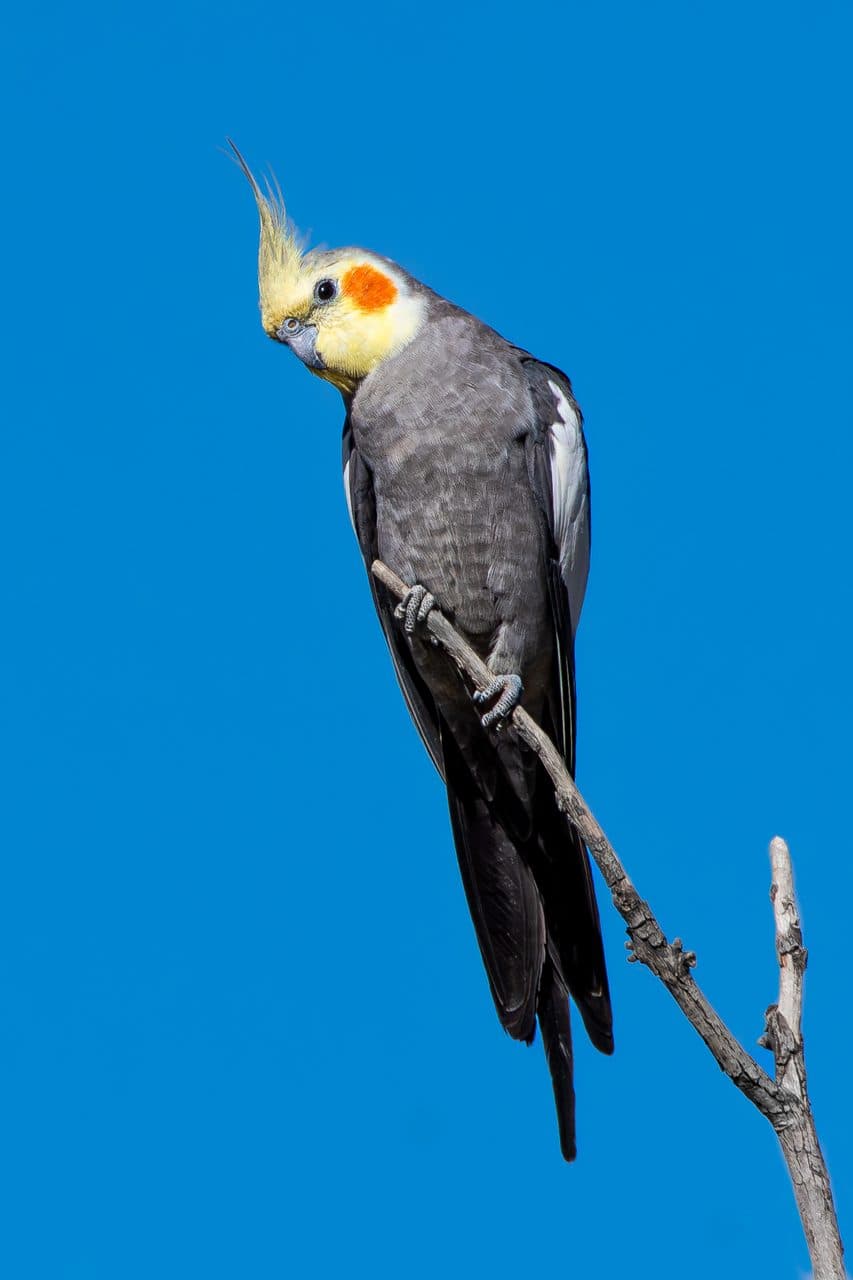
Ninfa (Cockatiel)
Distinctive crest. Affectionate and sociable. Learns to whistle. Needs to come out of the cage daily.
Foto: Wikipedia Commons · CC BY-SA
Ideal for
- ✓Families with time for daily interaction
- ✓Spacious flats (large birds require a room)
- ✓Those who accept a decades-long commitment (parrots live a long time)
Reconsider if
- ×Households without time to socialise
- ×Those who cannot tolerate noise (all parrots vocalise)
- ×Flats without space for flight
Notify me when a Ninfa (Cockatiel) is up for adoption
We'll only email you when a verified rescue posts one available. No spam, unsubscribe in 1 click.
We'll only use your email for this alert. More info in our privacy policy.
Is the Ninfa (Cockatiel) a good match for you?
Indicative rating from 1 (low) to 5 (high).
💶 Estimated cost of ownership
25-50 €/month
Extruded food and seeds (10-18 €), fresh vegetables and fruit (8-12 €), cuttlebone, substrate and chewing toys (8-15 €). Separately, the annual avian/exotics vet check-up (40-70 €/year) and the initial investment in a spacious cage (80-200 €). A fund for emergencies such as egg binding is advisable.
History and origin
A small cockatoo native to the arid regions of Australia; a classic reservoir of chlamydiosis and one of the most docile of avian pets.
Temperament and character
Intelligence varies by species. Parrots form strong bonds with their humans. They need daily mental stimulation · NOT just a cage.
Living together
Children: depends on species + individual character. **Other birds:** better in a pair/group (except territorial species). **Larger pets:** avoid — real risk of predation.
Life stages of the Ninfa (Cockatiel)
Each stage has its own care priorities. Life expectancy: 15-25 años.
Chick
0-3 months
Weaning, warmth, development of the plumage and crest
Juvenile
3-12 months
First moult, taming, balanced diet
Adult
1-12 years
Reproductive management, weight, prevention of night frights
Senior
12-25 years
Renal/hepatic function, tumours, eyes and joints
Care
Cage: at minimum twice the size of the bird with its wings extended. A dedicated room is better.
Feeding: SEEDS are NOT a complete diet. A combination of pellets + daily fresh fruit/vegetables.
Free flight: at least 1-2 hours/day outside the cage in a safe area.
Vet: avian specialist vet (exotics vet). Annual check-up.
Care in detail
🍽️ Nutrition
Seeds are NOT a complete diet: they cause obesity and vitamin A deficiency. A base of quality extruded food for cockatiels, supplemented daily with leafy greens, vegetables and a little fruit. Cuttlebone or a mineral block for calcium; fresh water changed every day.
✂️ Grooming
It requires hardly any plumage care, which it maintains itself. Offering baths (spraying with lukewarm water or a shallow bath) once or twice a week helps feather health and controls the powder characteristic of the species. Check nails and beak at vet visits.
🎓 Training
A very sociable species that tames well and learns to whistle tunes and imitate sounds, especially the males. Short, daily sessions with positive reinforcement (treats and a gentle voice). Get it used to the hand early (step-up); never force or punish, as it becomes fearful.
🏃 Exercise
It needs to come out of the cage for at least 1-2 hours a day to fly and socialise in a safe room (windows and mirrors covered, no other pets). Enrichment with toys to chew, foraging and interaction time: bored and alone, it develops feather plucking and screaming.
Breed-specific health
Aspergillosis (fungal), psittacosis (chlamydiosis), feather problems from stress/deficiencies. Life expectancy 15-25 years with proper care. Before adopting a large parrot, consider that you will live with it throughout your adult life.
🩺 Health predispositions of this breed
Conditions this breed is more predisposed to. Knowing about them helps with prevention and early detection. A predisposition does not mean the animal will develop them.
Common diseases in birds
Learn the symptoms, prevention and when to see the vet. Reviewed indicative information that does not replace a veterinary consultation.
Screening and prevention for the Ninfa (Cockatiel)
Recommended tests and screenings
- ✓PBFD screening (psittacine beak and feather disease caused by circovirus) by PCR, especially in young birds or those of dubious origin
- ✓Detection of psittacosis/chlamydiosis (Chlamydia psittaci), a zoonosis transmissible to people
- ✓Faecal analysis and Macrorhabdus ('megabacteria') test in cases of chronic weight loss
- ✓Assessment of the diet and signs of vitamin A hypovitaminosis (very common in birds fed only on seeds)
- ✓Examination of the beak and jaw to rule out malocclusion and overgrowth
Prevention
A balanced diet based on extruded food (pellets) plus vegetables, avoiding the seed-only diet that causes vitamin A deficiency and obesity. Quarantine of new birds, cage hygiene and avoiding draughts and smoke. In females, control chronic egg-laying and provide calcium (cuttlebone).
Check-up schedule
Annual avian veterinary check-up with weighing and diet assessment; basic blood work advisable in birds over 8-10 years of age or in the event of any change.
Warning signs
- !Fluffed-up plumage, drowsiness and staying at the bottom of the cage (birds hide illness until they are very unwell)
- !Tail-bobbing breathing, clicking sounds or nasal discharge
- !Female crouched, fluffed up and straining: possible egg binding (EMERGENCY)
- !Weight loss despite eating, or regurgitation and droppings with undigested seeds
- !Feather loss, feather plucking or abnormalities of the beak and nails
Ninfa (Cockatiel) gallery

Frequently asked questions about the Ninfa (Cockatiel)
- How long does a Ninfa (Cockatiel) live? ▾
- The life expectancy of the Ninfa (Cockatiel) is 15-25 años. A good diet, adequate exercise, annual veterinary check-ups and preventive care can help reach the upper end of that range.
- How much does a Ninfa (Cockatiel) weigh? ▾
- An adult Ninfa (Cockatiel) weighs between 80-120g, depending on its sex, genetics and condition. It is mediano.
- Where does the Ninfa (Cockatiel) breed come from? ▾
- The Ninfa (Cockatiel) originates from Australia. A small cockatoo native to the arid regions of Australia; a classic reservoir of chlamydiosis and one of the most docile of avian pets.
- How much exercise does a Ninfa (Cockatiel) need? ▾
- The Ninfa (Cockatiel) has media energy. **Cage:** at minimum twice the size of the bird with its wings extended. A dedicated room is better.
- Is the Ninfa (Cockatiel) good with children? ▾
- **Children:** depends on species + individual character. **Other birds:** better in a pair/group (except territorial species). **Larger pets:** avoid — real risk of predation.
- Who is the Ninfa (Cockatiel) NOT recommended for? ▾
- It isn't the right breed for: Households without time to socialise. Those who cannot tolerate noise (all parrots vocalise). Flats without space for flight. It's important to choose a breed that's compatible with your lifestyle.
- What health problems does the Ninfa (Cockatiel) have? ▾
- Aspergillosis (fungal), psittacosis (chlamydiosis), feather problems from stress/deficiencies. Life expectancy 15-25 years with proper care. Before adopting a large parrot, consider that you will live with it throughout your adult life.
- Can I feed my cockatiel only on a seed mix? ▾
- It is not recommended. The seed-only diet is very fatty and lacks vitamin A and calcium, which causes obesity, liver problems and respiratory diseases. The ideal is a base of pellets plus fresh vegetables daily.
- Do cockatiels talk or sing? ▾
- They hardly talk, but they are excellent whistlers: males learn tunes, tones and small imitations. With daily dedication they reproduce simple songs. Females are quieter and whistle less.
- Is it better to keep a cockatiel alone or in a pair? ▾
- If you have plenty of time to interact, a single one will bond intensely with you. If you are going to be out, a pair is better so it does not suffer from loneliness. In a pair they will pay you less attention, but they will be more emotionally balanced.
- Why does my cockatiel lay eggs without a male? ▾
- Females can lay infertile eggs due to hormonal stimuli. Chronic laying depletes their calcium and can lead to egg binding, an emergency. You must provide calcium, reduce the hours of light and consult the vet if it recurs.
- What is the 'powder' that cockatiels give off? ▾
- It is powder down, normal in cockatoos, which they use to preen themselves. Good ventilation and regular baths are advisable. People with asthma or allergies should bear it in mind before adopting a cockatiel.
Learn more about birds
Practical veterinary guides to support your Ninfa (Cockatiel).
Sources and references
Content compiled from official breed standards and leading veterinary sources.
- WikipediaNymphicus hollandicus ↗
- World Parrot TrustCockatiel - Parrot Encyclopedia ↗
Want to adopt a ninfa (cockatiel)?
There are ninfa (cockatiel)s in rescue shelters looking for a family. Filter by breed in the catalogue.