

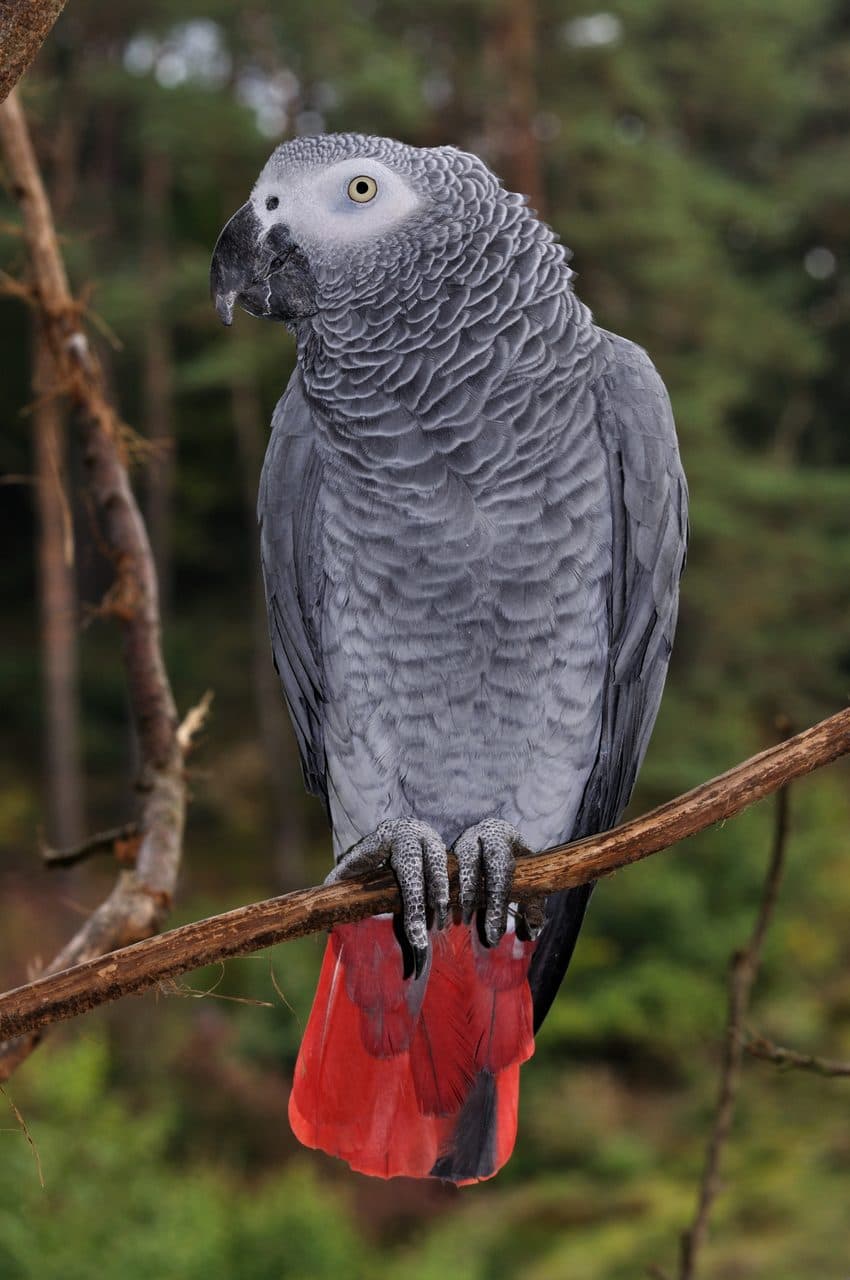
Loro Yaco (African Grey)
Considered the most intelligent parrot. A vocabulary of 1000+ words. An enormous commitment; it needs constant stimulation.
Foto: Wikipedia Commons · CC BY-SA
Ideal for
- ✓Families with time for daily interaction
- ✓Spacious flats (large birds require a room)
- ✓Those who accept a decades-long commitment (parrots live a long time)
Reconsider if
- ×Households with no time to socialise
- ×Those who cannot tolerate noise (all parrots vocalise)
- ×Flats with no space for flight
Notify me when a Loro Yaco (African Grey) is up for adoption
We'll only email you when a verified rescue posts one available. No spam, unsubscribe in 1 click.
We'll only use your email for this alert. More info in our privacy policy.
Is the Loro Yaco (African Grey) a good match for you?
Indicative rating from 1 (low) to 5 (high).
💶 Estimated cost of ownership
40-70 €/month
Feeding (pellets, fruit and vegetables): 20-35 € · Toys and enrichment: 8-15 € · Avian vet: 10-20 €
History and origin
An African grey parrot from Central Africa, considered one of the most intelligent animals; highly sensitive to hypocalcaemia and stress.
Temperament and character
Intelligence varies by species. Parrots form strong bonds with their humans. They need daily mental stimulation · NOT just a cage.
Living together
Children: depends on the species + individual character. **Other birds:** better in a pair/group (except territorial species). **Older pets:** avoid — a real risk of predation.
Life stages of the Loro Yaco (African Grey)
Each stage has its own care priorities. Life expectancy: 40-60 años.
Chick
0-5 months
Hand-rearing, prolonged weaning, calcium/vitamin D
Juvenile
5 months-5 years
Socialisation, cognitive stimulation, pelleted diet
Adult
5-30 years
Hypocalcaemia, feather picking, intensive enrichment
Senior
30-60 years
Atherosclerosis, arthritis, kidney/liver function
Care
Cage: at minimum twice the size of the bird with its wings outstretched. A dedicated room is better.
Feeding: SEEDS are NOT a complete diet. A combination of pellets + fresh fruit/vegetables daily.
Free flight: at least 1-2 hours/day outside the cage in a safe area.
Veterinarian: an avian (exotic) vet specialist. Annual check-up.
Care in detail
🍽️ Nutrition
Seeds are NOT a complete diet. A base of quality pellets supplemented daily with fresh fruit and vegetables; pay particular attention to calcium intake.
✂️ Grooming
Bathing or showering with lukewarm water several times a week and checks of the beak and nails. It needs adequate light exposure for feather health and calcium.
🎓 Training
It is the most intelligent parrot, able to learn more than 1000 words: highly trainable with positive reinforcement. It needs daily interaction and mental stimulation or it develops feather picking and problem behaviours.
🏃 Exercise
At least 1-2 hours a day outside the cage in a safe area, with toys, foraging and mental work. The cage alone is never enough.
Breed-specific health
Aspergillosis (fungal), psittacosis (chlamydiosis), feather problems from stress/deficiencies. Life expectancy 40-60 years with proper care. Before adopting a large parrot, consider that you will live with it throughout your adult life.
🩺 Health predispositions of this breed
Conditions this breed is more predisposed to. Knowing about them helps with prevention and early detection. A predisposition does not mean the animal will develop them.
Common diseases in birds
Learn the symptoms, prevention and when to see the vet. Reviewed indicative information that does not replace a veterinary consultation.
Screening and prevention for the Loro Yaco (African Grey)
Recommended tests and screenings
- ✓Annual blood test and biochemistry, with particular attention to calcium (the African grey is prone to hypocalcaemia)
- ✓Psittacosis screening (chlamydiosis, zoonotic)
- ✓Culture/serology for aspergillosis in the presence of respiratory signs
- ✓Viral screening (PBFD, polyomavirus) in birds of uncertain origin
Prevention
A varied diet based on pellets plus fresh fruit and vegetables (seeds alone cause deficiencies), adequate light exposure to fix calcium, a draught- and fume-free environment, and plenty of enrichment to prevent stress-related feather picking.
Check-up schedule
Annual review with an avian vet specialist, including blood work.
Warning signs
- !Deteriorated or self-plucked plumage (feather picking from stress or deficiencies)
- !Nasal or ocular discharge and sneezing
- !Breathing difficulty, tail pumping or open-mouthed breathing
- !Lethargy, fluffed-up feathers or weight loss
Loro Yaco (African Grey) gallery

Frequently asked questions about the Loro Yaco (African Grey)
- How long does a Loro Yaco (African Grey) live? ▾
- The life expectancy of the Loro Yaco (African Grey) is 40-60 años. A good diet, adequate exercise, annual veterinary check-ups and preventive care can help reach the upper end of that range.
- How much does a Loro Yaco (African Grey) weigh? ▾
- An adult Loro Yaco (African Grey) weighs between 400-500g, depending on its sex, genetics and condition. It is grande.
- Where does the Loro Yaco (African Grey) breed come from? ▾
- The Loro Yaco (African Grey) originates from África Central. An African grey parrot from Central Africa, considered one of the most intelligent animals; highly sensitive to hypocalcaemia and stress.
- How much exercise does a Loro Yaco (African Grey) need? ▾
- The Loro Yaco (African Grey) has media energy. **Cage:** at minimum twice the size of the bird with its wings outstretched. A dedicated room is better.
- Is the Loro Yaco (African Grey) good with children? ▾
- **Children:** depends on the species + individual character. **Other birds:** better in a pair/group (except territorial species). **Older pets:** avoid — a real risk of predation.
- Who is the Loro Yaco (African Grey) NOT recommended for? ▾
- It isn't the right breed for: Households with no time to socialise. Those who cannot tolerate noise (all parrots vocalise). Flats with no space for flight. It's important to choose a breed that's compatible with your lifestyle.
- What health problems does the Loro Yaco (African Grey) have? ▾
- Aspergillosis (fungal), psittacosis (chlamydiosis), feather problems from stress/deficiencies. Life expectancy 40-60 years with proper care. Before adopting a large parrot, consider that you will live with it throughout your adult life.
- How long does an African grey parrot live? ▾
- Between 40 and 60 years. It is a lifelong commitment: you will very likely live with it throughout your adult life, and it is wise to plan who will care for it if you pass away.
- Can it eat only seeds? ▾
- No. A seed-only diet causes serious deficiencies (vitamin A, calcium). The base should be quality pellets plus fresh fruit and vegetables daily.
- Is it noisy? ▾
- Like all parrots, it vocalises and can be noisy, as well as talking a great deal. It is worth considering if you live in a flat with sensitive neighbours.
- Why do they pluck their feathers? ▾
- Feather picking is usually due to stress, boredom or nutritional deficiencies. It is a highly intelligent bird that needs daily interaction and enrichment; without these it develops this problem.
- Does it need a special vet? ▾
- Yes, an avian (exotic) vet specialist. An annual blood test is advisable, monitoring calcium given its predisposition to hypocalcaemia.
Learn more about birds
Practical veterinary guides to support your Loro Yaco (African Grey).
Sources and references
Content compiled from official breed standards and leading veterinary sources.
- WikipediaPsittacus erithacus ↗
- World Parrot TrustGrey Parrot - Parrot Encyclopedia ↗
Want to adopt a loro yaco (african grey)?
There are loro yaco (african grey)s in rescue shelters looking for a family. Filter by breed in the catalogue.