

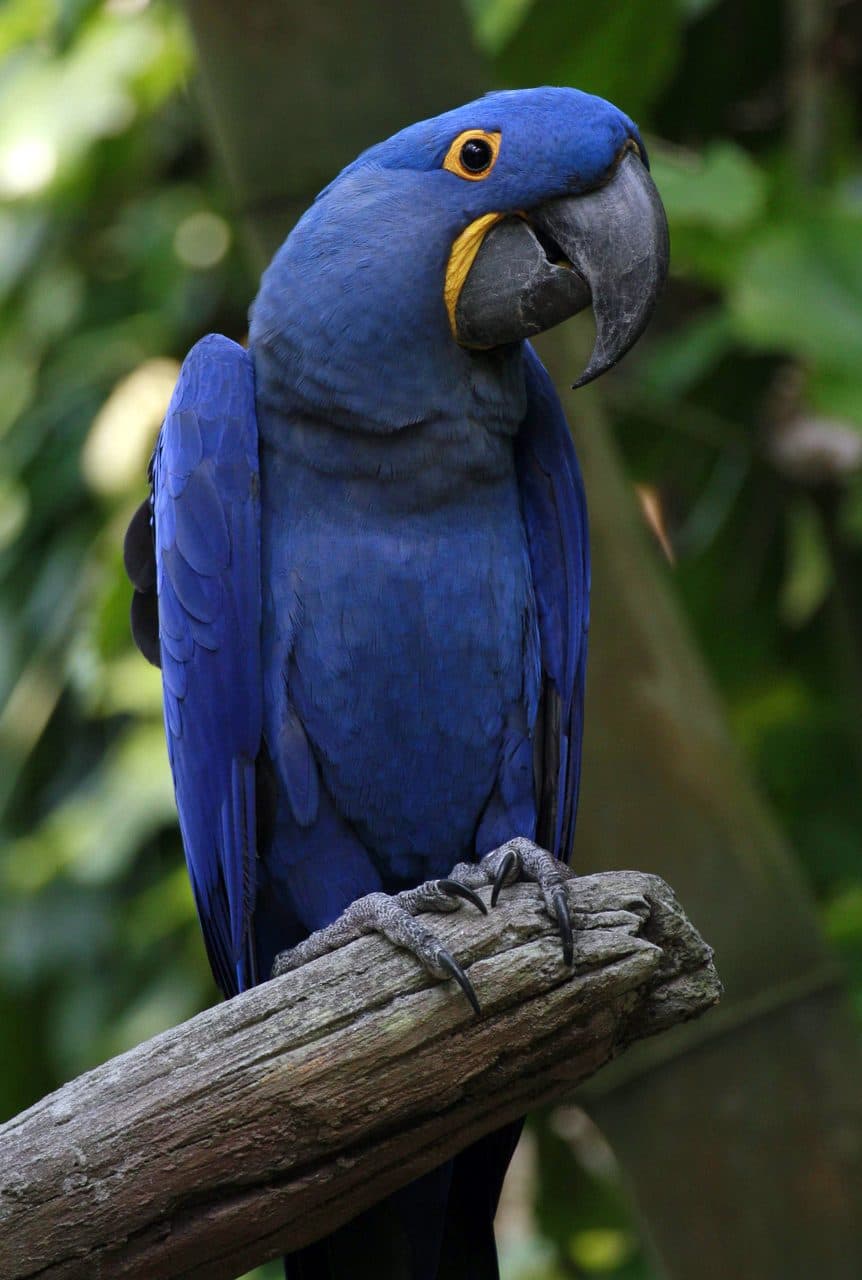
Guacamayo Jacinto
The largest in the world. Deep blue. CITES I — vulnerable. Only from a legal, documented breeder.
Foto: Wikipedia Commons · CC BY-SA
Ideal for
- ✓Families with time for daily interaction
- ✓Spacious flats (large birds require a dedicated room)
- ✓Those who accept a commitment of decades (parrots live a long time)
Reconsider if
- ×Homes without time to socialise them
- ×Those who cannot tolerate noise (all parrots vocalise)
- ×Flats without room to fly
Notify me when a Guacamayo Jacinto is up for adoption
We'll only email you when a verified rescue posts one available. No spam, unsubscribe in 1 click.
We'll only use your email for this alert. More info in our privacy policy.
Is the Guacamayo Jacinto a good match for you?
Indicative rating from 1 (low) to 5 (high).
💶 Estimated cost of ownership
120-220 €/month
Palm/macadamia nuts, pellets, fruit and vegetables: 60-110 €/month (its high-fat diet is expensive). Toys and hardwood (it destroys them): 25-50 €/month. Pro-rated specialist avian vet and blood work: 30-60 €/month. Separately: a reinforced initial aviary and CITES I documentation; a commitment of over 50 years.
History and origin
The largest flying parrot in the world, native to Brazil; threatened and with a diet highly specialised in palm nuts.
Temperament and character
Intelligence varies by species. Parrots form strong bonds with their humans. They need daily mental stimulation · NOT just a cage.
Living together
Children: depends on the species plus individual temperament. **Other birds:** better in a pair or group (except territorial species). **Older pets:** avoid — a real risk of predation.
Life stages of the Guacamayo Jacinto
Each stage has its own care priorities. Life expectancy: 50+ años.
Chick
0-6 months
Hand-rearing, long weaning, fat intake (palm nuts)
Juvenile
6 months-7 years
Socialisation, flight, nut-rich diet
Adult
7-40 years
Very powerful beak, enrichment, heavy-metal poisoning
Senior
40-60 years
Atherosclerosis, arthritis, kidney/liver function
Care
Cage: at least twice the size of the bird with its wings spread. A dedicated room is better.
Diet: SEEDS are NOT a complete diet. A combination of pellets plus fresh fruit and vegetables daily.
Free flight: at least 1-2 hours a day outside the cage in a safe area.
Vet: an avian specialist vet (exotics vet). Annual blood work.
Care in detail
🍽️ Nutrition
A special diet: it needs more fat than other parrots, based on palm nuts, macadamia and walnuts, complemented with macaw pellets and fruit/vegetables. Its beak cracks very hard nuts; offer safe nuts in the shell.
✂️ Grooming
Frequent bathing/showering, beak and nail care, feather inspection. Its plumage is kept in condition by the right diet and environment, not by brushing.
🎓 Training
The largest parrot in the world and highly intelligent: it learns tricks and words with positive reinforcement and is surprisingly gentle, but its beak is the most powerful of any bird; handling requires a great deal of experience.
🏃 Exercise
It needs a large aviary and several hours of flight, chewing and foraging daily. It is huge, strong and very social: it does not tolerate confinement or loneliness.
Breed-specific health
Aspergillosis (fungal), psittacosis (chlamydiosis), feather problems from stress or deficiencies. Life expectancy 50+ years with proper care. Before adopting a large parrot, consider that you will live with it throughout your adult life.
🩺 Health predispositions of this breed
Conditions this breed is more predisposed to. Knowing about them helps with prevention and early detection. A predisposition does not mean the animal will develop them.
Common diseases in birds
Learn the symptoms, prevention and when to see the vet. Reviewed indicative information that does not replace a veterinary consultation.
Screening and prevention for the Guacamayo Jacinto
Recommended tests and screenings
- ✓DNA sexing
- ✓PCR for PBFD (circovirus) and polyomavirus
- ✓PCR/serology for psittacosis (Chlamydia psittaci)
- ✓Monitoring for PDD/bornavirus, aspergillosis and liver problems from an inadequate diet
Prevention
A very specific diet with a high intake of palm/macadamia nuts (it needs more fat than other parrots) plus pellets and fruit, a large dedicated aviary, daily interaction and flight, and an annual avian check-up. CITES I documentation is mandatory.
Check-up schedule
Annual avian check-up with weighing, blood work and liver/cardiovascular monitoring; follow-up by a vet experienced with large psittacines.
Warning signs
- !Regurgitation and weight loss (PDD)
- !Feather-plucking and dull plumage
- !Breathing difficulty (aspergillosis)
- !Apathy and ruffled feathers
- !Overweight or liver problems from the wrong kind of excess fat
Guacamayo Jacinto gallery

Frequently asked questions about the Guacamayo Jacinto
- How long does a Guacamayo Jacinto live? ▾
- The life expectancy of the Guacamayo Jacinto is 50+ años. A good diet, adequate exercise, annual veterinary check-ups and preventive care can help reach the upper end of that range.
- How much does a Guacamayo Jacinto weigh? ▾
- An adult Guacamayo Jacinto weighs between 1500g+, depending on its sex, genetics and condition. It is gigante.
- Where does the Guacamayo Jacinto breed come from? ▾
- The Guacamayo Jacinto originates from Brasil. The largest flying parrot in the world, native to Brazil; threatened and with a diet highly specialised in palm nuts.
- How much exercise does a Guacamayo Jacinto need? ▾
- The Guacamayo Jacinto has media energy. **Cage:** at least twice the size of the bird with its wings spread. A dedicated room is better.
- Is the Guacamayo Jacinto good with children? ▾
- **Children:** depends on the species plus individual temperament. **Other birds:** better in a pair or group (except territorial species). **Older pets:** avoid — a real risk of predation.
- Who is the Guacamayo Jacinto NOT recommended for? ▾
- It isn't the right breed for: Homes without time to socialise them. Those who cannot tolerate noise (all parrots vocalise). Flats without room to fly. It's important to choose a breed that's compatible with your lifestyle.
- What health problems does the Guacamayo Jacinto have? ▾
- Aspergillosis (fungal), psittacosis (chlamydiosis), feather problems from stress or deficiencies. Life expectancy 50+ years with proper care. Before adopting a large parrot, consider that you will live with it throughout your adult life.
- Is it legal to keep a hyacinth macaw? ▾
- Only with valid CITES I documentation and from a legal breeder. It is a vulnerable and highly protected species: buying birds without paperwork or of wild origin is illegal. Demand and keep full traceability.
- Why does it need such a special diet? ▾
- Its natural diet is based on very fatty palm nuts, so it requires more fat (macadamia, palm nut) than other parrots. A standard feed without that intake causes deficiencies; the wrong kind of excess causes fatty liver.
- Is it really the largest parrot? ▾
- Yes, it is the largest psittacine in the world (up to a metre wingspan) and has the most powerful beak, capable of cracking very hard nuts. It needs space and toys to match.
- Is it aggressive? ▾
- It is usually surprisingly gentle and calm for its size, but its beak is very powerful. It requires an expert handler and is not suitable around young children without supervision.
- Can it be kept in a flat? ▾
- Not realistically. It needs a large aviary, flies and chews a great deal, and lives more than 50 years. It is an enormous commitment of space, time and budget.
Learn more about birds
Practical veterinary guides to support your Guacamayo Jacinto.
Sources and references
Content compiled from official breed standards and leading veterinary sources.
- WikipediaAnodorhynchus hyacinthinus ↗
- World Parrot TrustHyacinth Macaw - Parrot Encyclopedia ↗
Want to adopt a guacamayo jacinto?
There are guacamayo jacintos in rescue shelters looking for a family. Filter by breed in the catalogue.