

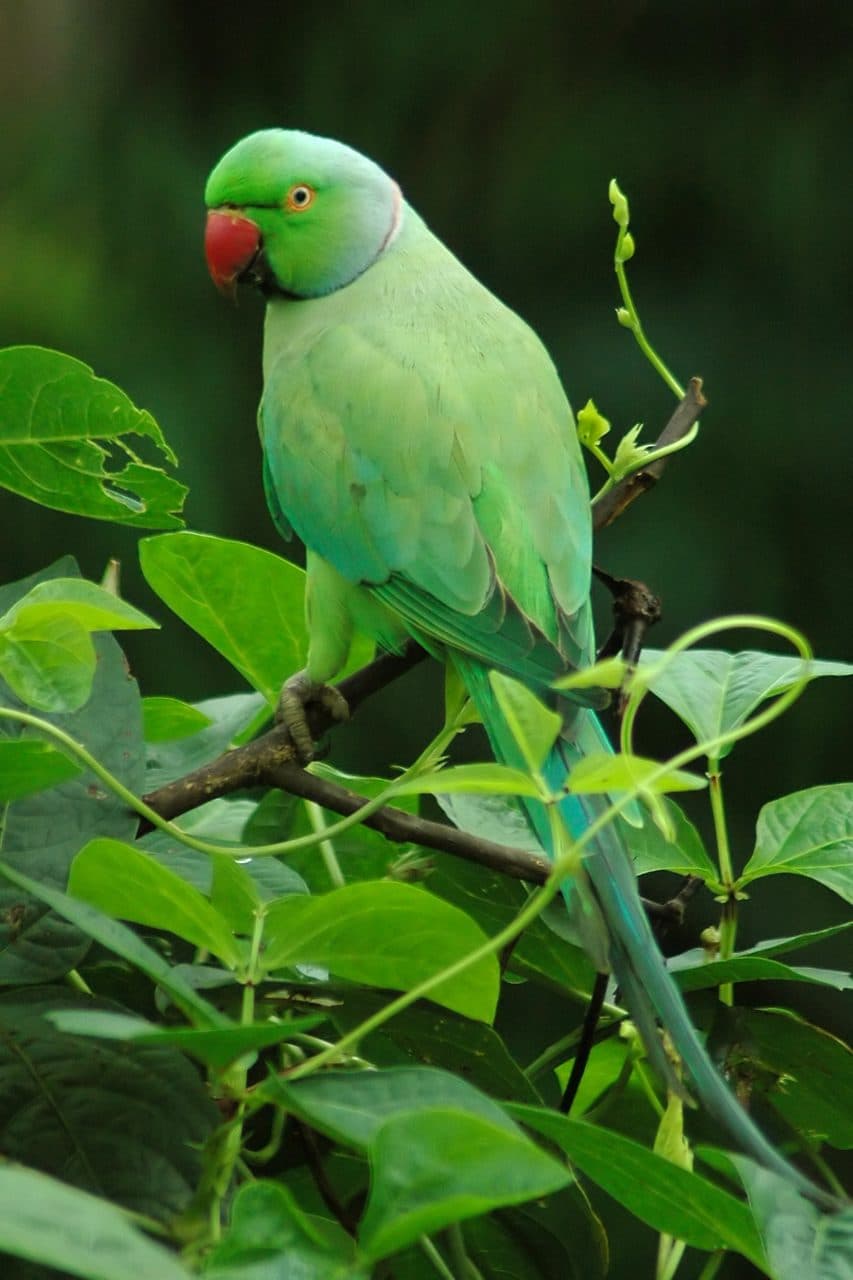
Cotorra de Kramer
A black collar in adult males. Colourful. In the UK there are established feral colonies (London and beyond).
Foto: Wikipedia Commons · CC BY-SA
Ideal for
- ✓Families with time for daily interaction
- ✓Spacious flats (large birds need a room)
- ✓Anyone who accepts a decades-long commitment (parrots live a long time)
Reconsider if
- ×Households with no time to socialise the bird
- ×Anyone who cannot tolerate noise (all parrots vocalise)
- ×Flats with no space for flight
Notify me when a Cotorra de Kramer is up for adoption
We'll only email you when a verified rescue posts one available. No spam, unsubscribe in 1 click.
We'll only use your email for this alert. More info in our privacy policy.
Is the Cotorra de Kramer a good match for you?
Indicative rating from 1 (low) to 5 (high).
💶 Estimated cost of ownership
30-60 €/month
Pellets, fruit and vegetables: 18-30 €/month. Toys and enrichment: 6-12 €/month. Pro-rated annual avian vet: 8-18 €/month. Separately: the initial large, elongated cage and checking the legality of ownership.
History and origin
A ring-necked parakeet native to Africa and southern Asia; widely naturalised in European parks and very long-lived in captivity.
Temperament and character
Intelligence varies by species. Parrots form strong bonds with their humans. They need daily mental stimulation · NOT just a cage.
Living together
Children: depends on the species + individual temperament. **Other birds:** best kept in a pair/group (except territorial species). **Larger pets:** avoid — a real risk of predation.
Life stages of the Cotorra de Kramer
Each stage has its own care priorities. Life expectancy: 20-30 años.
Chick
0-2 months
Rearing, weaning and growth
Juvenile
2-18 months
Moult, taming, appearance of the collar (males)
Adult
1.5-18 years
Flight management, weight, breeding season
Senior
18-30 years
Liver/kidney and locomotor check-ups
Care
Cage: at minimum twice the size of the bird with its wings spread. A dedicated room is better.
Feeding: SEEDS are NOT a complete diet. A combination of pellets + fresh daily fruit/vegetables.
Free flight: at least 1-2 hours/day outside the cage in a safe area.
Vet: an avian specialist vet (exotic vet). Annual check-up.
Care in detail
🍽️ Nutrition
A base of parakeet pellets with varied fruit and vegetables and seeds as a treat; vitamin A provided through vegetables (carrot, leafy greens). Avoid a seed-only diet.
✂️ Grooming
Frequent bathing, nail and beak care, plumage checks. A fairly independent bird; respect its pace when handling it.
🎓 Training
Intelligent and an excellent talker, but more independent and sometimes standoffish than a conure; constant positive reinforcement improves its tameness. It learns many words.
🏃 Exercise
A large, elongated cage (it needs to flap its wings and move its long tail) plus 1-3 hours of daily flight with toys.
Breed-specific health
Aspergillosis (fungal infection), psittacosis (chlamydiosis), feather problems caused by stress/deficiencies. Life expectancy 20-30 years with proper care. Before adopting a large parrot, bear in mind you will share your whole adult life with it.
🩺 Health predispositions of this breed
Conditions this breed is more predisposed to. Knowing about them helps with prevention and early detection. A predisposition does not mean the animal will develop them.
Common diseases in birds
Learn the symptoms, prevention and when to see the vet. Reviewed indicative information that does not replace a veterinary consultation.
Screening and prevention for the Cotorra de Kramer
Recommended tests and screenings
- ✓DNA sexing (collar dimorphism only in adult males)
- ✓PCR for PBFD (circovirus) and polyomavirus
- ✓PCR/serology for psittacosis (Chlamydia psittaci)
- ✓Faecal Gram stain, blood count and vitamin A level according to diet
Prevention
A pellet-based diet with fruit and vegetables, daily flight and enrichment, quarantine of new birds and an annual avian check-up. Check the legal situation before acquiring one.
Check-up schedule
Annual avian check-up with weighing; watch the plumage (for 'French moult' caused by PBFD) and the diet.
Warning signs
- !Flight/tail feathers that fail to grow or fall out (French moult)
- !Feather plucking and dull plumage
- !Apathy and ruffled feathers
- !Abnormal droppings
- !Laboured breathing
Cotorra de Kramer gallery

Frequently asked questions about the Cotorra de Kramer
- How long does a Cotorra de Kramer live? ▾
- The life expectancy of the Cotorra de Kramer is 20-30 años. A good diet, adequate exercise, annual veterinary check-ups and preventive care can help reach the upper end of that range.
- How much does a Cotorra de Kramer weigh? ▾
- An adult Cotorra de Kramer weighs between 95-143g, depending on its sex, genetics and condition. It is mediano.
- Where does the Cotorra de Kramer breed come from? ▾
- The Cotorra de Kramer originates from África y Asia. A ring-necked parakeet native to Africa and southern Asia; widely naturalised in European parks and very long-lived in captivity.
- How much exercise does a Cotorra de Kramer need? ▾
- The Cotorra de Kramer has media energy. **Cage:** at minimum twice the size of the bird with its wings spread. A dedicated room is better.
- Is the Cotorra de Kramer good with children? ▾
- **Children:** depends on the species + individual temperament. **Other birds:** best kept in a pair/group (except territorial species). **Larger pets:** avoid — a real risk of predation.
- Who is the Cotorra de Kramer NOT recommended for? ▾
- It isn't the right breed for: Households with no time to socialise the bird. Anyone who cannot tolerate noise (all parrots vocalise). Flats with no space for flight. It's important to choose a breed that's compatible with your lifestyle.
- What health problems does the Cotorra de Kramer have? ▾
- Aspergillosis (fungal infection), psittacosis (chlamydiosis), feather problems caused by stress/deficiencies. Life expectancy 20-30 years with proper care. Before adopting a large parrot, bear in mind you will share your whole adult life with it.
- Is it legal to keep a rose-ringed parakeet in the UK? ▾
- You need to check: the rose-ringed parakeet (Psittacula krameri / Alexandrinus krameri) is treated as an invasive alien species in many countries, which restricts keeping, breeding, trade and release. Consult the current national and regional regulations before acquiring one.
- Does only the male have the black collar? ▾
- Yes. The characteristic black-and-pink collar appears only in adult males, at around 18-36 months. That is why, in young birds, DNA sexing is the reliable option.
- Is it a good talker? ▾
- Excellent: it is one of the Psittacula that learn to talk best, with a broad vocabulary and a clear voice. It needs stimulation so it does not get bored.
- Is it affectionate like a conure? ▾
- It is more independent and can be standoffish, especially during the breeding season. With socialisation and positive reinforcement it becomes tame, but it is not usually as 'clingy'.
- Is it very noisy? ▾
- It has a sharp, penetrating screech that it repeats, typical of urban colonies. In a flat it can be a nuisance to neighbours.
Learn more about birds
Practical veterinary guides to support your Cotorra de Kramer.
Sources and references
Content compiled from official breed standards and leading veterinary sources.
- WikipediaPsittacula krameri ↗
- SEO/BirdLifeRose-ringed parakeet - exotic species ↗
- World Parrot TrustRose-ringed Parakeet - Parrot Encyclopedia ↗
Want to adopt a cotorra de kramer?
There are cotorra de kramers in rescue shelters looking for a family. Filter by breed in the catalogue.