

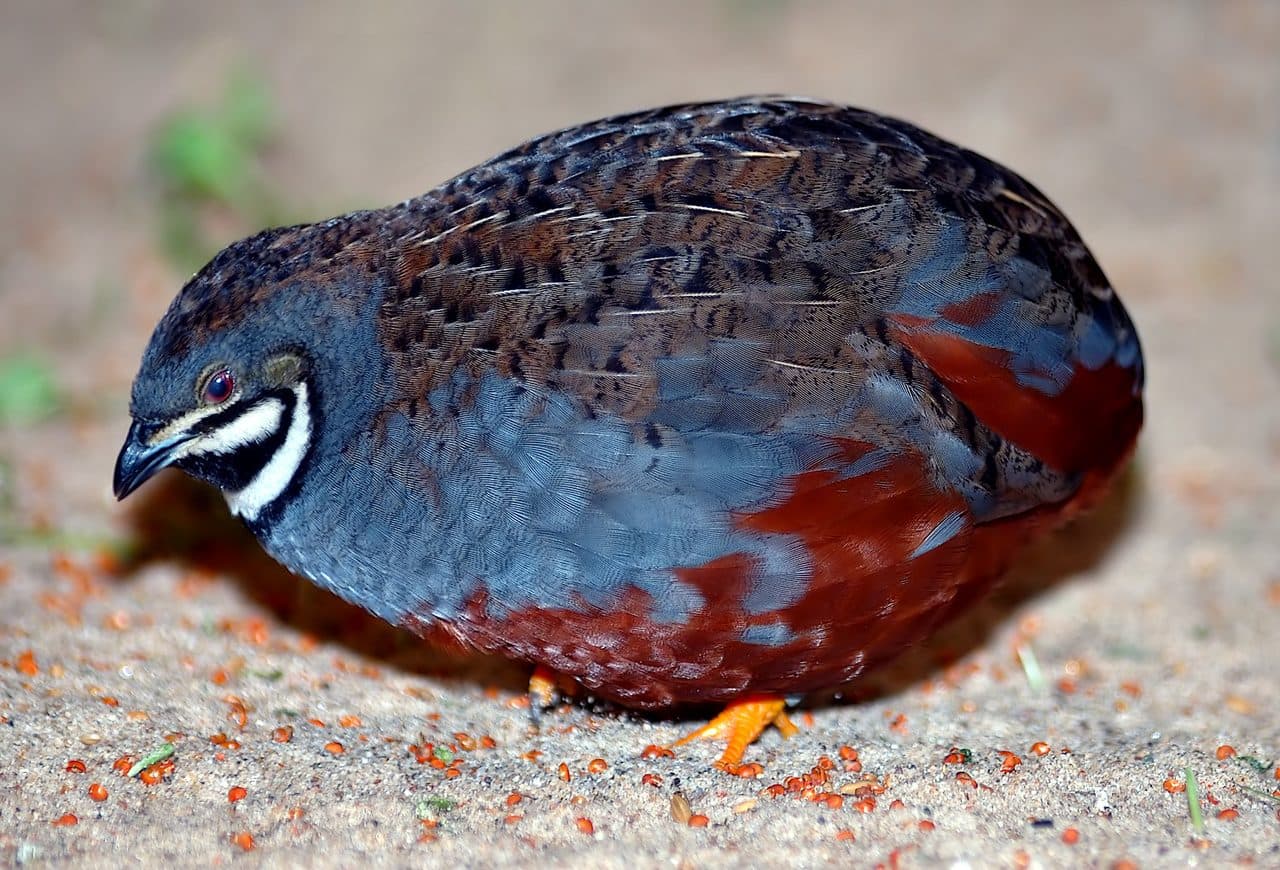
Codorniz China
A ground-walker on the cage floor. Can share an aviary with finches (it occupies the floor, so there is no competition).
Foto: Wikipedia Commons · CC BY-SA
Ideal for
- ✓Families with time for daily interaction
- ✓Spacious flats (large birds require a room)
- ✓Anyone accepting a decades-long commitment (parrots live a long time)
Reconsider if
- ×Homes without time to socialise
- ×Anyone who cannot tolerate noise (all parrots vocalise)
- ×Flats without space to fly
Notify me when a Codorniz China is up for adoption
We'll only email you when a verified rescue posts one available. No spam, unsubscribe in 1 click.
We'll only use your email for this alert. More info in our privacy policy.
Is the Codorniz China a good match for you?
Indicative rating from 1 (low) to 5 (high).
💶 Estimated cost of ownership
15-30 €/month
Quail feed and millet: 6-10 €/month. Vegetables, grit and calcium: 2-4 €/month. Substrate and frequent floor cleaning: 3-6 €/month. Prorated avian vet: 3-6 €/month.
History and origin
Native to Asia. A ground-walker on the cage floor.
Temperament and character
Intelligence varies by species. Parrots form strong bonds with their humans. They need daily mental stimulation · NOT just a cage.
Living together
Children: depends on the species + individual temperament. **Other birds:** better in a pair/group (except for territorial species). **Larger pets:** avoid — a real risk of predation.
Life stages of the Codorniz China
Each stage has its own care priorities. Life expectancy: 3-5 años.
Chick
0-3 weeks
Precocial nidifuge; warmth in a brooder and high-protein starter crumb.
Juvenile
3-8 weeks
Rapid feathering; dimorphism (chestnut breast in the male) and early maturity.
Adult
2 months-3 years
Lives on the aviary floor; a soft-ceilinged cage due to sudden vertical leaps.
Senior
3-5 years
Cessation of laying; watch for prolapse, legs and head injuries.
Care
Cage: at least twice the size of the bird with its wings spread. A dedicated room is better.
Feeding: SEEDS are NOT a complete diet. A combination of pellets + fresh fruit/vegetables daily.
Free flight: at least 1-2 hours/day outside the cage in a safe area.
Vet: an avian specialist vet (exotics vet). Annual tests.
Care in detail
🍽️ Nutrition
Quail/gallinaceous feed (higher protein than canary feed) plus millet, chopped vegetables, grit/oyster shell for calcium (especially laying hens) and occasional animal protein.
✂️ Grooming
It does not preen itself; it needs a dry sand bath to maintain its plumage and control parasites. Frequent cleaning of the floor substrate.
🎓 Training
Not trainable. Handling is minimal: they are nervous and, when startled, leap upwards; a low or soft ceiling and calm movements are advisable.
🏃 Exercise
It lives on the ground: it needs a large horizontal surface with hiding places; it does not climb or fly like a budgerigar. It can share an aviary, occupying the floor.
Breed-specific health
Aspergillosis (fungi), psittacosis (chlamydiosis), feather problems due to stress/deficiencies. Life expectancy 3-5 years with proper care. Before adopting a large parrot, consider that you will live with it throughout your adult life.
🩺 Health predispositions of this breed
Conditions this breed is more predisposed to. Knowing about them helps with prevention and early detection. A predisposition does not mean the animal will develop them.
Common diseases in birds
Learn the symptoms, prevention and when to see the vet. Reviewed indicative information that does not replace a veterinary consultation.
Screening and prevention for the Codorniz China
Recommended tests and screenings
- ✓Avian veterinary examination
- ✓Faecal examination for coccidia and nematodes
- ✓Monitoring for ulcerative enteritis (intestinal ulcers)
- ✓Examination of the legs and plumage for external mites
Prevention
Soft flooring and safe substrate, a low or padded ceiling to prevent injuries when startled (they leap vertically), an appropriate diet, hygiene and a sand bath for parasites.
Check-up schedule
Regular avian check-up; in heavily laying hens, watch for egg retention and wear from laying.
Warning signs
- !Wounds or blood on the head (hitting the ceiling)
- !A swollen hen that is not laying (egg retention)
- !Ruffled feathers and lethargy
- !Diarrhoea (coccidiosis)
- !Lameness or scabs on the legs
Codorniz China gallery

Frequently asked questions about the Codorniz China
- How long does a Codorniz China live? ▾
- The life expectancy of the Codorniz China is 3-5 años. A good diet, adequate exercise, annual veterinary check-ups and preventive care can help reach the upper end of that range.
- How much does a Codorniz China weigh? ▾
- An adult Codorniz China weighs between 50-70g, depending on its sex, genetics and condition. It is pequeño-mediano.
- Where does the Codorniz China breed come from? ▾
- The Codorniz China originates from Asia. Native to Asia. A ground-walker on the cage floor.
- How much exercise does a Codorniz China need? ▾
- The Codorniz China has media energy. **Cage:** at least twice the size of the bird with its wings spread. A dedicated room is better.
- Is the Codorniz China good with children? ▾
- **Children:** depends on the species + individual temperament. **Other birds:** better in a pair/group (except for territorial species). **Larger pets:** avoid — a real risk of predation.
- Who is the Codorniz China NOT recommended for? ▾
- It isn't the right breed for: Homes without time to socialise. Anyone who cannot tolerate noise (all parrots vocalise). Flats without space to fly. It's important to choose a breed that's compatible with your lifestyle.
- What health problems does the Codorniz China have? ▾
- Aspergillosis (fungi), psittacosis (chlamydiosis), feather problems due to stress/deficiencies. Life expectancy 3-5 years with proper care. Before adopting a large parrot, consider that you will live with it throughout your adult life.
- Why does it need a low or padded ceiling? ▾
- When startled it leaps straight up ('boink') and can hit its head on the cage ceiling. A low ceiling or one of soft mesh prevents serious injuries.
- Can it live with finches or canaries? ▾
- Yes, in a large aviary: the quail occupies the floor and the other birds the high perches, without competing. It also cleans up fallen seeds.
- Does it lay many eggs? ▾
- Hens can lay almost daily in season. They need extra calcium (grit, oyster shell) to avoid laying problems.
- Can you pick it up and stroke it? ▾
- It is not a bird for handling: it is shy and gets stressed. It is best enjoyed by observing it; any handling should be brief and careful.
- Is it very noisy? ▾
- It is quite discreet. The male gives a soft, high-pitched song; overall they are among the quietest cage birds.
Learn more about birds
Practical veterinary guides to support your Codorniz China.
Sources and references
Content compiled from official breed standards and leading veterinary sources.
- WikipediaKing quail / painted quail (Synoicus chinensis) ↗
- BirdLife InternationalBirdLife International ↗
Want to adopt a codorniz china?
There are codorniz chinas in rescue shelters looking for a family. Filter by breed in the catalogue.