


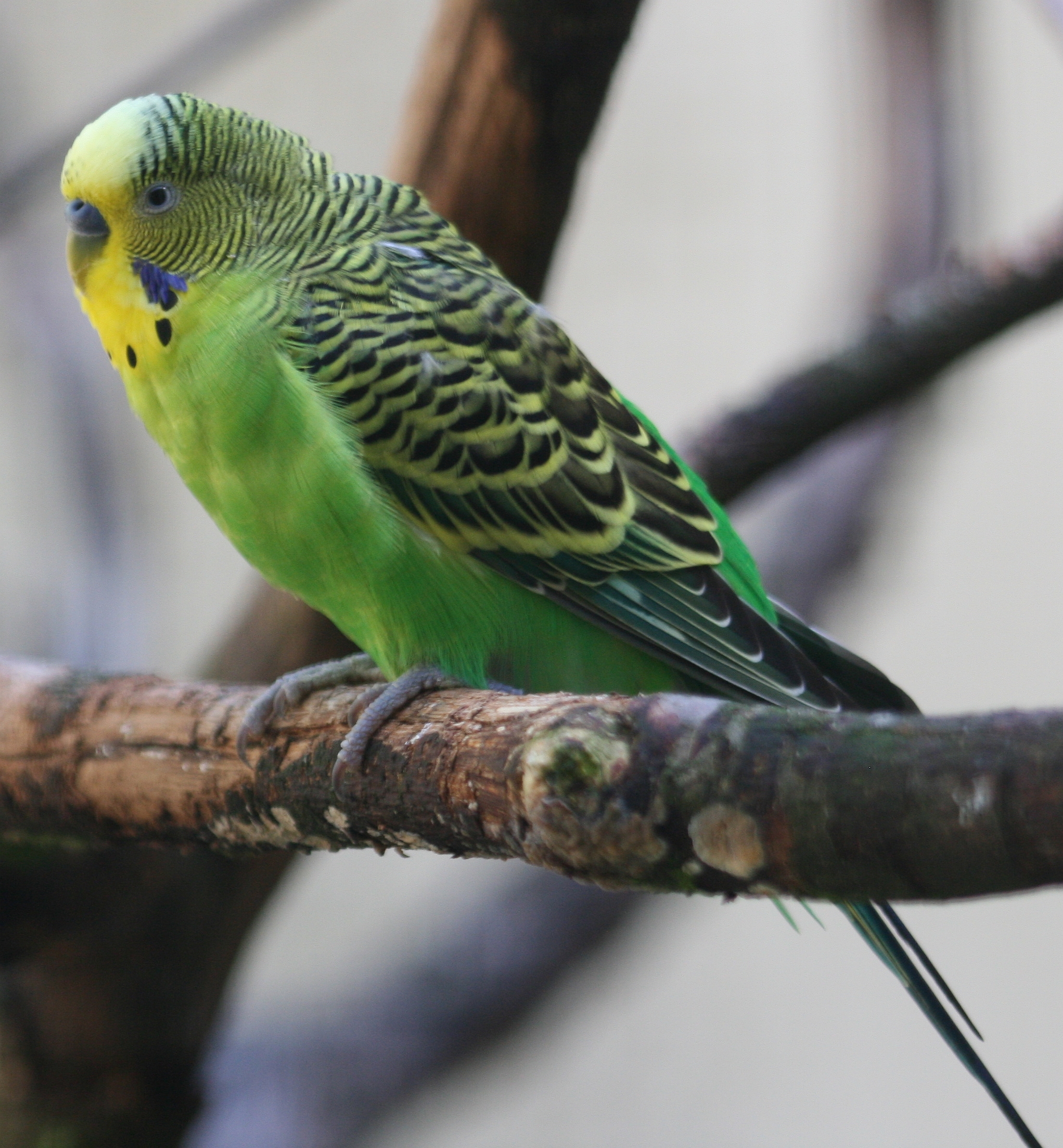
Periquito Inglés (Show Budgie)
The larger variety selected for exhibition. Prominent face. Shorter-lived than the common budgie.
Foto: Wikipedia Commons · CC BY-SA
Ideal for
- ✓Families with time for daily interaction
- ✓Spacious flats (large birds need a room)
- ✓Those who accept a decades-long commitment (parrots are long-lived)
Reconsider if
- ×Homes with no time to socialise
- ×Those who cannot tolerate noise (all parrots vocalise)
- ×Flats with no space to fly
Notify me when a Periquito Inglés (Show Budgie) is up for adoption
We'll only email you when a verified rescue posts one available. No spam, unsubscribe in 1 click.
We'll only use your email for this alert. More info in our privacy policy.
Is the Periquito Inglés (Show Budgie) a good match for you?
Indicative rating from 1 (low) to 5 (high).
💶 Estimated cost of ownership
10-22 €/month
Food (seed mix/pellets and vegetables) and grit 6-12 €/month; avian vet prorated (annual check ~40-60 €); cage, perches and toys as an initial investment. Emergencies for tumours are extra.
History and origin
Originating in England (selective breeding). The larger variety selected for exhibition.
Temperament and character
Intelligence varies by species. Parrots form strong bonds with their humans. They need daily mental stimulation · NOT just a cage.
Living together
Children: depends on the species + individual temperament. **Other birds:** better in a pair/group (except territorial species). **Larger pets:** avoid — a real predation risk.
Life stages of the Periquito Inglés (Show Budgie)
Each stage has its own care priorities. Life expectancy: 7-9 años.
Chick
0-1.5 months
Rapid growth; forehead barring (disappears at the moult) and cere development
Juvenile
1.5-6 months
Weaning and first moult; socialisation and taming
Adult
0.5-5 years
Varied diet low in fatty millet; watch for tumours and obesity from the show line
Senior
5-9 years
Monitoring of renal/testicular tumours, megabacteriosis and joints
Care
Cage: at least twice the size of the bird with its wings spread. A dedicated room is better.
Feeding: SEEDS are NOT a complete diet. A combination of pellets + fresh fruit/vegetables daily.
Free flight: at least 1-2 hours/day outside the cage in a safe area.
Vet: an avian specialist vet (exotics vet). Annual work-up.
Care in detail
🍽️ Nutrition
Budgerigar-specific seed mix or pellets, with leafy vegetables daily and a cuttlebone for calcium. The English budgerigar tends to put on weight, so ration the fatty seeds.
✂️ Grooming
Minimal: offer a bath or a light misting. Nails and beak wear down with branches and toys; check the cere and the head plumage, which is denser in this variety.
🎓 Training
Intelligent and docile: with positive reinforcement it learns to step onto the finger, whistle and even say words. The English budgerigar is calmer than the common one.
🏃 Exercise
1-2 hours daily of supervised free flight, foraging toys and ladders; best in a pair or group for its wellbeing.
Breed-specific health
Aspergillosis (fungal), psittacosis (chlamydiosis), feather problems from stress/deficiencies. Life expectancy 7-9 years with appropriate care. Before adopting a large parrot, consider that you will live with it throughout your adult life.
🩺 Health predispositions of this breed
Conditions this breed is more predisposed to. Knowing about them helps with prevention and early detection. A predisposition does not mean the animal will develop them.
Common diseases in birds
Learn the symptoms, prevention and when to see the vet. Reviewed indicative information that does not replace a veterinary consultation.
Screening and prevention for the Periquito Inglés (Show Budgie)
Recommended tests and screenings
- ✓Sexing by the cere (blue in males, brown in hens in breeding condition) or DNA
- ✓PCR for Chlamydia psittaci (psittacosis)
- ✓PCR for PBFD and polyomavirus
- ✓Screening for Macrorhabdus ornithogaster (megabacteria)
- ✓Faecal examination and tumour check (common in budgerigars)
Prevention
Quality seed mix or pellets with daily vegetables, weight control (they tend towards lipomas and obesity), quarantine of new birds and cage hygiene. No fumes or Teflon.
Check-up schedule
Annual check-up with an avian vet; monitoring for lumps and of the cere due to their tumour predisposition.
Warning signs
- !Fluffed-up plumage and lethargy
- !Lumps on the abdomen or under the wing (lipomas, tumours)
- !Change in cere colour outside the breeding season
- !Laboured breathing and abnormal droppings
Periquito Inglés (Show Budgie) gallery
Frequently asked questions about the Periquito Inglés (Show Budgie)
- How long does a Periquito Inglés (Show Budgie) live? ▾
- The life expectancy of the Periquito Inglés (Show Budgie) is 7-9 años. A good diet, adequate exercise, annual veterinary check-ups and preventive care can help reach the upper end of that range.
- How much does a Periquito Inglés (Show Budgie) weigh? ▾
- An adult Periquito Inglés (Show Budgie) weighs between 50-65g, depending on its sex, genetics and condition. It is pequeño.
- Where does the Periquito Inglés (Show Budgie) breed come from? ▾
- The Periquito Inglés (Show Budgie) originates from Inglaterra (selección). Originating in England (selective breeding). The larger variety selected for exhibition.
- How much exercise does a Periquito Inglés (Show Budgie) need? ▾
- The Periquito Inglés (Show Budgie) has media energy. **Cage:** at least twice the size of the bird with its wings spread. A dedicated room is better.
- Is the Periquito Inglés (Show Budgie) good with children? ▾
- **Children:** depends on the species + individual temperament. **Other birds:** better in a pair/group (except territorial species). **Larger pets:** avoid — a real predation risk.
- Who is the Periquito Inglés (Show Budgie) NOT recommended for? ▾
- It isn't the right breed for: Homes with no time to socialise. Those who cannot tolerate noise (all parrots vocalise). Flats with no space to fly. It's important to choose a breed that's compatible with your lifestyle.
- What health problems does the Periquito Inglés (Show Budgie) have? ▾
- Aspergillosis (fungal), psittacosis (chlamydiosis), feather problems from stress/deficiencies. Life expectancy 7-9 years with appropriate care. Before adopting a large parrot, consider that you will live with it throughout your adult life.
- How does it differ from the common budgerigar? ▾
- The English or exhibition budgerigar is larger and stockier, with very prominent facial plumage. In return it is usually calmer but lives less long (7-9 years versus the 10-12 of the common one).
- Does it learn to talk? ▾
- Yes, especially young, hand-tamed males can mimic words and whistles, though in a low, garbled voice.
- Male or female? ▾
- In adults they are told apart by the cere colour (blue in the male, rough brown in the hen in breeding condition); in young birds, or to be sure, by DNA sexing.
- Is it prone to any illness? ▾
- Yes, budgerigars are very prone to tumours and lipomas; it is worth checking lumps and monitoring weight with the vet.
Learn more about birds
Practical veterinary guides to support your Periquito Inglés (Show Budgie).
Sources and references
Content compiled from official breed standards and leading veterinary sources.
- WikipediaMelopsittacus undulatus (Common budgerigar) ↗
- World Parrot TrustBudgerigar ↗
Want to adopt a periquito inglés (show budgie)?
There are periquito inglés (show budgie)s in rescue shelters looking for a family. Filter by breed in the catalogue.