

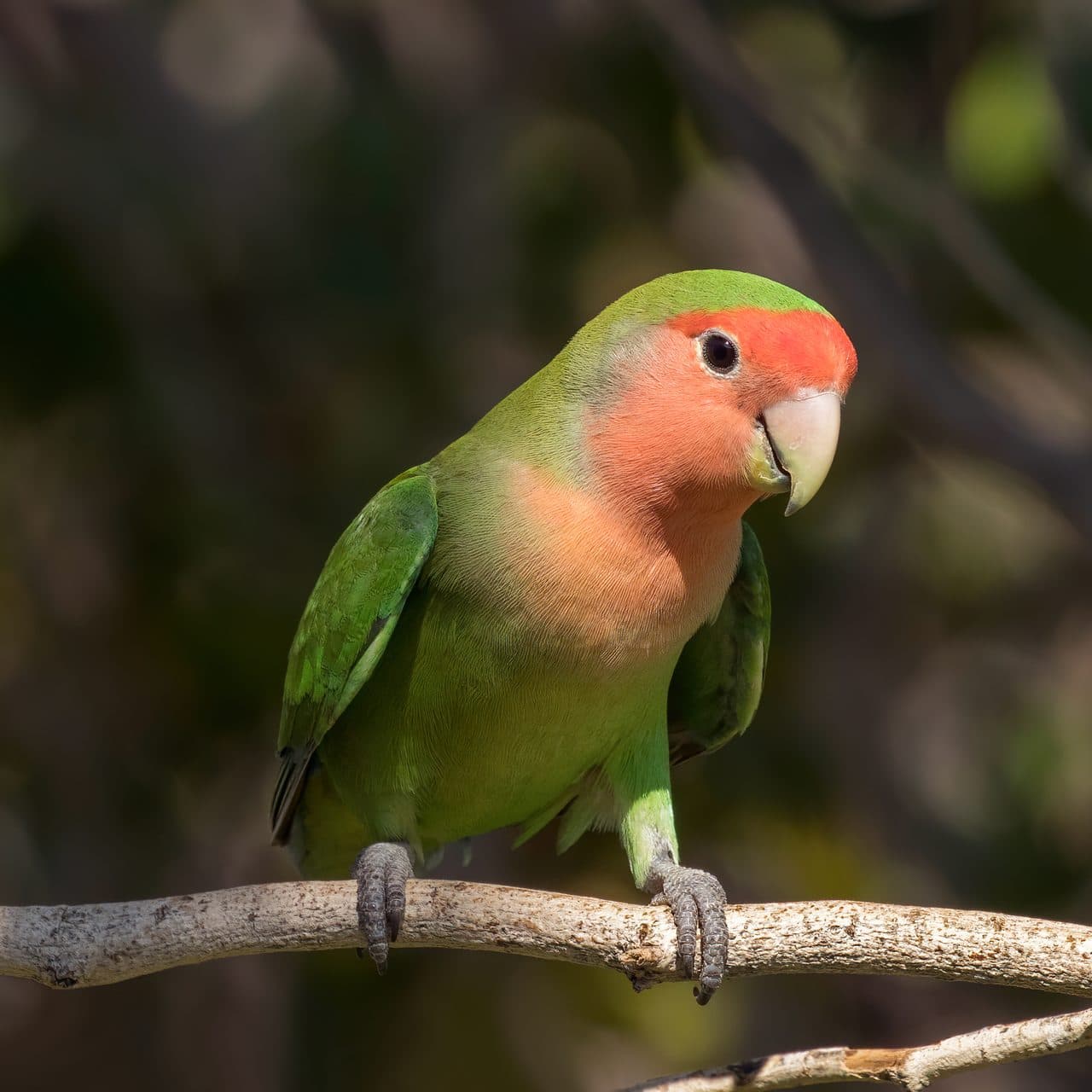
Agapornis Roseicollis
Distinctive rosy face. The hardiest species. Excellent for beginners with birds.
Foto: Wikipedia Commons · CC BY-SA
Ideal for
- ✓Families with time for daily interaction
- ✓Spacious flats (large birds require a room)
- ✓Those who accept a commitment of decades (parrots live a long time)
Reconsider if
- ×Homes without time to socialise the bird
- ×Those who cannot tolerate noise (all parrots vocalise)
- ×Flats without space for flight
Notify me when a Agapornis Roseicollis is up for adoption
We'll only email you when a verified rescue posts one available. No spam, unsubscribe in 1 click.
We'll only use your email for this alert. More info in our privacy policy.
Is the Agapornis Roseicollis a good match for you?
Indicative rating from 1 (low) to 5 (high).
💶 Estimated cost of ownership
12-25 €/month
Food and supplements 8-15 €/month; exotics vet apportioned (annual check-up ~40-60 €); a spacious cage, perches and toys as an initial investment. Emergencies and breeding are extra.
History and origin
Rosy-faced lovebird native to the arid regions of south-western Africa; the most widely captive-bred lovebird species and the one with the most colour mutations.
Temperament and character
Intelligence varies by species. Parrots form strong bonds with their humans. They need daily mental stimulation · NOT cage-only.
Living together
Children: depends on the species + individual temperament. **Other birds:** best in a pair/group (except territorial species). **Older pets:** avoid — a real risk of predation.
Life stages of the Agapornis Roseicollis
Each stage has its own care priorities. Life expectancy: 10-15 años.
Chick
0-2 months
Rearing, warmth and weaning
Juvenile
2-12 months
Moult, taming, balanced diet
Adult
1-10 years
Territoriality, breeding management, weight control
Senior
10-15 years
Hepatic/renal and locomotor monitoring
Care
Cage: at least twice the size of the bird with its wings outstretched. A dedicated room is better.
Feeding: SEEDS are NOT a complete diet. A combination of pellets + fresh fruit/vegetables daily.
Free flight: at least 1-2 hours/day out of the cage in a safe area.
Vet: an avian specialist vet (exotics vet). Annual check-up.
Care in detail
🍽️ Nutrition
A base of quality pellets with daily leafy greens and fruit as a treat; cuttlebone for calcium. Seeds only occasionally. Avoid avocado, chocolate and salt.
✂️ Grooming
Very little: they love to bathe. Nails and beak stay in trim with branches and toys; do not clip the wings unless advised by a vet.
🎓 Training
It is the easiest lovebird to tame: with positive reinforcement and short sessions it becomes confident. It may give territorial nips when in breeding condition.
🏃 Exercise
1-2 hours of supervised flight out of the cage daily, with foraging and shredding toys.
Breed-specific health
Aspergillosis (fungal), psittacosis (chlamydiosis), feather problems due to stress/deficiencies. Life expectancy 10-15 years with proper care. Before adopting a large parrot, consider that you will live with it throughout your adult life.
🩺 Health predispositions of this breed
Conditions this breed is more predisposed to. Knowing about them helps with prevention and early detection. A predisposition does not mean the animal will develop them.
Common diseases in birds
Learn the symptoms, prevention and when to see the vet. Reviewed indicative information that does not replace a veterinary consultation.
Screening and prevention for the Agapornis Roseicollis
Recommended tests and screenings
- ✓DNA sexing (monomorphic to the naked eye)
- ✓PCR for Chlamydia psittaci (psittacosis)
- ✓PCR for PBFD (circovirus) and polyomavirus
- ✓Faecal examination and crop cytology
- ✓Baseline complete blood count and biochemistry
Prevention
Pellets with daily vegetables as the staple, quarantine of new birds, cage hygiene and weight monitoring. Avoid Teflon fumes, tobacco smoke and aerosols.
Check-up schedule
Annual review with an avian vet, including weighing and baseline blood work.
Warning signs
- !Fluffed-up plumage and lethargy
- !Noisy breathing or a pumping tail
- !Feather plucking or pulling
- !Altered droppings and weight loss
Agapornis Roseicollis gallery

Frequently asked questions about the Agapornis Roseicollis
- How long does a Agapornis Roseicollis live? ▾
- The life expectancy of the Agapornis Roseicollis is 10-15 años. A good diet, adequate exercise, annual veterinary check-ups and preventive care can help reach the upper end of that range.
- How much does a Agapornis Roseicollis weigh? ▾
- An adult Agapornis Roseicollis weighs between 46-63g, depending on its sex, genetics and condition. It is pequeño.
- Where does the Agapornis Roseicollis breed come from? ▾
- The Agapornis Roseicollis originates from Sudoeste África. Rosy-faced lovebird native to the arid regions of south-western Africa; the most widely captive-bred lovebird species and the one with the most colour mutations.
- How much exercise does a Agapornis Roseicollis need? ▾
- The Agapornis Roseicollis has media energy. **Cage:** at least twice the size of the bird with its wings outstretched. A dedicated room is better.
- Is the Agapornis Roseicollis good with children? ▾
- **Children:** depends on the species + individual temperament. **Other birds:** best in a pair/group (except territorial species). **Older pets:** avoid — a real risk of predation.
- Who is the Agapornis Roseicollis NOT recommended for? ▾
- It isn't the right breed for: Homes without time to socialise the bird. Those who cannot tolerate noise (all parrots vocalise). Flats without space for flight. It's important to choose a breed that's compatible with your lifestyle.
- What health problems does the Agapornis Roseicollis have? ▾
- Aspergillosis (fungal), psittacosis (chlamydiosis), feather problems due to stress/deficiencies. Life expectancy 10-15 years with proper care. Before adopting a large parrot, consider that you will live with it throughout your adult life.
- Is it a good lovebird for beginners? ▾
- Yes, the rosy-faced (roseicollis) is the hardiest, most readily available and most docile of the lovebirds; with daily dedication it tames well and makes a good first bird.
- Male or female? ▾
- They cannot be told apart by eye: although the female is usually a little more robust, only DNA sexing gives certainty.
- Better one bird or a pair? ▾
- If you devote many hours to it, a single bird bonds intensely with you. If you spend little time at home, a pair is better, though then they tame less.
- How long does it live? ▾
- From 10 to 15 years with good feeding, space to fly and check-ups with an exotics vet.
Learn more about birds
Practical veterinary guides to support your Agapornis Roseicollis.
Sources and references
Content compiled from official breed standards and leading veterinary sources.
- WikipediaRosy-faced lovebird ↗
- World Parrot TrustRosy-faced Lovebird - Parrot Encyclopedia ↗
Want to adopt a agapornis roseicollis?
There are agapornis roseicolliss in rescue shelters looking for a family. Filter by breed in the catalogue.